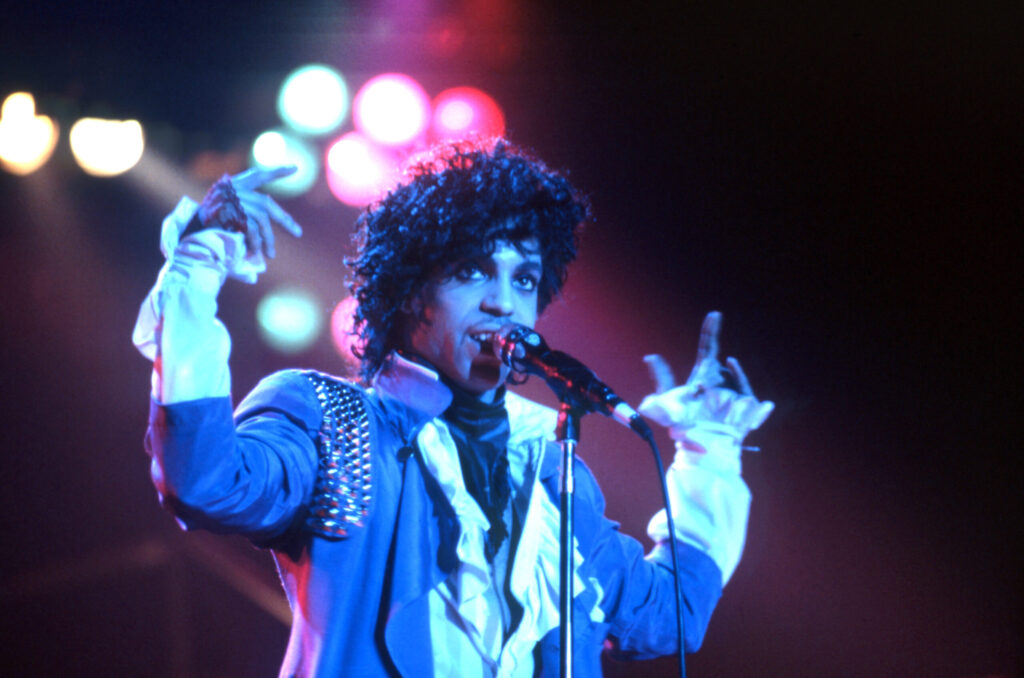
DETROIT, MI - NOVEMBER 4: American singer Prince (1958-2016) performs onstage during the 1984 Purple Rain Tour on November 4, 1984, at the Joe Louis Arena in Detroit, Michigan. (Photo by Ross Marino/Getty Images)
A decade has passed since we lost the iconic Prince on April 21, 2016. His death sent shockwaves through the music world and beyond, leaving fans grappling with the profound absence of a genius who transformed the soundscape of popular music. Prince was not just a musician; he was an innovator, a fashion icon, and a cultural phenomenon, whose ability to blend genres and push boundaries set him apart from his contemporaries. His artistic legacy is celebrated and revered, with songs that continue to resonate deeply, from the sultry grooves of “Kiss” to the poignant melodies of “Purple Rain.”
Yet, the aftermath of his passing revealed a stark reality that is often overlooked: the tumultuous battle over his estate. With no will in place, the legal complexities that ensued were reminiscent of a tragic drama, drawing in family members, former associates, and even fans who felt a connection to the Purple One. This battle illuminated not only the challenges of managing a vast artistic legacy but also raised critical questions about the implications of estate planning for artists, particularly in the Black community, where such conversations are rarely prioritized.
As we reflect on Prince’s legacy ten years later, it’s essential to recognize not just the music but the man behind it. His artistry was imbued with messages of love, empowerment, and defiance against societal norms. He was unapologetically himself, using his platform to advocate for issues close to his heart, including racial justice and artistic freedom. Prince’s legacy is a reminder of the importance of individuality and the power of self-expression, traits that continue to inspire new generations of artists today.
In the wake of his passing, it’s also crucial to examine how his estate battle serves as a cautionary tale for future artists. The complexities surrounding his legacy have sparked conversations about the importance of planning for the future, ensuring that artists’ visions and wishes are honored even after they are gone. As we celebrate the brilliance of Prince’s life and music, let’s also advocate for greater awareness of the necessity of wills and estate planning in the creative community, so that the next generation won’t face similar struggles. As we honor the memory of a true legend, we must also ensure that his legacy continues to inspire and educate those who follow in his footsteps.
About The Author