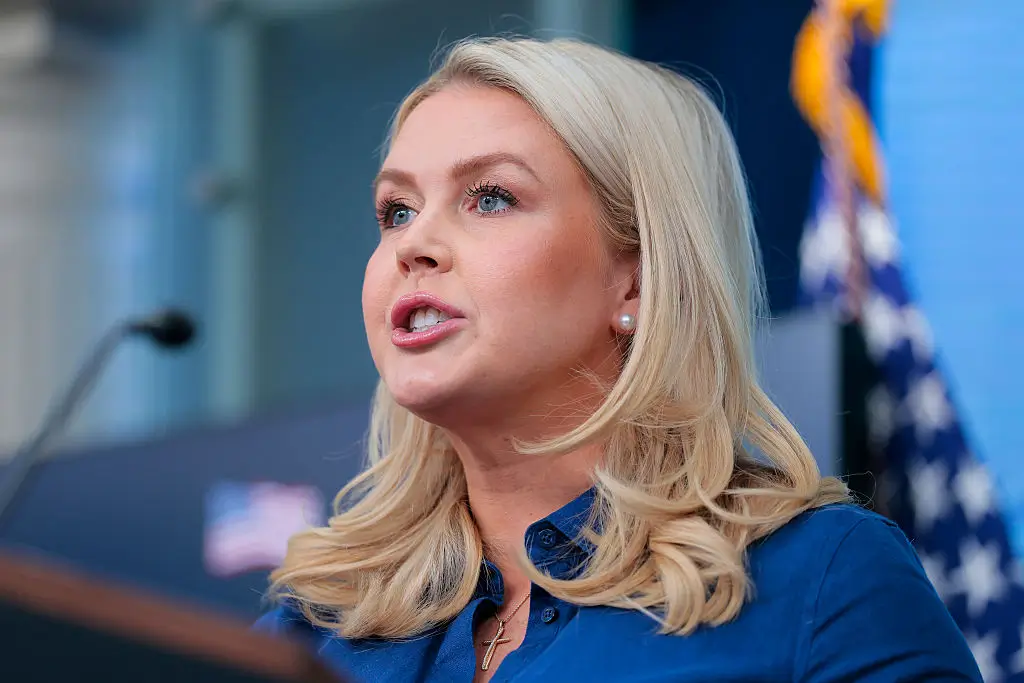
In the ever-evolving circus that is American politics, few moments have matched the chaotic energy of White House Press Secretary Karoline Leavitt’s recent defense of Donald Trump. After Trump’s incendiary social media post urging for a federal shutdown as a response to his ongoing legal troubles, Leavitt found herself in a precarious position, scrambling to reshape the narrative. Instead of confronting the glaring issues raised by Trump’s unhinged remarks, she pivoted sharply, attempting to paint him as a victim of a politically motivated witch hunt. This deft maneuver was less about honesty and more about bolstering the beleaguered former president’s image in a moment of crisis.
Leavitt’s combative approach toward the press, where she accused journalists of spreading hysteria and lies, speaks volumes about the current administration’s strategy to control the narrative. In her view, the media is the enemy, creating a convenient scapegoat in a world where Trump’s polarizing presence looms large. This narrative strategy isn’t just about Trump; it’s a broader tactic that resonates with a significant segment of the Republican base, one that thrives on portraying themselves as outsiders battling an exaggerated ‘elite’ establishment. But with the FBI breathing down Trump’s neck, those tactics may soon face a critical test.
Just as Leavitt was trying to spin the narrative, the FBI made a stunning move that could potentially alter the course of this political saga. New developments in the investigation into Trump’s mishandling of classified documents have sent shockwaves through the political landscape, prompting questions about how long the former president can maintain his narrative of victimization. This new scrutiny adds a layer of complexity to Leavitt’s already difficult task, as the administration must now grapple with the ramifications of Trump’s unchecked bravado.
As the days unfold, it will be intriguing to see how Leavitt adjusts her messaging in light of the FBI’s actions. Will she continue to deflect blame onto the media, or will the gravity of the situation force her to confront the realities of Trump’s political demise? The stakes are high, and the pressure is mounting—not just for Leavitt and Trump, but for the Republican Party as a whole, which is caught in the crosshairs of a scandal that could redefine its future. In the end, the question remains: can they hold their base together in the face of an unraveling narrative, or will the walls come crashing down?
About The Author