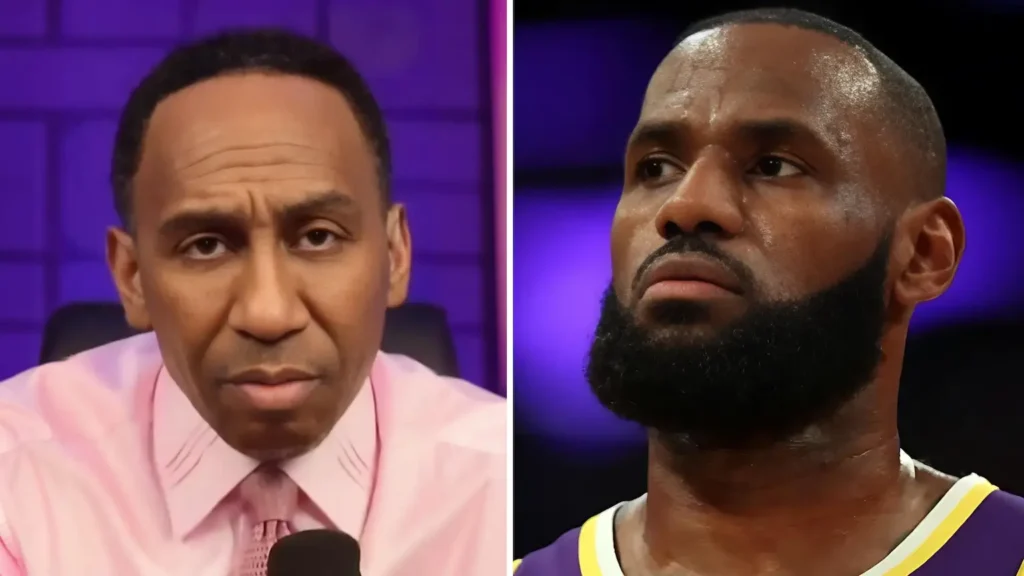
In the world of sports, few rivalries have captivated the public quite like the one between LeBron James and Stephen A. Smith. Known for his bold opinions and unflinching commentary, Smith recently found himself on the receiving end of an irate LeBron after a contentious confrontation that had the basketball community buzzing. As the Los Angeles Lakers forward stepped into the spotlight to address the situation, his message was clear: some narratives simply cross the line.
LeBron took to social media, expressing his frustration directly, stating, “You have crossed the line!” His remarks were a clear indictment of the sensationalized nature of Smith’s commentary regarding his performance and off-court personas. For a player who’s spent two decades in the league, building a legacy that intertwines with the very fabric of basketball, the stakes of public perception are incredibly high. The issue at hand wasn’t just about a disagreement; it was about respect and the responsibility that comes with the platform both men occupy.
The clash sparked an intense debate among fans and analysts, many of whom sided with LeBron, citing the often toxic nature of sports commentary that prioritizes drama over truth. Smith, who has built his career on sparking conversations around the league’s biggest names, may have underestimated the impact of his words. LeBron’s response resonated deeply with those who believe that athletes, particularly Black athletes, deserve to have their narratives shaped by their voices rather than external assumptions.
As the dust settles from this high-profile confrontation, it serves as a reminder of the power dynamics in sports media. LeBron’s fiery retort is more than just a reaction to Smith; it’s a call to action for media figures to approach their craft with a sense of responsibility and integrity. With the Lakers’ playoff push heating up, all eyes will now be on LeBron—not only to showcase his on-court prowess but also to continue to challenge the narratives that attempt to define him. In a world where every word is scrutinized, James’ bold stance reinforces the importance of truth in a space that often thrives on sensationalism.
About The Author