President Donald Trump has long made it clear that loyalty isn’t optional. Inside his orbit, it’s expected, and at times enforced both directly and indirectly. A new report has surfaced, shedding light on how far this expectation extends and the lengths to which Trump’s administration has gone to secure it. Allegations surfaced that the Pentagon attempted to strongarm the Vatican, leveraging U.S. power to influence the Catholic Church’s stance on various issues. This shocking revelation underscores how deeply loyalty is intertwined with political maneuvering, even involving institutions as revered and historically significant as the Vatican.
The implications are staggering. We’re not just talking about typical political lobbying; this is a blatant misuse of authority that borders on coercion. The Vatican, a powerful player in global politics, has often maintained a neutral stance, but it seems the Trump administration was not ready to take no for an answer. Such tactics reveal a dangerous precedent for political loyalty, with the potential to undermine trust in diplomatic relations worldwide. In essence, it’s a power play that raises the question: at what cost does loyalty come in the corridors of power?
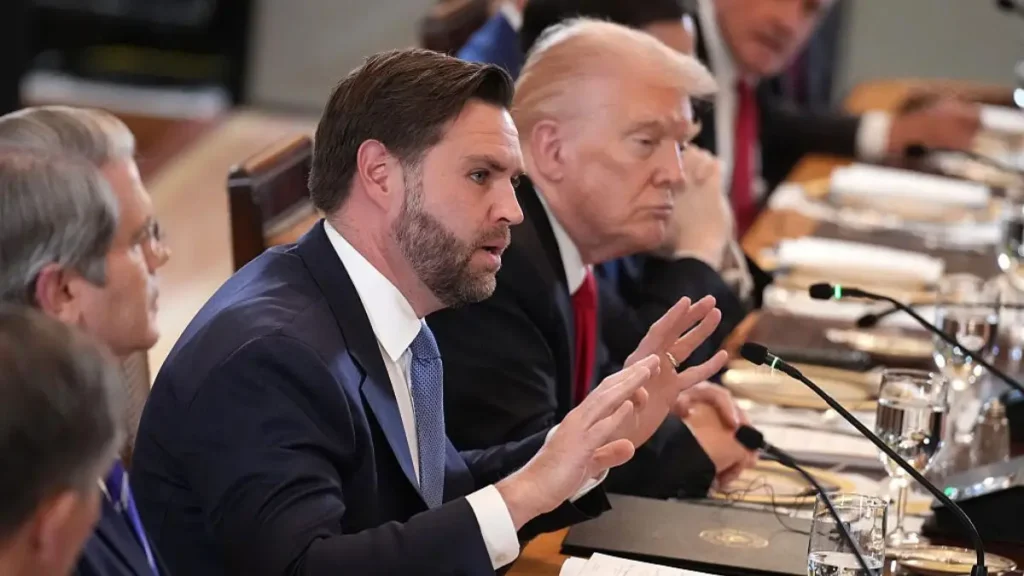
Highlighting the absurdity of the situation, Senator JD Vance found himself in a position where he had to address these allegations. When pressed on camera, his responses seemed to unravel, illustrating the discomfort many within Trump’s loyalist circle feel when confronted with the gravity of such actions. Vance’s obvious unease speaks volumes about the internal conflict brewing within the Republican Party—loyalty to Trump versus adherence to ethical governance. It’s a conflict that could redefine political alliances and strategies going forward.
As the dust settles, the broader implications of these revelations are significant. Voters are becoming increasingly aware of the lengths to which politicians will go for loyalty, and the potential compromises that come with it. This isn’t merely a tale of political maneuvering; it’s a reminder of the ethical responsibilities that come with leadership. With midterm elections looming and national sentiment shifting, politicians like Vance will need to decide whether sticking to party lines is worth the cost of their integrity in the eyes of their constituents.
In the age of Trump-era politics, where loyalty often supersedes common sense and ethical governance, one can’t help but wonder—how far will they go next? In a landscape fraught with loyalty tests, the stakes are higher than ever, and the implications could echo far beyond the walls of Washington, D.C.
About The Author