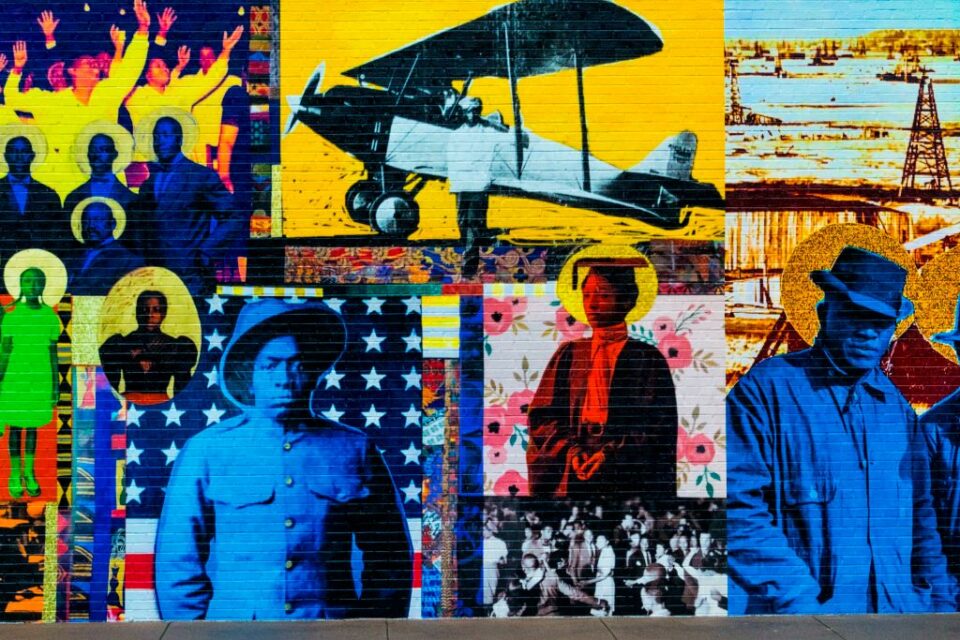
Mural Commemorating 100th Anniversary of Black Wall Street Massacre in 1921, Tulsa, Oklahoma. (Photo by: Joe Sohm/Visions of America/UCG/Universal Images Group via Getty Images)
In a historic development that has reverberated through the corridors of justice and affected communities across the nation, the Department of Justice (DOJ) has announced that it will investigate the 1921 bombing of Tulsa, Oklahoma. This act of racial violence devastated the thriving Black business district known as Black Wall Street, resulting in unimaginable loss and trauma that has been left unaddressed for far too long. Under the Emmett Till Unsolved Civil Rights Crime Act, this investigation opens the door to examining one of the darkest chapters in American history, shedding light on injustices that have long been overshadowed by time and silence.
The DOJ’s Civil Rights Division Cold Case Unit is stepping up to confront historical injustices that resonate deeply within the African American community. The massacre in Tulsa, where hundreds of Black residents were killed and homes and businesses destroyed, mirrors other atrocities in American history where systemic racism has led to brutal acts of violence against Black communities. By taking a closer look at these past crimes, the DOJ is not only honoring the memory of the victims of the Tulsa massacre but also acknowledging the need for accountability and justice that has been sought for generations.
The Emmett Till Act, named after the 14-year-old Black boy lynched in Mississippi in 1955, allows the federal government to investigate hate crimes dating back to 1979. As such, it serves as a vital tool in the pursuit of justice for those who suffered under racially motivated violence. Tulsa’s case is particularly poignant, as the 1921 massacre stands as a symbol of resilience and survival. The community is not merely looking for acknowledgment of past wrongs but also for a pathway to healing and restoration.
As this investigation unfolds, it will be essential to amplify the voices of those affected and ensure that there is a commitment not only to uncovering the truth but also to addressing the long-standing disparities that exist today. The scars of the Tulsa massacre are not just historical footnotes; they continue to shape the socio-economic landscape for Black Americans. It is time for the nation to confront its past, to learn from it, and to make strides toward ensuring that such atrocities are never repeated. The DOJ’s renewed focus on these cold cases offers a glimmer of hope, signaling a potential shift toward reconciliation and understanding in a society that often struggles to come to terms with its history.
About The Author