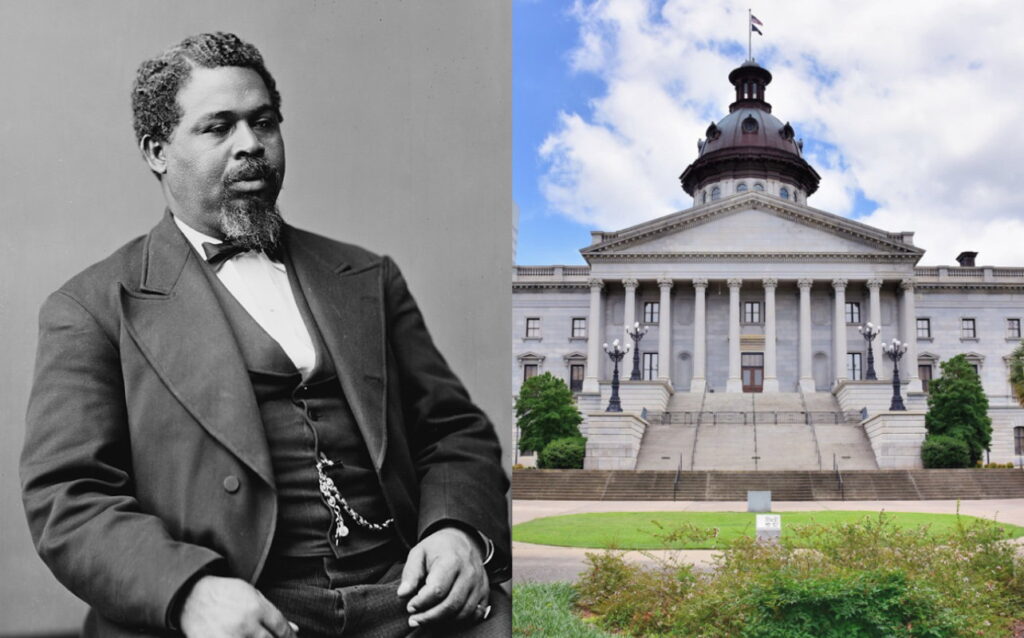
In a historic move, South Carolina is set to honor Gullah Geechee hero Robert Smalls with a statue at the Statehouse in Columbia, marking a significant milestone as the first individual statue of a Black person on the Statehouse lawn. Smalls, a former enslaved man turned Civil War hero, is celebrated not just for his bravery but for his remarkable journey from bondage to freedom. During the Civil War, he commandeered a Confederate ship and delivered it to Union forces, a daring act that symbolized liberation and resilience. His contributions extended beyond the battlefield; after the war, he became a prominent politician, advocating for education and civil rights in South Carolina.
The decision to erect this statue comes as part of a growing recognition of the importance of Black history in America, especially in a state that was a significant battleground during the Civil War. For too long, the narratives of heroes like Smalls have been overshadowed, but this statue serves as a powerful reminder of his legacy and the countless lives impacted by his courage. It’s not just a tribute to one man; it’s an acknowledgment of the resilience of the Gullah Geechee community and their rich cultural heritage.
Community leaders and advocates have long called for this recognition, and as the statue prepares to be unveiled, it represents a collective victory. The Gullah Geechee culture, with its unique traditions and dialect, has been a cornerstone of South Carolina’s history, and honoring Smalls is a step towards preserving and celebrating that heritage. The statue will not only stand as a testament to Smalls’ bravery but also as a beacon of hope and inspiration for future generations.
As we approach this historic moment, it’s essential to reflect on the profound impact of Robert Smalls’ life and legacy. His story is one of overcoming adversity and fighting for justice, qualities that resonate deeply within the Black community today. The statue will be a space for reflection, education, and celebration, reminding all who visit of the power of resilience and the ongoing struggle for equality. It’s a long-overdue recognition that paves the way for future dialogues about history, heritage, and the heroes who shaped our nation, making it a day to remember in South Carolina’s journey toward acknowledging the breadth of its past.
About The Author