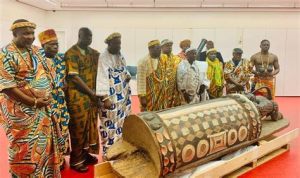
In a poignant moment connecting the past to the present, France has officially returned the sacred Djidji Ayôkwé drum to Côte d’Ivoire after 110 years of its absence. This drum, hailing from the Tchaman (Atchan, Ebriés) people, is more than just a musical instrument; it is a symbol of cultural heritage and identity that has echoed through generations. The return of such artifacts is crucial in the ongoing journey of decolonization and reconciliation, reminding us of histories that are often overlooked or erased.
The Djidji Ayôkwé, a striking 4-meter (13-foot) talking drum, was taken during the colonial era and had been on display at the Musée du Quai Branly in Paris. For the Ivorian people, this drum holds deep cultural significance, used in various ceremonies to convey messages and stories across the community. Its return is not merely a restoration of a physical object; it signifies France acknowledging its colonial past and the importance of reparative justice.
As we reflect on this moment, we must recognize the larger context of cultural repatriation happening globally. Countries and communities are reclaiming their identities, traditions, and sacred objects that were once taken without consent. The Djidji Ayôkwé’s journey back to Côte d’Ivoire is a step towards healing and understanding, showcasing the power of heritage in bridging divides and fostering unity.
This incident serves as a beacon of hope and a reminder of the importance of preserving and honoring cultural artifacts. The drum’s return is an invitation for dialogue about the legacies of colonialism and the sincere efforts required to reconcile with history. As we celebrate this victory for Côte d’Ivoire, it propels us to continue advocating for the return of other stolen cultural treasures, ensuring that the voices of our ancestors resonate through time for future generations.
About The Author