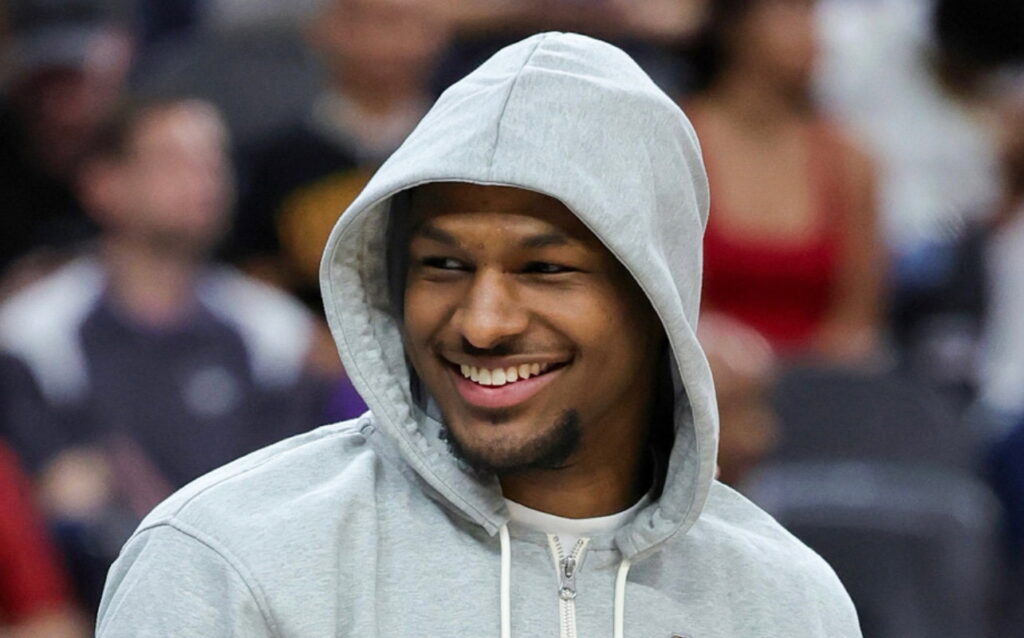
In a surprising twist in the world of sports branding, the United States Patent and Trademark Office (USPTO) has rejected Nike’s attempt to trademark the ‘B9’ logo associated with Bronny James, the son of NBA superstar LeBron James and a rising talent in his own right. The ‘B9′ branding was intended to capitalize on Bronny’s growing popularity, especially as he makes strides in the competitive landscape of basketball, including his recent involvement with the Los Angeles Lakers. Nike’s aspirations to align Bronny’s identity with this logo reflected a calculated move to secure his brand’s future, anticipating a wave of commercial success in a market that thrives on athletes’ personal brands.
The rejection from the USPTO raises questions about the complexities of trademarking in the sports arena. The office often evaluates trademarks not just in terms of their uniqueness but also their potential market impact. In this case, the office may have deemed the ‘B9’ logo too similar to existing trademarks or simply not distinctive enough to warrant protection. This situation underscores the challenges that come with brand expansion in today’s heavily saturated market, particularly for athletes who are just beginning to carve out their niche. With the basketball season in full swing, Bronny’s focus remains on his performance rather than branding, a reminder that while trademarks can be pivotal, they can also be precarious.
For Bronny, who recently turned heads with his skills on the court, the focus should ideally shift back to basketball fundamentals rather than commercial pursuits. Every move he makes is scrutinized, not just by fans but by organizations eager to harness his potential for their own benefit. Nike’s aspirations for Bronny were clearly ambitious, aiming to leverage the combination of his surname and his own burgeoning talent to create a brand that could rival some of the biggest names in sports. However, in a world driven by social media and instant feedback, the emphasis on performance and authenticity often outweighs branding efforts, particularly for young athletes still finding their footing.
In the meantime, this development serves as a reminder of the delicate balance young athletes must navigate between their burgeoning careers and the branding opportunities that come with them. As Bronny continues to step out of his father’s shadow, he will undoubtedly face numerous challenges, not just on the court but also in how he manages his image off it. The rejection of the ‘B9’ trademark may well be a blessing in disguise, allowing him to focus on his game and legacy rather than the trappings of commercial success too early in his career. For fans and followers alike, the journey of Bronny James is just beginning, and we’ll be watching closely as he builds his own identity in basketball and beyond.
About The Author