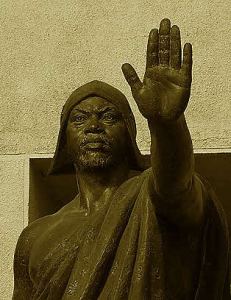
In a thought-provoking interview on April 2, 2026, Burkina Faso’s President Ibrahim Traoré captured the heart of an ongoing struggle faced by many African nations. He emphasized the critical need for industrialization as a pathway to true autonomy, echoing the sentiments of his predecessor, the legendary Thomas Sankara. Traoré drew parallels between everyday objects, like a simple spoon, and the larger narrative of Africa’s economic plight. By illustrating how Africa remains entrapped in a colonial economic model—one that focuses on exporting raw materials rather than fostering local production—he painted a picture of both challenge and opportunity.
With a demeanor reminiscent of Sankara’s unwavering spirit, Traoré presented his ideas in relatable terms, making the complexities of industrialization accessible to all. He argued that when African nations rely solely on foreign imports for basic needs, they surrender their sovereignty and economic independence. This reality is further compounded by a history of colonial exploitation, where resources are siphoned off to enrich foreign economies while African communities languish in poverty. Traoré’s wisdom is a reminder that, to break these cycles, we must embrace a new vision for our economies, one rooted in self-reliance and innovation.
His advocacy for local production is not just an economic strategy; it’s a call for a cultural renaissance. Every item produced locally carries with it the potential to foster job creation, ignite entrepreneurship, and restore pride in African craftsmanship. Traoré’s vision is not just about spoons or other mundane objects; it is about the dignity of labor and the resurgence of African identity through economic empowerment. By championing industrialization, he champions a future where Africa not only consumes but also produces, where it becomes a force on the global stage.
As we reflect on Ibrahim Traoré’s insights, we are reminded of the broader implications this struggle holds for the continent. The fight for industrialization serves as a clarion call for unity among African nations. It pushes us to reconsider our historical narratives and inspires us to reclaim our economic destinies. In doing so, we honor the legacies of leaders like Sankara, who envisioned a continent that thrives not merely as a resource supplier but as a vibrant hub of innovation and cultural revival. Traoré’s message is clear: true sovereignty demands a commitment to industrialization, a journey that will ultimately define our place in the world.
About The Author