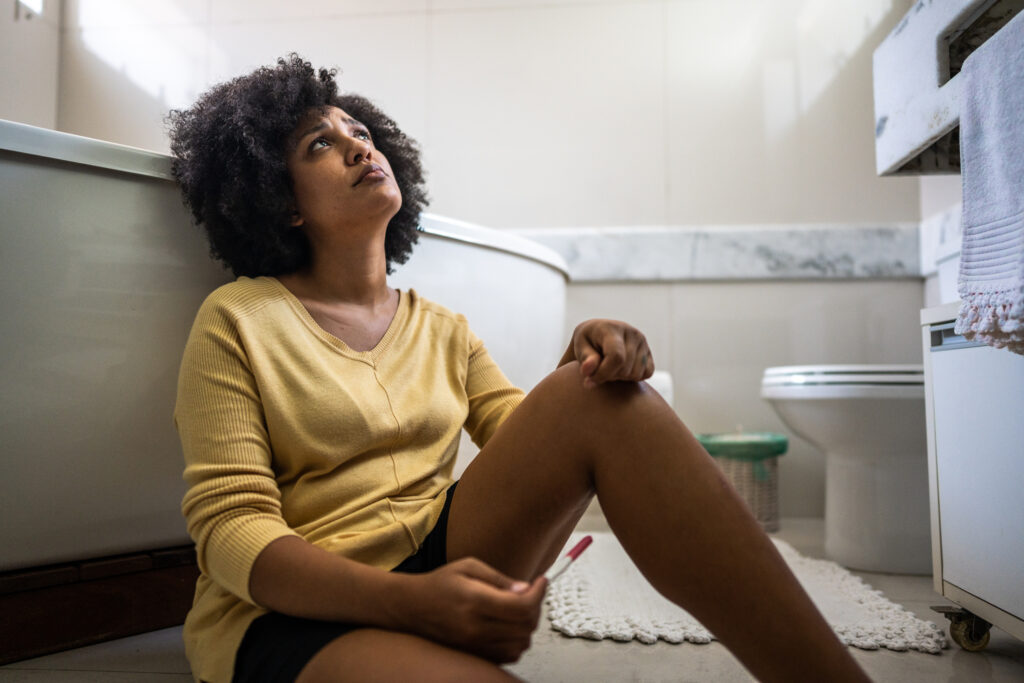
Sad young woman holding a pregnancy test sitting on ground in the bathroom at home
As National Infertility Awareness Week unfolds, it is crucial to shine a light on the unique challenges faced by Black women when it comes to infertility. Research indicates that Black women experience infertility at significantly higher rates than their white counterparts, a disparity that can often be traced back to a complex web of systemic issues, including limited access to healthcare, biases within the medical community, and socioeconomic factors. Many Black women are left navigating this painful journey without adequate support or resources, which can lead to feelings of isolation and despair.
One of the early red flags to watch for in the journey toward conception is irregular menstrual cycles, which can signal underlying health issues that may impact fertility. Yet, the unfortunate truth is that many Black women are not given appropriate screenings or referrals due to biases that persist in the healthcare industry. This systemic neglect can exacerbate existing health disparities, making it all the more difficult for Black women to receive the care they need in a timely manner.
Despite these stark realities, there is hope. Experts and advocates are beginning to spotlight affordable options that can empower Black women on their fertility journeys. From community-based resources to educational workshops, initiatives are emerging that aim to improve access to fertility treatments and provide much-needed support. These resources not only offer practical solutions but also help to foster a sense of community among women who share similar experiences.
Ultimately, awareness is the first step toward change. By amplifying the voices of Black women and advocating for equitable healthcare solutions, we can begin to dismantle the barriers that have long hindered access to fertility care. As we observe this week dedicated to raising awareness, let’s commit to ensuring that every Black woman knows her worth, her options, and the support available to her. The journey to motherhood can be arduous, but with the right resources and advocacy, it is one that can be navigated with hope and resilience.
About The Author