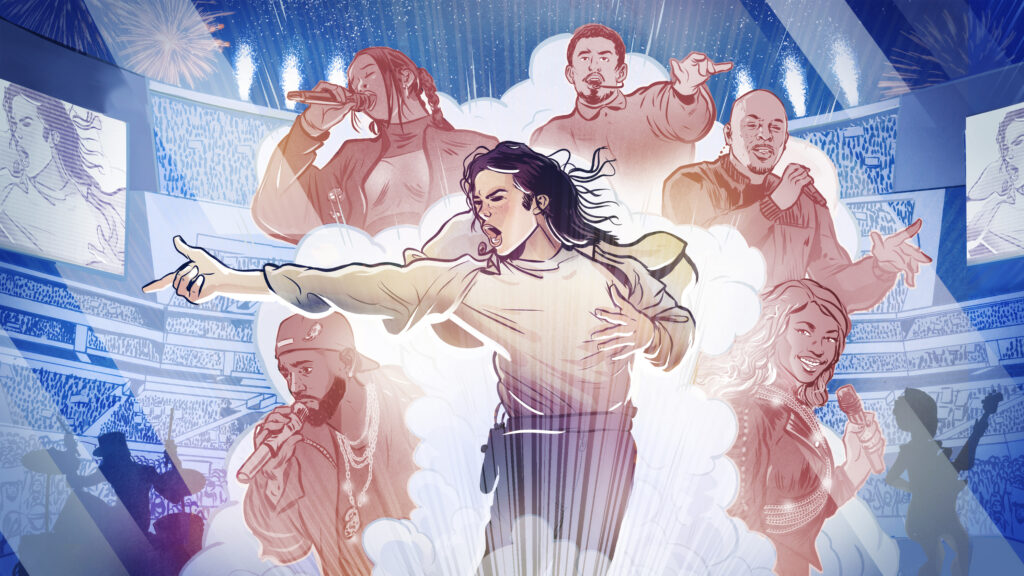
The Super Bowl halftime show has long been a theater of cultural expression, a stage where music, politics, and race intertwine in a narrative that often reflects the pulse of America. In 1993, when Michael Jackson took center stage, he transformed that 12-minute slot into an indelible moment that rippled through the fabric of both the event and American society at large. This was no ordinary halftime show; it was a declaration from the King of Pop, a poignant reminder that entertainment can ignite conversations beyond the football field.
As the lights dimmed and the familiar opening notes of “Jam” filled the air, millions of viewers held their breath. Jackson’s performance was a masterclass in spectacle, seamlessly blending music, dance, and a message. It was a reminder of the power of Black artistry, deftly showcasing his influence and the cultural significance that the Super Bowl could carry when wielded by an artist of his caliber. The entire nation paused, mesmerized, as Jackson transcended the realms of sport, engaging with themes of unity, joy, and the human experience, reminding everyone that the game was merely a backdrop to something much bigger.
But it wasn’t just a show; it was a moment of reckoning. In the backdrop of a divided America, Jackson offered a vision of inclusion and harmony, a stark contrast to the racial tensions that simmered throughout the 1990s. With every moonwalk and gravity-defying move, he urged us to reflect on our shared humanity, using his platform to bridge gaps and inspire hope. It was an invitation to see the Super Bowl not merely as an athletic competition but as a cultural touchstone that could speak to the nation’s spirit.
Years later, we can still feel the reverberations of that night. The Super Bowl has evolved, but the legacy of Jackson’s performance remains a pivotal chapter in both entertainment and social commentary. His connection to the halftime show set a precedent, prompting future artists to embrace their roles as voices of change, proving that when the lights shine the brightest, it’s the messages we send that resonate the longest. In those fleeting moments, the Super Bowl transformed from a mere sporting event into a platform for artistic expression and cultural reckoning, and Michael Jackson was its maestro, orchestrating a night where the world, if only for a moment, stood still.
About The Author