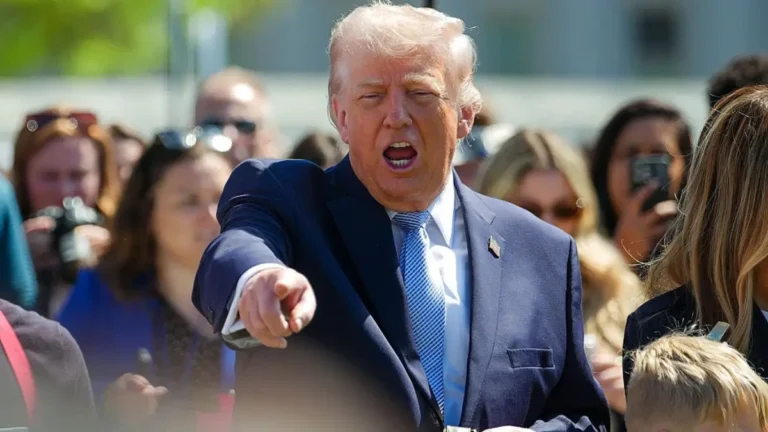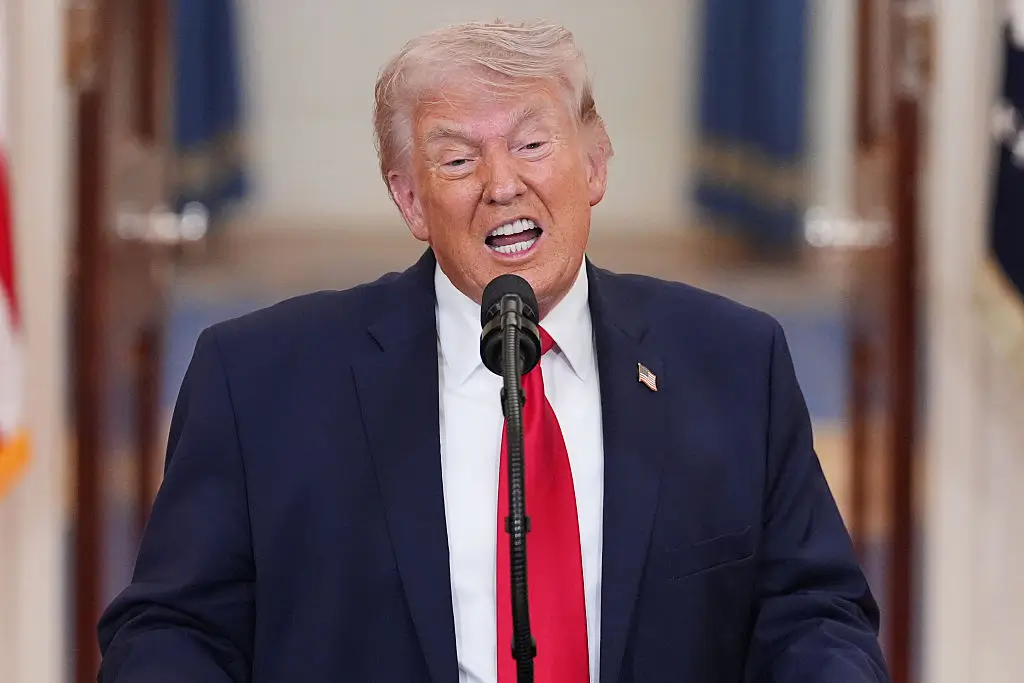
In a recent public appearance, former President Donald Trump found himself in a situation that many of his critics have long pointed to as emblematic of his disconnect from everyday America. While delivering a speech, he stumbled upon a word that caught him off guard, leading to an exasperated outburst: ‘Who the hell wrote that?’ This moment, captured on camera, serves as a stark reminder of how privilege can insulate individuals from the common experiences of everyday life, turning what could have been a simple reading into a spectacle of ego and bewilderment.
The incident quickly became a meme, with social media users dissecting not just the word itself but the broader implications of Trump’s reaction. It wasn’t just that he misread a word—it was that he seemed genuinely flustered by it, as if his carefully curated world had been jolted by a moment of vulnerability. For many, it was a peek behind the curtain, showcasing the privilege that allows someone to operate without ever having to grapple with the mundane realities that most people face daily. The irony is hard to ignore; a man who built an empire on the back of privilege crumbled at the sight of a single unfamiliar word.
This incident is more than just a humorous blunder; it speaks volumes about the chasm between political elites and the general populace. It’s not unusual to see politicians stumble over words, but when that stumbling is accompanied by a sense of entitlement and disdain, it brings to light a troubling narrative about who gets to lead and how disconnected they can be from the lives of the very people they claim to serve. In a world where communication is crucial, how can we trust leaders who can’t even navigate the basics of speech?
As the internet erupted with laughter and critiques, it became clear that this moment resonated beyond just a slip of the tongue. It raised questions about literacy, accessibility, and the expectations we place on those in positions of power. This is not merely about Trump; it’s about a system that often prioritizes status over substance, leaving many wondering just how prepared our leaders are to tackle the complexities of governance. For those of us who live in the real world, this blunder is a reminder of the importance of humility, understanding, and, most importantly, the ability to connect with the people we serve.
In the end, ‘who the hell wrote that’ may just be the question that unearths deeper conversations on power dynamics and the stark realities of leadership. And if nothing else, it’s a moment that reminds us that even the most powerful are not immune to the human experience—though they might sometimes prefer to be.
About The Author