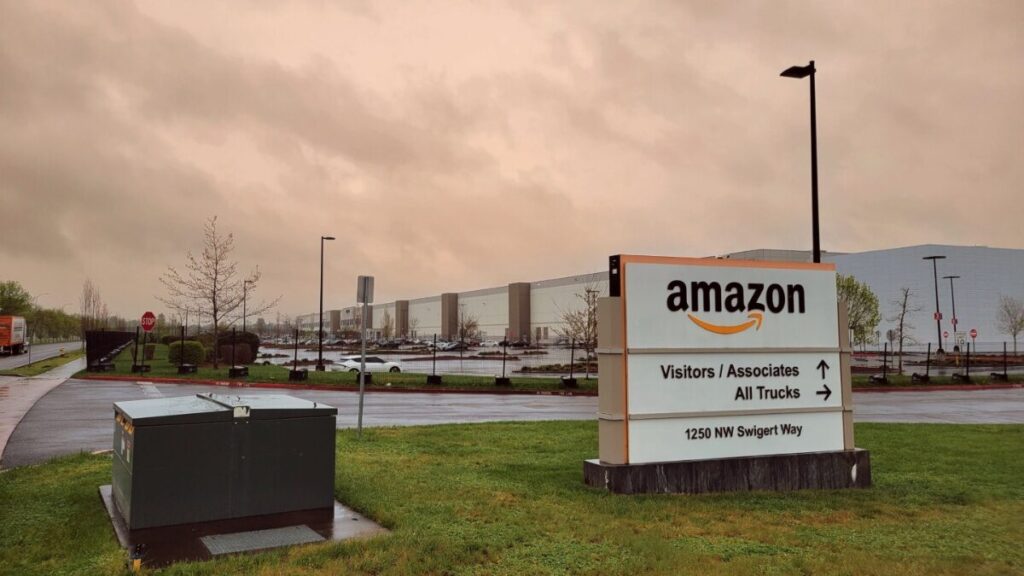
In a heartbreaking turn of events, an Amazon employee tragically lost her life while on duty at an Oregon fulfillment center, sparking outrage and claims of inhumane working conditions. Reports have emerged that after the employee collapsed, the work continued around her, leaving colleagues in shock and disbelief. One co-worker recounted the harrowing experience, stating, ‘I started sobbing’ as she struggled to process the emotional weight of the moment amidst the relentless pace of the warehouse. This incident has reignited discussions about the treatment of workers in warehouses, particularly in a company like Amazon that has been repeatedly criticized for its demanding labor practices.
The culture of corporate efficiency often overshadows the very real human cost of such environments, and this tragedy serves as a stark reminder of the need for empathy and respect in the workplace. Employees deserve to feel safe and supported, not merely as cogs in a machine churning out products at high speed. As the fallout from this incident unfolds, it’s crucial for all of us to reflect on how we value human life versus corporate profit. This isn’t just an isolated incident; it’s a wake-up call for all of us to demand better working conditions and practices that prioritize the well-being of employees over the bottom line.
In the wake of this tragedy, the calls for change are growing louder. Workers and activists are pushing back against a culture that often prioritizes productivity over human life, and they are rallying for reforms that ensure the safety and dignity of workers everywhere. As we remember the life lost, we must also amplify the voices of those who are calling for systemic changes in how companies operate, especially those with a vast influence like Amazon.
Now more than ever, it’s time to hold these corporations accountable and ensure that such tragedies do not happen again. It’s not just about one workplace incident; it’s about transforming the narrative around work, respect, and humanity across the board. The outpour of grief and anger from employees is a testament to the need for change in how companies treat their most valuable asset – their people.
About The Author