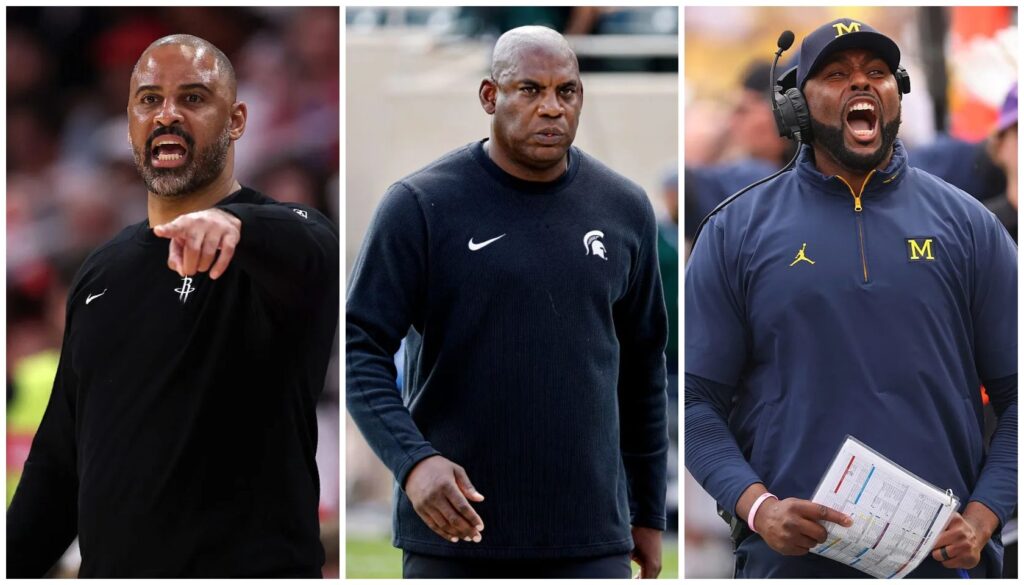
In a season that has already seen its fair share of drama, the recent firing of Sherrone Moore from Michigan’s football program underscores a troubling trend among Black coaches in sports. Moore, once touted as a rising star in the coaching ranks, finds himself on the sidelines for reasons that many struggle to comprehend. With Ime Udoka and Mel Tucker both facing their own controversies, it begs the question: What does it take for Black coaches to keep their jobs, especially when their white counterparts seem to dodge similar scrutiny?
The past few years have illuminated the harsh realities of a profession that too often seems to hold Black coaches to a different standard. Udoka faced public backlash not just for his coaching decisions but for personal matters that had little to do with his on-court performance. Similarly, Tucker’s experience reflects a narrative that often plays out within the league: one untethered from the realm of football or basketball. The spotlight tends to shine more intensely on Black coaches, sometimes leading to their swift dismissal for behavior that might be overlooked in other demographics.
As Moore joins this unfortunate club of high-profile dismissals, it raises questions about accountability and the expectations placed upon Black leaders in sports. While the conversation around diversity and inclusion has ramped up in recent years, the results have often been mixed, leaving many to wonder if the progress is merely lip service. Coaches like Udoka, Tucker, and now Moore are caught in a system where their professional decisions can quickly spiral into personal failings in the eyes of the public.
The lack of support for these coaches goes beyond the sidelines; it speaks to the systemic issues that plague sports. It’s not just about winning games; it’s about the pressure to perform under a microscope that seems to glare a little brighter on Black coaches. As fans and followers of the game, it’s crucial to advocate for a fair playing field—one where all coaches can succeed without the added weight of racial bias. With Ime Udoka and Mel Tucker already navigating choppy waters, it’s time for the industry to take a hard look at how it treats coaches of color, especially when they stumble.
As Moore reflects on his circumstances, he joins a growing list of talented individuals whose potential may be stifled by an unforgiving system. Moving forward, it’s imperative that the sports community not only acknowledges these disparities but actively works to remedy them. Black coaches deserve the same opportunities to thrive and fail as their white counterparts, and until that’s a reality, the burden of their success—and failure—will continue to weigh heavily on their shoulders.
About The Author