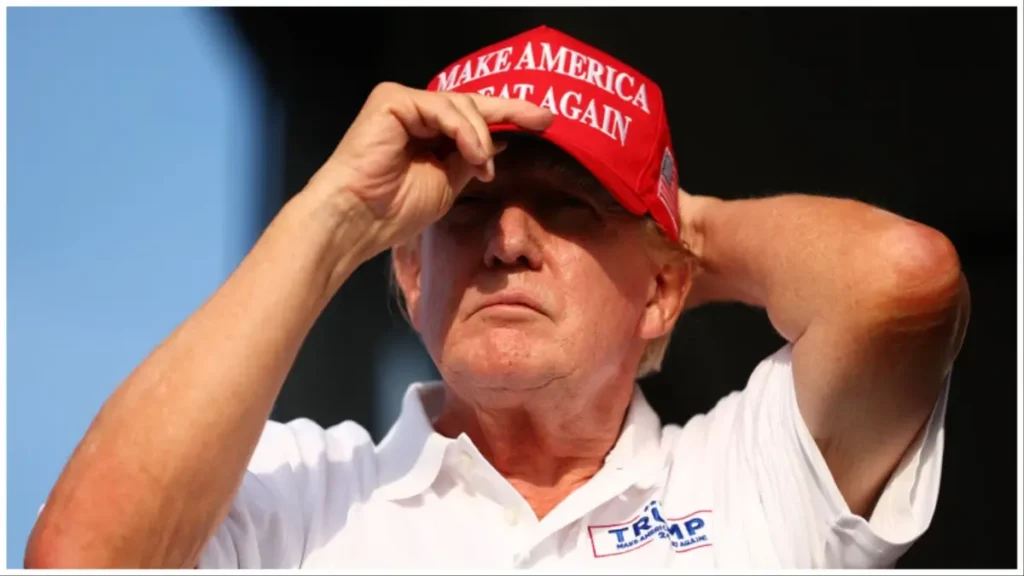
In an era where the truth often feels like a malleable concept, the White House’s recent attempt to spin President Donald Trump’s controversial endorsements has raised eyebrows and sparked outrage among critics. Following a praise-filled statement from White House Press Secretary Karoline Leavitt, who lauded Trump for suggesting changes to the name of Immigration and Customs Enforcement (ICE), many have responded with disbelief. Their sentiment? The administration is trying to cloak the former president’s blunders in a veil of positivity, but the real story is far too glaring to be ignored.
Trump’s history is riddled with contentious remarks and policies that have shaped conversations around immigration and human rights in America. The backlash against his endorsement of a name change for ICE—an entity that has often been associated with aggressive immigration enforcement—reveals a deeper desire for accountability and reform within the political landscape. But instead of confronting these complex issues head-on, the administration seems more focused on crafting a narrative that aligns with their agenda, which not only misrepresents facts but also disrespects the lived experiences of countless individuals affected by these policies.
Social media has become a battleground for this discourse, with critics calling out the use of AI-generated images and edited video footage that aim to soften the former president’s public image. As platforms become the new town hall, voices from marginalized communities are rising to challenge these narratives. They highlight that while the White House may wish to present Trump as a reformed leader, the realities of his administration’s actions speak louder than any PR campaign.
The disconnect between the administration’s portrayal and public perception is almost comical. The term “Clown!” has emerged as a rallying cry against what many see as an attempt to distract from the importance of accountability and truth in governance. In a time when the stakes are high and misinformation spreads like wildfire, it becomes increasingly clear that trying to sell a sanitized version of reality will only lead to further scrutiny. For those who prioritize truth and transparency, the efforts to downplay Trump’s past actions only reinforce the belief that real change requires honest reflection and engagement with the issues that directly impact lives.
As we navigate through these conversations, it’s vital to keep our leaders accountable, demanding both truth and integrity in their rhetoric. The culture calls for a collective responsibility not to be swayed by slick edits and AI illusions, but to engage critically with the messages we receive. In the end, it’s our voices that matter, and we need to ensure they resonate louder than any distorted version of the truth.
About The Author