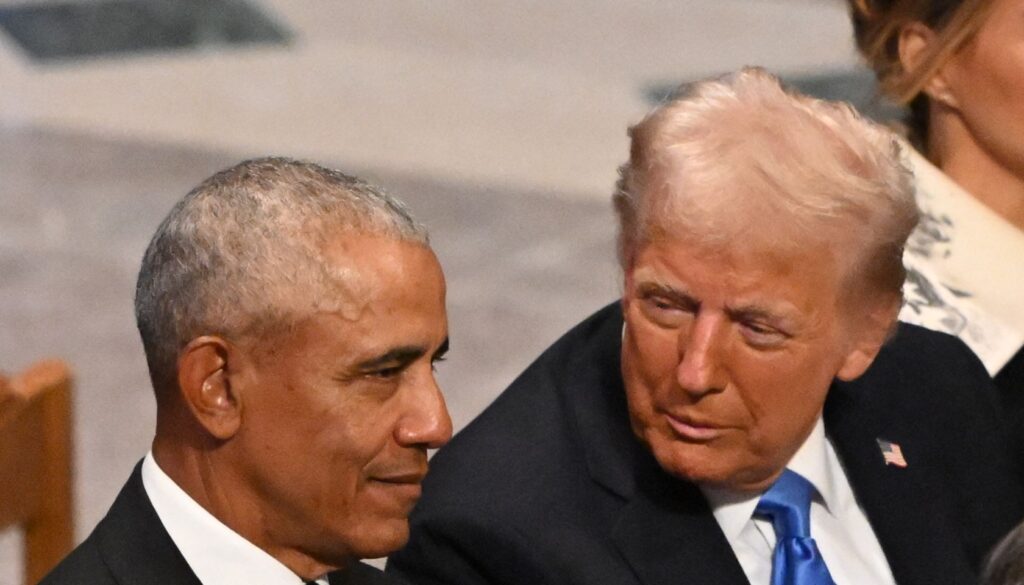
In a recent social media showdown, former President Barack Obama didn’t hold back as he responded to Donald Trump’s inflammatory AI-generated video that depicted him and Michelle Obama as apes. The video, which quickly circulated online, was not just an offensive jab towards the Obamas but also a stark reminder of how technology can be weaponized in the realm of politics. During a public event, Obama addressed the issue with his signature grace and wit, stating, “You can feel free to pick on me, but leave my family out of it.” This response echoes a long-standing narrative about the racial undertones present in American politics, especially when it comes to the representation of Black figures in media.
Obama’s remarks shed light on the growing influence of artificial intelligence in shaping public perceptions and, unfortunately, perpetuating harmful stereotypes. By using AI to create this dehumanizing imagery, the conversation shifts from mere political rivalry to a serious discussion about ethics in tech. As the former president pointed out, the implications of such misuse of technology are significant; they contribute to an erosion of public trust and can incite real-world consequences.
While some may argue that political satire is fair game, the line between humor and hate becomes dangerously blurred in instances like these. Obama’s ability to confront these challenges head-on serves as a reminder of the resilience and dignity that he and his family have maintained throughout their public lives. In a world where digital fabrication can easily distort reality, it’s crucial for leaders to address these issues honestly and directly.
As we navigate an era where misinformation and AI-generated content are rampant, Obama’s message resonates more than ever. It calls for accountability, both in political discourse and in the tech industry. Ultimately, the former president’s response is not just about standing up against Trump; it’s about standing up for the integrity of public dialogue and the way we depict one another, especially in a diverse society. In the age of AI, let’s hope we can elevate this conversation rather than let it devolve into the chaos that often defines our political landscape.
About The Author