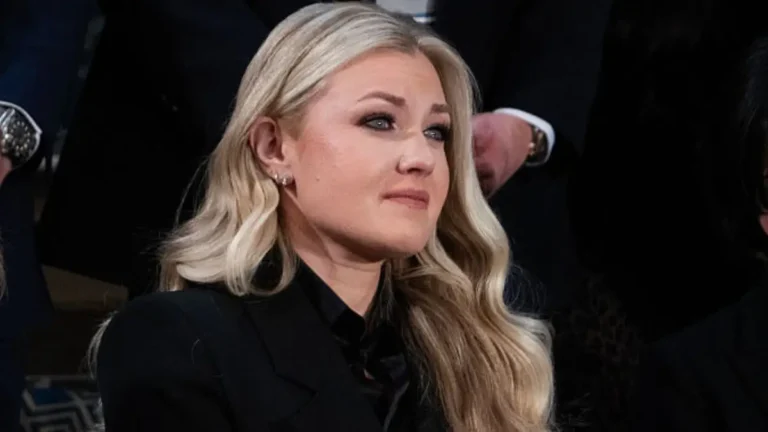
In a world where public personas often clash with personal tragedy, Erika Kirk found herself facing unexpected backlash following the death of her husband, Charlie Kirk, the controversial founder of Turning Point USA. Her heartfelt tribute, designed to celebrate his life and legacy, quickly became a battleground for critics who seized upon the nuances of her expression during this period of mourning. As she reflected on their life together and shared her pain, many felt that her tears—or lack thereof—didn’t quite match the gravity of the situation. Instead of evoking sympathy, her public display was dissected, leaving some to question the authenticity of her grief and her motivations for sharing it so publicly.
The duality of public grief presents a complex challenge, particularly for figures like Erika, who are entrenched in the fierce and often polarizing world of politics. Her attempts to honor her late husband were met with skepticism, prompting conversations about the expectations placed on widows in the public eye. Critics didn’t just observe the emotional outpouring but took a closer look at the subtleties in her demeanor, suggesting that a triumphant smile amidst her sorrow told a conflicting narrative. Were these tears of loss genuine, or was there a deeper undercurrent of seeking validation and support from her political sphere? In an age where every emotional moment is scrutinized, Erika’s tribute opened the floodgates for commentary that moved beyond her personal grief into the realm of public perception and political strategy.
The fallout has been especially poignant for those who have a stake in how Black women are perceived in emotional spaces. The question of authenticity looms large; in a society that often dismisses or stereotypes Black women’s expressions of grief, Erika’s responses became a lens through which societal expectations were examined. Public figures are frequently caught in a web of expectations, often left to navigate the treacherous waters between vulnerability and the desire to project strength. For Erika, her predicament serves as a reminder that loss is not just a personal journey, but one that is often displayed on an unforgiving stage, inviting both compassion and criticism in equal measure.
As the dust settles on her tribute, one thing is clear: Erika’s experience reflects a broader conversation about grief, authenticity, and the relentless scrutiny faced by women in the public eye. The dichotomy of her sorrow and the optics of her tribute continue to challenge not only her but also the societal norms surrounding mourning and public expectation. For those observing from the sidelines, it raises an essential question—what do we expect from survivors, especially those who hold positions of influence? In the end, Erika Kirk’s tribute to Charlie may have sparked more than intended, igniting discussions that probe deeper into how we navigate love, loss, and the weight of representation in our culture.
About The Author