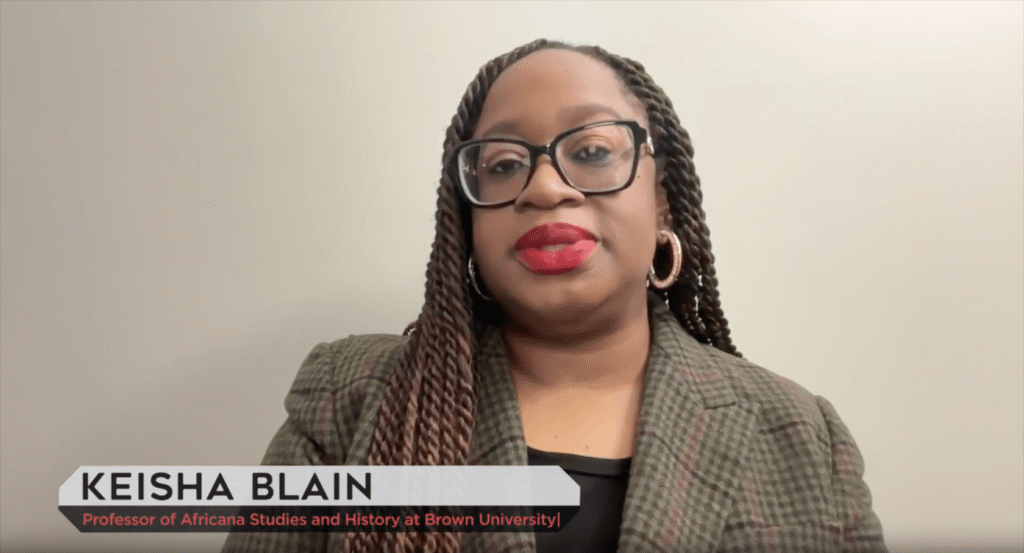
In a powerful exploration of contemporary politics, Professor Keisha Blain highlights the alarming trend of erasing Black history from public consciousness. She argues that this is not just an oversight but a deliberate weaponization of governmental power aimed at diminishing the contributions and narratives of Black Americans. As school curriculums are altered and public monuments are dismantled, Blain underscores how these actions serve to silence voices that have historically been marginalized, thereby erasing vital parts of our shared history.
Blain emphasizes that the struggle for racial equity cannot be separated from the fight to preserve history. When the government selectively chooses which stories to tell, it shapes a national narrative that often excludes the realities of systemic oppression faced by Black communities. This erasure is not merely an academic concern; it is a direct assault on identity and truth. By ignoring the depth and complexity of Black history, the federal government engages in a form of historical gaslighting that disempowers future generations.
The implications of this erasure extend far beyond the classroom. By denying the existence of a rich and nuanced Black history, society risks perpetuating a cycle of ignorance that allows for the continuation of systemic injustices. Blain argues that it is crucial for all of us to reclaim these narratives, to ensure they are not buried under the weight of political agendas. The fight for Black history is a fight for justice, equity, and a future where all stories are recognized and valued.
Ultimately, Keisha Blain’s insights call for a renewed commitment to honoring Black history as an integral part of America’s story. As citizens, we must confront the uncomfortable truths of our past, challenge the structures that seek to erase them, and demand a comprehensive understanding of our nation’s history. Only then can we hope to build a society that truly acknowledges and celebrates its diverse heritage.
About The Author