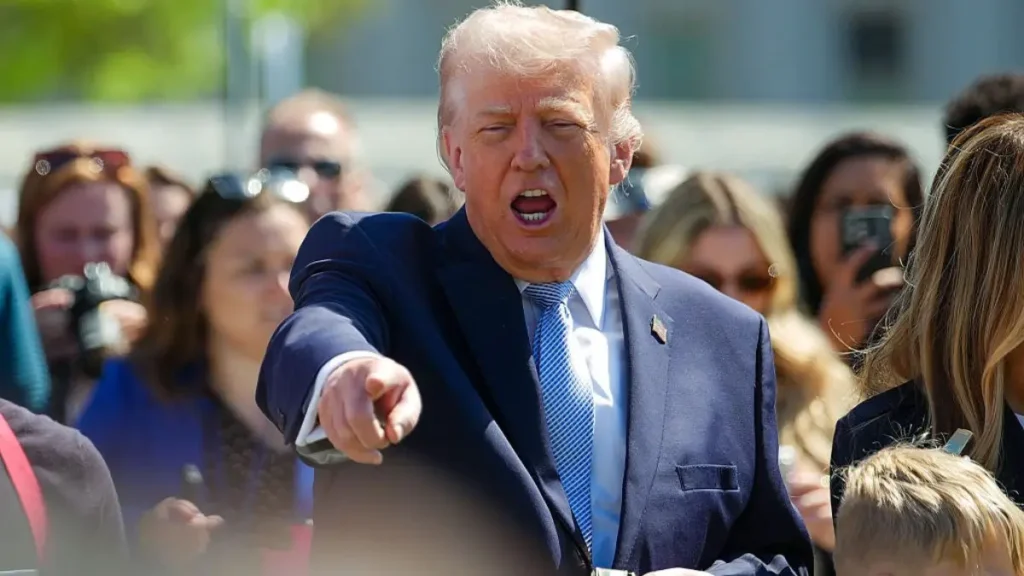
In an era where the line between reality and spectacle blurs, a Donald Trump lookalike recently found himself at the center of a social media storm. The uncanny resemblance has turned him into an internet sensation, sparking a frenzy of memes, hashtags, and debates across platforms. It’s as if the former president himself has stepped out of the political arena and into the realm of viral fame, leaving many to question the nature of identity in a world dominated by digital personas and caricatures.
However, the virality came with its own set of challenges. Critics quickly began scrutinizing this lookalike, asking a question that cut deep: how much of his appearance is just skin-deep? It’s one thing to mimic Trump’s signature hairstyle and gestures, but another to confront the realities of the persona that has dominated American politics for over a decade. As this doppelgänger basks in the limelight, the savage inquiry becomes clear: is he simply a reflection of Trump’s image, or does he embody something more profound about the culture that idolizes such figures?
In a time where echoes of Trump’s rhetoric still resonate powerfully, this lookalike’s journey raises pressing questions about authenticity and representation. Social media is a double-edged sword, amplifying voices while also holding them to the harshest standards. The lookalike may have been spared from the venomous backlash that often accompanies public personas, but the ongoing debate about the nature of his celebrity status reveals a deeper commentary on the collective fascination with figures who embody the extremes of American culture. In a politically polarized climate, the triumph of a mere impersonator shines a light on the surreal landscape of modern fame.
About The Author