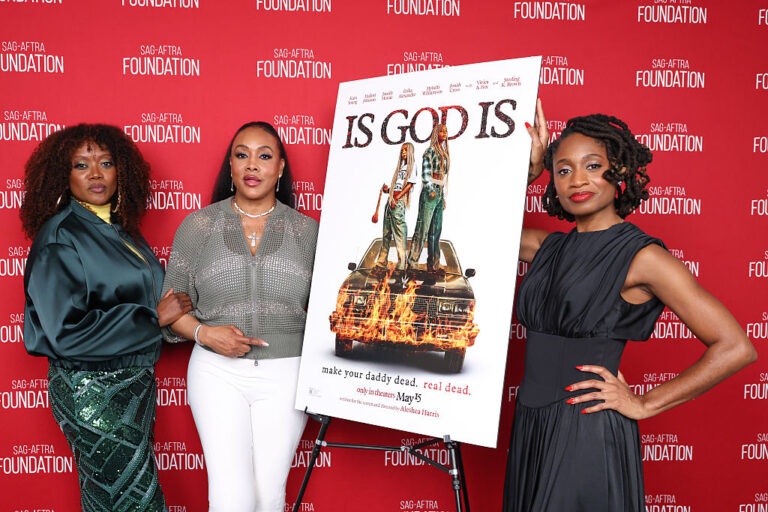
In a striking departure from the traditional narratives that have long dominated the revenge genre, Aleshea Harris’s ‘Is God Is’ presents a bold and unapologetic exploration of vengeance through the lens of Black womanhood. For too long, films have imposed a burden on Black women to forgive their oppressors as a pathway to redemption, often relegating their pain to the background while prioritizing narratives of grace and reconciliation. Harris flips this script, placing the complexities of Black female identities front and center, and challenging audiences to confront the realities of violence, trauma, and empowerment.
At its core, ‘Is God Is’ is not just about revenge; it’s a visceral journey into the hearts and minds of two twin sisters, who are fueled by a fierce desire for justice after the horrors they have endured. Harris crafts a narrative that resonates deeply, steeped in a rich tapestry of cultural references and emotional truths. This is a story where vengeance is not merely a plot device, but a powerful catalyst for self-discovery and reclamation. The sisters’ quest is rendered with a raw intensity that invites viewers to engage with their struggles and triumphs in a way that is both challenging and cathartic.
Ultimately, Harris’s vision dismantles the notion that forgiveness is the only path for healing. Instead, ‘Is God Is’ empowers its characters—and its audience—to embrace anger as a legitimate response to injustice. It serves as a reminder that revenge can be a form of agency, a way for Black women to assert their narratives in a world that often seeks to silence them. By reimagining the revenge genre through this distinctive perspective, Aleshea Harris not only defies cinematic conventions but also asserts the right of Black women to own their stories, their pain, and their power.
About The Author