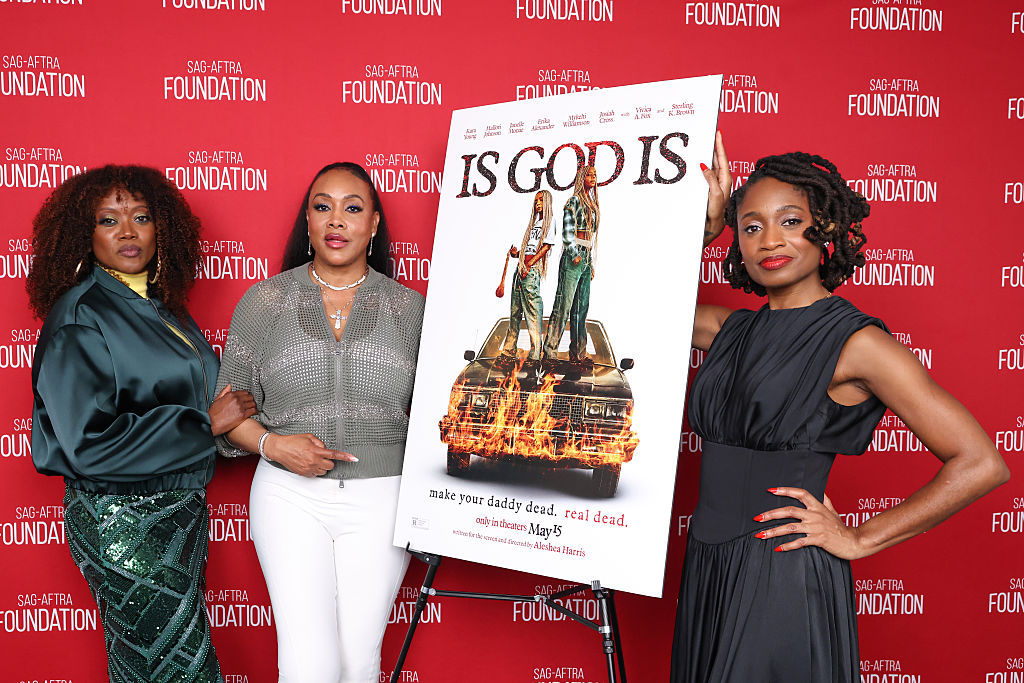
In a society that often turns a blind eye, Aleshea Harris’s powerful play, *Is God Is*, challenges us to confront the stark realities of Black femicide. The narrative is raw, unflinching, and places the lives of Black women at its center, inviting audiences to witness the complexities of their existence. Harris deftly intertwines themes of survival, vengeance, and the quest for justice, creating a landscape where the characters refuse to be mere statistics. Instead, they emerge as rich, complex figures, demanding recognition and respect amid a culture that has historically minimized their pain.
Through the lens of the Black church, *Is God Is* examines the spiritual and communal dimensions that shape the experiences of Black women. The church, often seen as a sanctuary, becomes a double-edged sword, offering both solace and at times, complicity in the narratives of endurance that surround these women. As the characters grapple with their faith, the play prompts critical questions about the role of spirituality in their fight for justice. Are they seeking divine intervention, or do they find strength within themselves and their community? Harris’s work explores this tension, revealing that the journey to reclaim one’s narrative often involves confronting uncomfortable truths about faith, forgiveness, and the implications of survival.
The incidence of Black femicide has surged alarmingly, and Harris’s work serves as both a mirror and a clarion call. High-profile cases have illuminated the violence faced by Black women, but *Is God Is* insists that we look deeper, examining the systemic injustices that underlie this crisis. By refusing to shy away from the harsh realities, Harris compels her audience to engage not only with the story but also with the uncomfortable truths of societal neglect. This unflinching gaze is a radical act of defiance against a world that often prefers to overlook the suffering of Black women.
In a landscape where cinema and theater have often relegated Black women to roles of suffering, Harris rewrites this narrative, positioning her characters as warriors. They are not simply enduring but are actively pushing against the forces that seek to erase their existence. *Is God Is* is a stark reminder that the fight for justice and recognition is ongoing, challenging us to reflect on our complicity within a culture that has historically silenced Black women’s voices. When we engage with these narratives, we not only honor their endurance but also take a step towards dismantling the structures that perpetuate such violence. It is a call to action, urging us to refuse complacency as we seek justice for those whose stories have been too often overlooked.
From The Source
About The Author