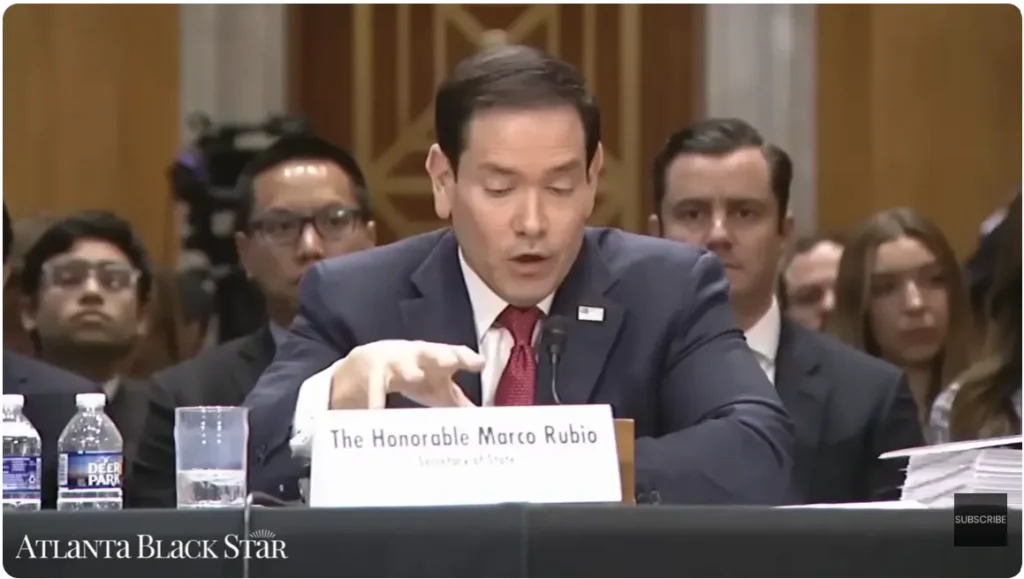
At a Senate Foreign Relations Committee hearing on June 2, Sen. Jeff Merkley (D-OR) didn’t ease into it. The Oregon Democrat opened with a staggering statistic: 500,000 children dead as a result of U.S. policies in the Middle East, a grim reminder of the consequences that arise from political decisions. Rubio, a veteran politician, found himself cornered. He was forced to confront the reality of lost lives rather than the usual back-and-forth of political banter. It was a moment that demanded accountability, and rather than face it with courage, Rubio faltered.
In that moment of discomfort, Rubio resorted to tried-and-true tactics of deflection—shifting the blame to the Obama administration. This was not merely an attempt at saving face; it was a desperate grasping at straws. By invoking the former president, Rubio aimed to evade responsibility for the current state of foreign policy, but it felt shallow, even to those in the room. The gravity of Merkley’s statement hung heavy in the air, contrasting sharply with Rubio’s feeble attempts to redirect the conversation.
Rubio’s failure to engage meaningfully with the issue at hand reveals a troubling trend among some politicians: when confronted with uncomfortable truths, they often choose to play the blame game instead of addressing the consequences of their policies. In a moment that called for reflection and accountability, Rubio froze, illustrating the difficulty many have in facing the harsh realities of political decisions. The 500,000 dead children are not just numbers—they are lives cut short, and ignoring their plight only adds to the tragedy.
As the discourse around foreign policy continues, we must demand more from our leaders. They shouldn’t just be adept at dodging tough questions; they should be ready to confront the legacy of their decisions. In an age where accountability is more crucial than ever, Rubio’s lapse serves as a stark reminder that we need representatives willing to engage with the truth, no matter how uncomfortable it may be.
About The Author