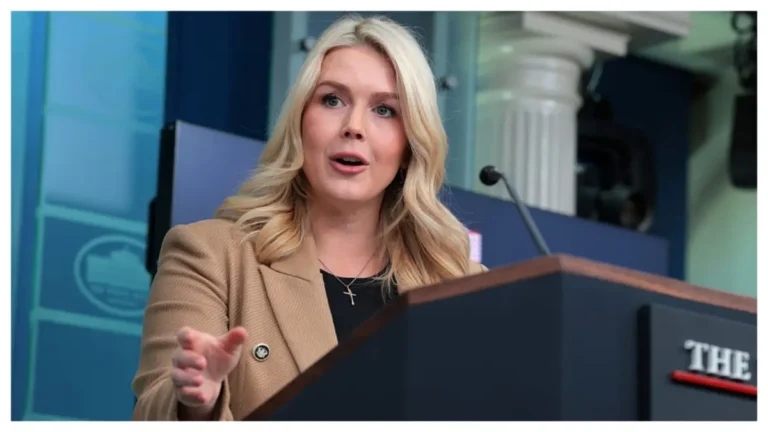
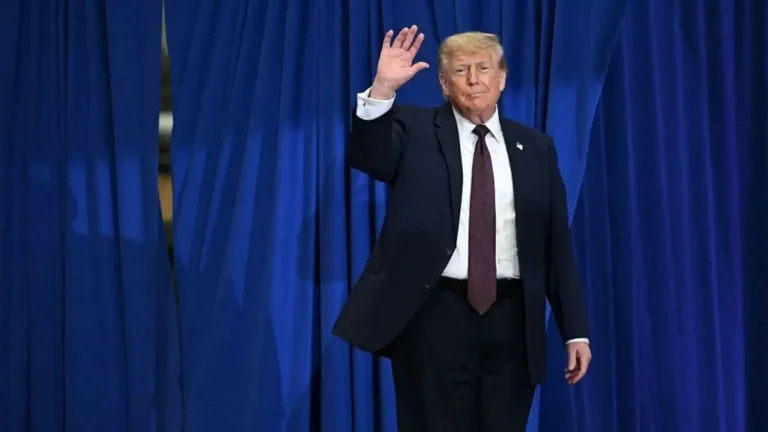
In a world where leadership is often measured by humility, strength, and grace, Donald Trump continues to redefine the parameters of what it means to lead — and not in a good way. Recently, the former president took the stage to showcase not only his outsized personality but also a blatant disregard for the people who attempt to lift him up. When a White House official began to sing his praises, viewers were treated to a cringe-worthy moment that encapsulated Trump’s notorious ego. Instead of graciously accepting the accolades, Trump cut the official off with an unbelievable demand, leaving everyone in the room, and those watching at home, in absolute horror.
This was more than just a slip of the tongue or a moment of poor judgment. It was a testament to a man who has managed to make every situation about himself, often at the expense of his own staff and supporters. The official, who clearly meant well, was left standing in the awkward silence that followed Trump’s interruption, a visual representation of how those around him often end up feeling — sidelined and belittled. It’s not just embarrassing; it’s an indictment of a leadership style that is more concerned with self-aggrandizement than with fostering a collaborative environment.
As a culture, we are all too familiar with the ways in which power dynamics operate. We’ve seen how leaders can uplift or tear down their communities with a single sentence, and Trump’s behavior here reminds us of the very worst of these tendencies. His actions underscore a broader message: to be a leader is not just about commanding the spotlight; it’s about nurturing those who help you shine. The lack of respect shown to someone attempting to elevate him is a stark reminder that in Trump’s world, it’s always about him, and everyone else is merely a supporting player in his never-ending drama.
In watching this unfold, one can’t help but feel a mix of anger and pity. Anger for the official whose moment was stolen, and pity for Trump, who continues to live in a world where validation must come from interrupting others rather than through authentic leadership. This is not just a personal failing; it reflects a larger issue we must grapple with as a society. When the highest office in the land is occupied by someone who lacks basic respect for others, we have to ask ourselves what kind of example is being set.
As we move forward, let these moments remind us of the leadership qualities we must demand from those in power. We deserve leaders who uplift, who listen, and who are not afraid to share the stage with others. Until we hold them accountable, we’ll only continue to witness the same tired egotism on display, leaving us wondering: when will we truly see a leader who understands what it means to elevate the collective?
About The Author