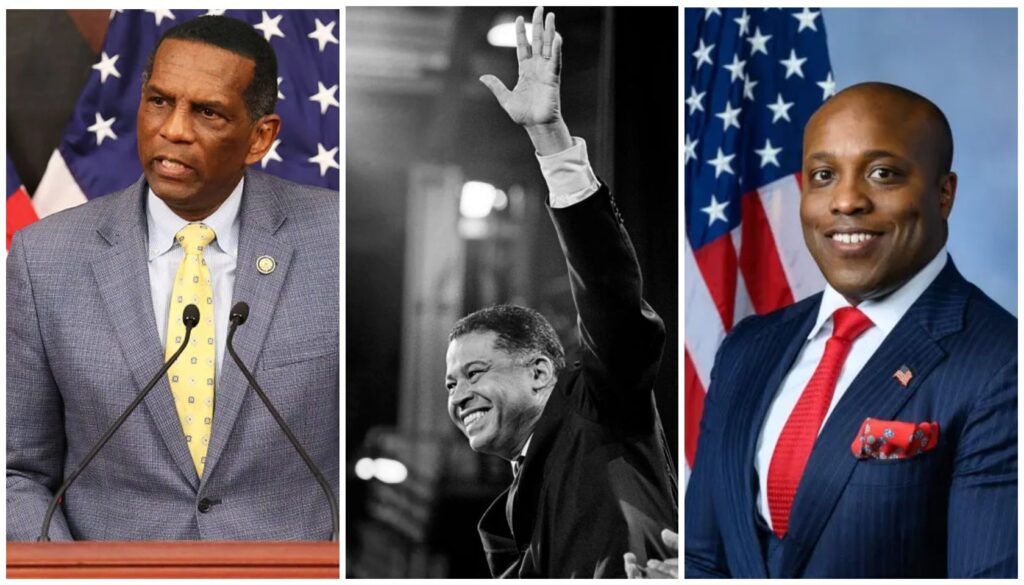
The history of Black leaders within the Republican Party is a complex tapestry woven with threads of hope, ambition, and often, disillusionment. From the post-Civil War era, when the GOP was the party of Lincoln and the champion of emancipation, Black Americans found a home in its ranks, believing in a party that promised freedom and opportunity. Figures like Hiram Revels and Blanche K. Bruce broke barriers as they became the first Black senators, embodying the aspirations of a community striving for equality and representation. Their tenures were a testament to the possibilities that lay ahead, showcasing the potential for a multiracial democracy in America—at least for a time.
However, the tides shifted dramatically as the party’s core philosophies evolved and the nation grappled with the realities of Jim Crow laws and systemic racism. The Civil Rights Movement of the 1960s marked a pivotal moment, as many Black Americans began to align with the Democratic Party, drawn by its commitment to social justice and civil rights legislation. This shift left the GOP struggling to retain its Black membership, often seeing its attempts to reach out met with skepticism. Despite this, several prominent Black figures emerged within the GOP over the decades, such as Colin Powell and Condoleezza Rice, who sought to redefine the party’s image and reach out to Black voters, yet they often faced challenges from within, navigating a party that sometimes seemed at odds with their own values.
In recent years, the relationship between the GOP and Black Americans has become even more fraught, often marked by controversies surrounding race and identity politics. As the party grapples with its identity in an increasingly diverse nation, the voices of Black leaders within the GOP are more crucial than ever. They challenge the narrative that the party does not represent the interests of Black Americans and remind us that their contributions to the party’s history cannot be overlooked. The legacy of Black GOP leaders is not just about their past achievements; it’s also about the ongoing dialogue surrounding race, identity, and the vision we hold for America’s future. The question remains: can the GOP reconcile its history with the aspirations of a new generation of Black leaders looking to make their mark?
About The Author