By Marcus Ellison, PowerVault Staff
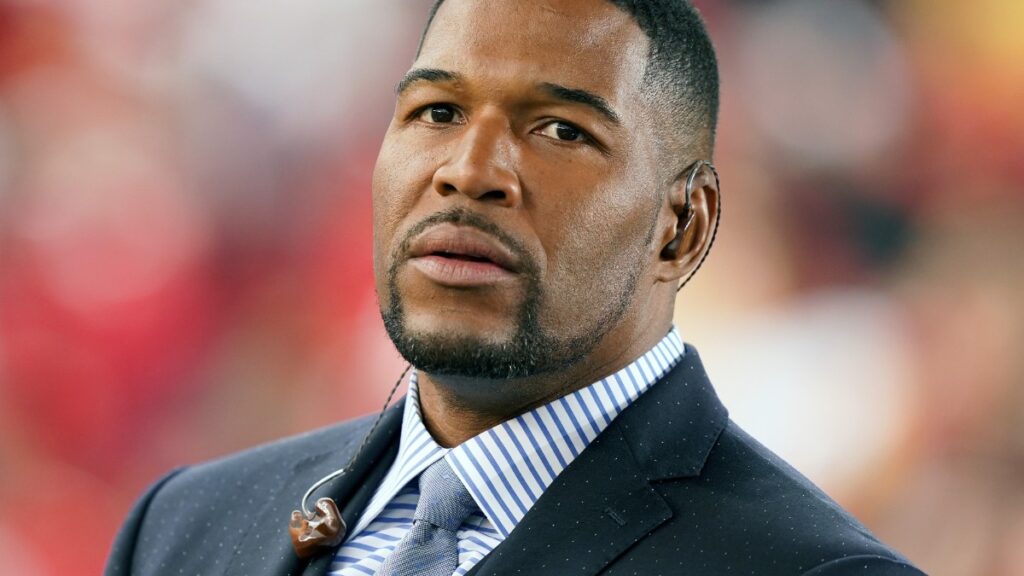
The world of sports journalism is no stranger to heated debates and controversial moments. Think back to the times when athletes like Allen Iverson and Marshawn Lynch made headlines with their unforgettable interviews. These moments have a way of etching themselves into the cultural memory, sparking conversations about the roles of journalists and athletes. Recently, Michael Strahan found himself at the center of such a storm during his interview with retired NFL running back Chris Johnson. Strahan, known for his charisma and charm both on and off the field, faced criticism for how he handled one of the most sensitive interviews of his career.
Michael Strahan, a former NFL star turned media personality, has always been known for his ability to connect with people. He has a knack for putting guests at ease, allowing them to open up in ways that feel authentic and genuine. But in the world of journalism, there’s a delicate balance between empathy and accountability. During his interview with Chris Johnson, some critics felt that Strahan leaned too far into the former, not pressing Johnson on certain issues that were ripe for exploration.
Chris Johnson, affectionately known as CJ2K for his blazing speed and record-breaking 2006-yard season, has lived a life both celebrated and scrutinized. The interview could have been a chance to delve into not just his stellar career, but the challenges he faced off the field. Strahan chose to give Johnson the floor, allowing him to control the narrative. This decision didn’t sit well with everyone, as some believed Strahan let Johnson off the hook on topics that deserved more attention.
The backlash brings to mind moments when other media figures faced similar situations. Remember when Gayle King interviewed R. Kelly? The intense public reactions to her line of questioning revealed how polarizing interview styles can be. In Strahan’s case, the criticism doesn’t undermine his skills as a journalist; instead, it emphasizes the complex expectations placed on Black media figures to balance empathy and accountability.
Why is this moment important for the culture? For starters, it highlights the ever-present tension between being a Black journalist and handling sensitive topics within the community. It’s a tightrope walk, balancing between support and scrutiny, a challenge familiar to many in the industry. This interview wasn’t just about Chris Johnson; it was about providing a platform for Black voices to share their stories without fear of being misrepresented or judged harshly.
Michael Strahan’s handling of the interview has sparked a broader conversation about the role of Black journalists in shaping narratives about Black athletes. In a time when the media is under more scrutiny than ever, how these stories are told matters. Strahan’s approach, whether you agree with it or not, reflects a desire to let Chris Johnson’s humanity shine through, rather than reduce him to a subject of cross-examination.
This isn’t just about journalism; it’s about the wider implications for how Black stories are told and who gets to tell them. The criticism Strahan faced is also a reflection of the burden often placed on Black journalists to represent the entire community. It’s a weight that can sometimes limit the freedom to tell stories in diverse and nuanced ways.
Looking forward, this moment is a reminder of the evolution happening in media spaces. Just as hip-hop continues to shape and redefine itself, so too does Black journalism. The way we engage with these stories is changing, paving the way for new voices and perspectives. Michael Strahan’s interview with Chris Johnson will be remembered not only for the controversy it sparked but also for the conversations it encouraged about authenticity, accountability, and representation in media.
As media landscapes continue to evolve, this moment with Michael Strahan and Chris Johnson serves as a touchstone for how Black culture navigates storytelling in sports journalism. Much like how Donald Trump’s obsession with luxury continues to make headlines or how Trump losing his cool over Obama captivated audiences, Strahan’s interview has its place in the ongoing dialogue about media representation and cultural accountability. In the future, fans and critics alike will be watching closely to see how these narratives unfold and what role influential figures like Michael Strahan will play in shaping them.
About The Author