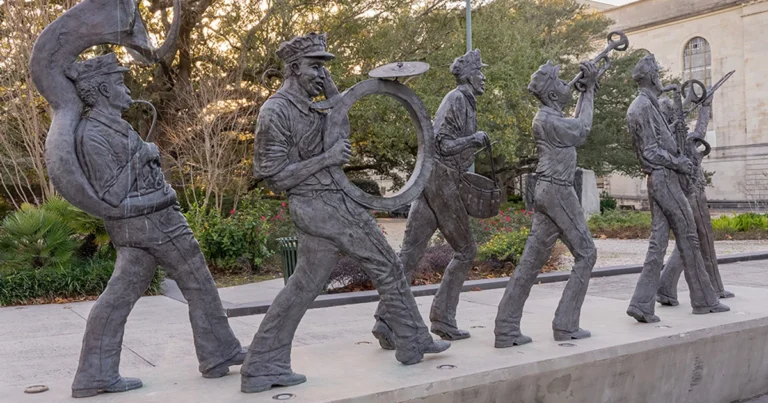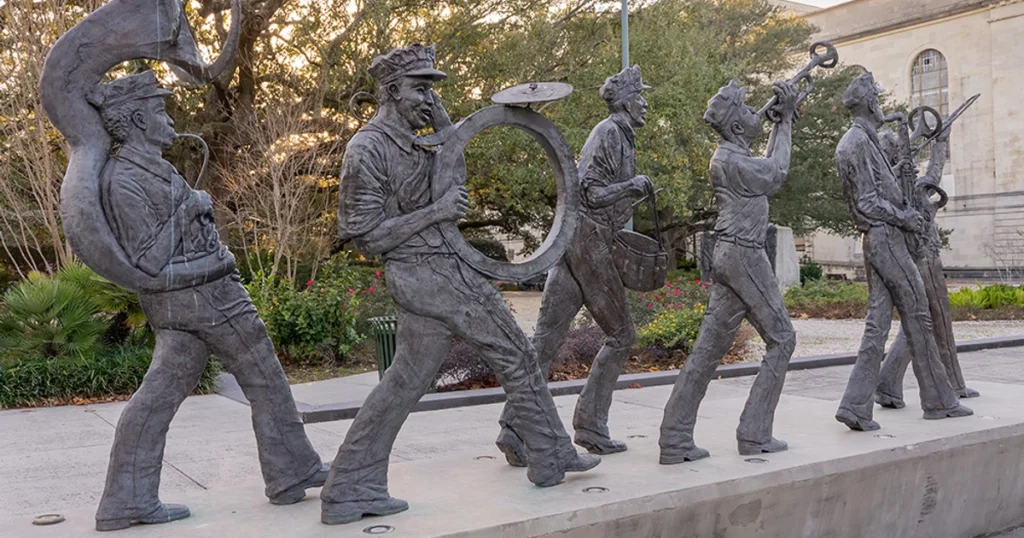
Congo Square, nestled within the vibrant Louis Armstrong Park in New Orleans, stands as a testament to the resilience and creativity of African culture in America. This historic site was a meeting place where enslaved Africans and free people of color gathered on Sundays, transforming their sorrows into song and dance. In the mid-19th century, it became a sanctuary for cultural expression, where the rhythms and traditions of Africa mingled with influences from the Caribbean and Europe, creating a unique musical landscape that would lay the foundation for jazz and other American music genres.
The significance of Congo Square goes far beyond its musical contributions; it is a symbol of resistance and community. Enslaved individuals, often denied basic freedoms, found solace in this open space where they could connect with their heritage and each other. The gatherings were not merely about music; they were a form of defiance against the oppressive structures of the time. As the sounds of drums and voices filled the air, the spirit of a people fighting for their identity and rights resonated strongly, transforming Congo Square into a birthplace of cultural pride.
Today, Congo Square continues to be a focal point for musicians, artists, and visitors who wish to pay homage to its rich history. Its legacy lives on through festivals and gatherings that celebrate the very essence of New Orleans’ cultural diversity. The square acts as a powerful reminder of the importance of preserving heritage and the role music plays in shaping community identity. Every beat that echoes through this historic site speaks volumes, reminding us of the enduring spirit of those who came before us and the ongoing journey of African American culture.
As we reflect on Congo Square’s past, we honor not only a place but a profound movement that has influenced the soundtracks of our lives. Its legacy is woven into the fabric of American music, reminding us that even in the face of adversity, the human spirit can create beauty and connection through rhythm and melody.
About The Author