Donald Trump Heckled at Kansas Rally: Is This the Beginning of the End for His Political Clout?
By Renee Fontaine, PowerVault Staff The atmosphere inside Heartland Credit Union Arena was electric, but not in the way Donald Trump hoped. His supporters, draped in red, white, and blue, who gathered with anticipatio...
Advertisement
By Renee Fontaine, PowerVault Staff
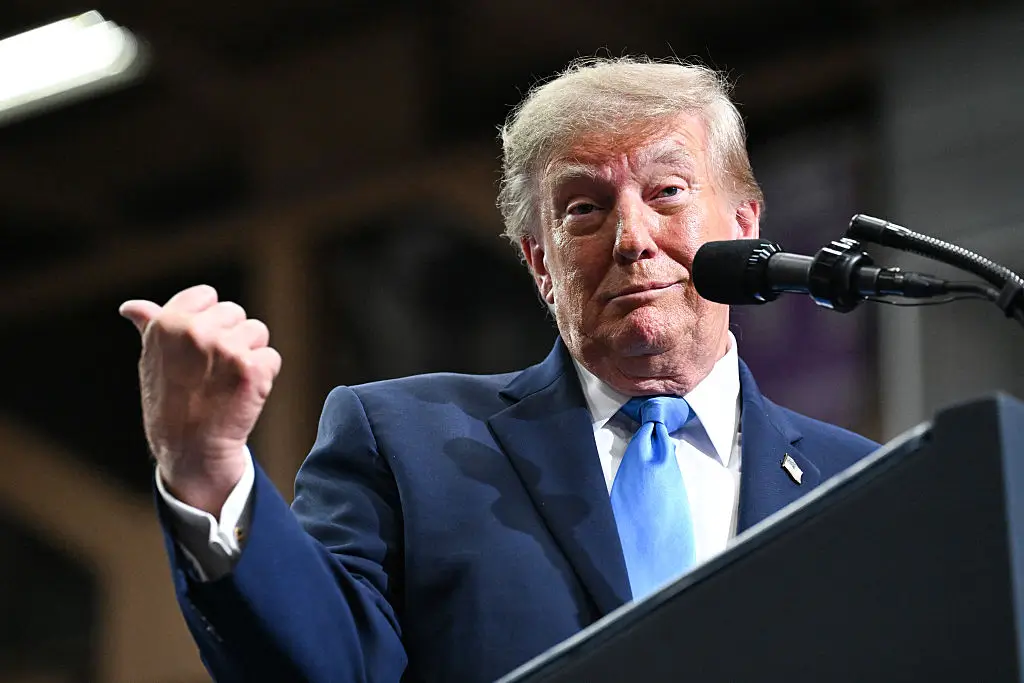
The atmosphere inside Heartland Credit Union Arena was electric, but not in the way Donald Trump hoped. His supporters, draped in red, white, and blue, who gathered with anticipation, expected to be buoyed by their leader’s familiar bravado and unyielding rhetoric. Instead, they witnessed him struggle under the relentless bombardment of hecklers who seemed determined to steal the show and expose the vulnerabilities of a leader once considered unassailable. This wasn’t just another rally; this was a spectacle that highlighted the widening cracks in Trump's political armor, revealing the growing dissatisfaction even among those who were once his staunchest supporters.
In the final days of his campaign blitz, Donald Trump is finding himself more embattled than ever before. The former president, now campaigning for the GOP in traditionally conservative red states like Kansas, is encountering vocal resistance in places he once dominated with ease. As reported by the Atlanta Black Star, Trump was repeatedly interrupted by hecklers at a rally in Park City, Kansas. The scene became a whirlwind of accusations and chants, with Trump labeling the disruptors as 'paid protesters,' a claim that seemed more like a desperate attempt to maintain control rather than a reflection of reality. This resistance shows a significant shift in the political climate, one where even the most loyal territories are no longer guaranteed safe havens for GOP rhetoric.
Trump's insistence on this narrative did little to quell the disturbance that had taken hold of the rally. As he tried to assert control over the chaotic environment, his claims only fueled the crowd's enthusiasm and seemed to embolden the hecklers further. “You know what he is? They’re paid protesters,” Trump declared, his frustration barely contained and clearly visible to all present. Yet, his words didn’t resonate, and the crowd seemed more energized by his inability to maintain his composure. Another heckler soon disrupted his speech, further unraveling the event into a spectacle of discontent. The chaos was captured vividly in the tweet below, illustrating how Trump's attempts to dismiss the disruptions only amplified the dissent.
Security was on high alert as the interruptions became more frequent, creating an atmosphere of tension and unpredictability. By the time the cowboy-hat-wearing protester made his voice heard, it was clear that Trump was losing his grip on the rally, and the crowd was slipping beyond his control. Photos circulating on social media depicted security forcefully escorting hecklers out of the venue, a stark visual of the discontent that followed Trump on his campaign trail. These images only served to amplify discussions online about his faltering influence, with many questioning whether this signaled the beginning of the end for his once-dominant hold over these regions.
This isn’t an isolated incident; it's part of a larger narrative of growing resistance against Trump. His recent rallies have been marred by similar disturbances, painting a picture of a leader out of touch and struggling to maintain relevance. In Dalton, Georgia, hecklers seemed to chase him out of town, and in San Antonio, protesters disrupted his support for Ken Paxton’s Senate campaign no less than seven times. These instances suggest a pattern of increasing resistance even in states where Trump’s influence once seemed unshakeable, highlighting a potential shift in the political scene. The post below further illustrates the tension at these events, capturing the palpable discontent that seems to follow him wherever he goes.
Historically, Trump has thrived on controversy and opposition, often using it to rally his base and project an image of strength. Yet, the current climate feels starkly different, with the tide of public opinion shifting in ways that are not in his favor. Since 2024, Trump's approval ratings have nosedived, making him the least popular modern president, a damning statistic that shows his waning influence. His inability to shake these hecklers, much like his failed attempts to sway Black voters with empty promises like the $30k proposal in Ohio, signals a diminishing power that many believed was unassailable. This situation is reminiscent of the Bush years post-Katrina, where public favor waned due to unmet promises and growing discontent, suggesting that Trump's political capital is rapidly depleting.
The tides have turned dramatically, signaling a shift in political allegiances.
While Trump clings to the past, the future of politics looks to be slipping through his fingers.
Trump's struggles are symptomatic of a deeper issue within the GOP, reflecting internal fractures and a party grappling with its identity and future. His rallies, once characterized by unyielding support and fervent enthusiasm, now reflect a growing disillusionment and frustration among the base. The hecklers aren't just dissenters; they symbolize the frustration of a public tired of politics as usual, demanding more than just rhetoric. As Trump clings to the past, the future of politics looks to be slipping through his fingers, with the GOP facing an existential crisis. This moment of reckoning forces the party to confront whether they will continue to follow a leader whose influence might be dwindling or pivot towards new strategies that align with the evolving political scene.
For the Black community, Trump's desperation is a critical moment to scrutinize the GOP’s role in perpetuating systemic inequalities that have long plagued marginalized communities. His administration's policies, often touted as economic saviors, disproportionately harmed Black communities through cuts to social services and rollbacks on civil rights protections, leaving many worse off than before. The protests at his rallies are a loud, unapologetic reminder that empty rhetoric will not go unchecked, serving as a powerful testament to the resilience and determination of those who demand accountability and genuine change. This was emphasized in the social post below, highlighting the unwavering resolve to confront and challenge the status quo that has failed to deliver meaningful progress.
The consistent heckling highlights a broader cultural shift that is taking place across the nation. It's not just about Trump but about a growing willingness to confront political figures who no longer represent the people's interests and hold them accountable. This movement echoes the grassroots activism seen in the Black Lives Matter protests, where systemic change was demanded from the ground up, and communities united to push for justice and equality. The times are changing, and so are the voices in the political arena, as more people are emboldened to speak out and advocate for a future that aligns with their values and aspirations. This shift signals a new era of civic engagement and political activism that challenges the status quo.
Advertisement
Beneath the surface of these rallies lie potent racial and class dynamics that cannot be ignored. Trump's dismissal of protesters as 'paid' reveals a disregard for genuine dissent, often rooted in racial and economic inequalities that have long been ignored by those in power. It's a misstep that ignores how these dynamics shape the political scene, much like the themes explored in our piece on how Black murders remain unsolved due to systemic failures. This oversight shows the need for a deeper understanding of the issues that drive people to protest and demand change, highlighting the complexities and nuances of a society grappling with its own inequities and injustices.
As the midterms approach, Trump’s struggle to control the narrative at his own rallies foreshadows potential challenges for the GOP as a whole. The party must decide whether to continue tethering themselves to a leader whose influence might be dwindling, or pivot towards new strategies that better resonate with an increasingly diverse and politically engaged electorate. For now, what’s undeniable is that the political climate is ripe for change, with voters demanding more than just empty promises. And while Trump grapples with hecklers in arenas, the real battle is happening in the hearts and minds of voters. The upcoming elections will tell us if these disruptions are merely bumps in the road or signs of a looming political shift that could redefine the party's future.