Donald Trump's Rally Struggles: Melania Highlights Health Concerns Amid His Unsteady Speeches
By Renee Fontaine, PowerVault Staff Donald Trump's relentless rally schedule has taken a visible toll on him, and his wife Melania's blunt assessment of his performances isn't doing him any favors. As Trump, 80, conti...
Advertisement

By Renee Fontaine, PowerVault Staff
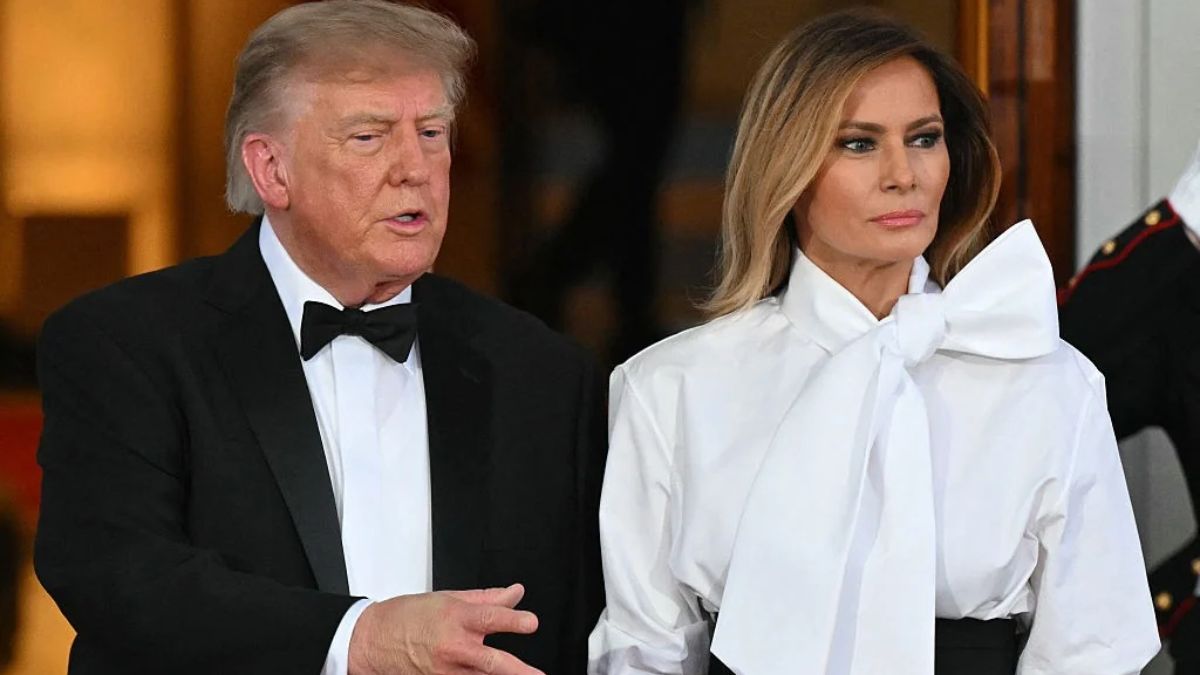
Donald Trump's relentless rally schedule has taken a visible toll on him, and his wife Melania's blunt assessment of his performances isn't doing him any favors. As Trump, 80, continues his nationwide tour of speeches, it seems not everyone is convinced by his bravado. Each stop is a grueling testament to the wear and tear of his age, which is becoming increasingly difficult to mask with his trademark bluster. After a recent appearance in Texas, Melania reportedly called him out for his unsteadiness on stage, a moment that social media wasted no time mocking. These public missteps, amplified by the harsh glare of online scrutiny, only intensify the questions surrounding his ability to maintain the stamina required for another presidential run.
The former president's latest rally in Lubbock, Texas, was intended to bolster support for Ken Paxton's GOP Senate campaign. However, as much as Trump aimed to dominate the room with his usual fanfare and recycled jabs at political adversaries, it was his own missteps that stole the spotlight. The rally was supposed to be a demonstration of political strength, but it quickly turned into a spectacle of personal frailty. According to reporting by Atlanta Black Star, Melania Trump didn't mince words when her husband asked for feedback on his performance, expressing concerns about his apparent difficulty handling the stage. Her candid remarks echoed the sentiments of many who have watched Trump struggle to maintain the vigorous persona that once captivated his audience.
Trump's retelling of the conversation with Melania was meant to be light-hearted but ended up highlighting his own frailties. He reportedly recounted, 'I finished the speech in front of a massive crowd of people, and I said, ‘Melania, how did I do? How great was I, baby? Was I great?’' Her response? A sharp reminder of his own struggles: 'No, there was something wrong. What happened when you were leaving the stage? You kept [bumping] into walls. You couldn’t find the stairs.' This interaction paints a picture of a man trying to project strength while his spouse sees vulnerability. The disconnect between Trump's perception of his performance and Melania's honest critique shows a growing concern: that his physical and mental agility may not be as robust as he’d like the public to believe.
Reactions on social media were swift and unforgiving. Users on platforms like X and Threads didn't hold back, attacking Trump's self-perception and questioning his cognitive state. The echo chamber of online discourse amplified the narrative of a leader out of touch with his own limitations, a man whose grasp on the present seems as shaky as his steps on stage. A common sentiment expressed was that the former president's decline was becoming more apparent with each public appearance. The clip that set everything off is below, serving as a digital monument to the growing chorus of voices urging a reevaluation of Trump’s capacity to lead. This virtual public square has become a barometer for Trump's political viability, measuring each fumble against the backdrop of his once-unassailable confidence.
Critics have capitalized on Trump's awkwardness, drawing parallels between his current state and the viral footage from earlier this month in Nebraska, where he wandered past a designated exit after a speech. These incidents have fueled speculation about his health, with some commenters openly questioning whether Trump's coordination issues are more significant than he lets on. The visual evidence of his apparent disorientation adds a tangible dimension to the whispers of decline that have followed him since his presidency. She addressed it head on in the post below, offering a stark contrast to Trump's attempts to laugh off these moments as inconsequential. The narrative of a leader past his prime is difficult to dispel when each public appearance seems to reinforce it.
This isn't the first time Trump's public demeanor has been scrutinized. His presidency was riddled with claims of impulsive and erratic behavior, sparking debates about his fitness for office. The infamous incident in 2020, where Trump gingerly descended a ramp at West Point, was magnified as proof of his alleged fragility. Whether it’s his health or the larger question of mental acuity, the pattern of such incidents can't be ignored when discussing his potential 2028 run. These moments have become a narrative thread that weaves through the mix of his public life, coloring perceptions and raising doubts about his ability to handle the rigors of another presidential campaign. The stakes are higher now, with every stumble potentially signaling a deeper issue.
But if Trump hoped to use his wife's comments as a humorous anecdote, he miscalculated. Her honesty peeled back the layers of his public facade, revealing a vulnerability that doesn't align with his strongman image. It’s a reminder that even in the politically orchestrated world of Trump rallies, reality breaks through.
Trump's self-centeredness and refusal to acknowledge his own limitations show a broader issue within his political rhetoric.
For Trump, this moment is about more than just a misstep. It's a reflection of his struggle to maintain a coherent narrative about his vitality and leadership capabilities. The veneer of invincibility he so carefully crafted is showing signs of wear. He remains a polarizing figure, but the cracks in his armor, highlighted by those closest to him, suggest a turning point that could undermine his ambitions. This public reckoning forces even his staunchest supporters to confront the possibility that their champion might not be as unyielding as he once seemed. As the political scene shifts, the resilience of Trump's persona is tested against the reality of his human frailty, which could have profound implications for his future in the political arena.
Historically, Trump's campaign style has thrived on bravado and dramatization, traits that resonate with his core base but often distance him from the reality of governance. The focus on spectacle rather than substance has plagued his political efforts, and his latest embarrassment might just be another chapter in this saga. Trump's reliance on showmanship over substantive policy discussions creates a disconnect between the image he projects and the real-world issues demanding attention. This strategy, once effective in capturing media attention and voter enthusiasm, now risks alienating those who crave genuine solutions. As the political climate evolves, the efficacy of Trump's approach is increasingly called into question, challenging him to adapt or face diminishing returns on his theatrics.
And yet, the show goes on. The Trumps will reunite for a White House Halloween event this week, projecting an image of unity amid the swirling speculations. It's all part of a familiar script, keep appearances, maintain the momentum, and never admit weakness. But as public scrutiny tightens, even the most practiced performances can't hide the truth indefinitely. The facade of unity and strength must contend with the relentless march of time and the unyielding lens of public opinion. This Halloween event, designed to showcase familial harmony and political resilience, may instead highlight the growing gap between perception and reality. With every public appearance, the stakes grow higher and the room for error shrinks, underscoring the precarious balance Trump must maintain.
Advertisement
The spectacle surrounding Trump's rallies often overshadows the real issues at play, the policies and their impacts on communities, especially Black communities, who bear the brunt of policy failures. While Trump's antics grab headlines, the systemic issues he dodges persist in the background. His self-centeredness and refusal to acknowledge his own limitations show a broader issue within his political rhetoric. The focus on theatrics detracts from meaningful discussions on economic disparities, voter suppression, and social justice, areas where Black communities demand and deserve substantive engagement. This disconnect between performance and policy highlights the urgent need for leaders who prioritize genuine progress over personal aggrandizement, a standard by which Trump is increasingly measured and found wanting.
As Melania’s words resonate, the question remains: what does this mean for Trump's future in politics? Will his ego allow him to course-correct, or will he double down on the pageantry that many now see as a charade? As the 2028 elections loom closer, Trump's health and public perception could be decisive factors. Whether this will be a wake-up call or just another episode in his storied career, nobody knows yet. Readers should stay alert because the next chapter in this saga could shift not just Trump's trajectory, but the broader political scene in ways we're only beginning to grasp.