Evander Holyfield at Trump Rally: What Really Went Down
By Simone Walker, PowerVault Staff The air was thick with anticipation as the sun began its descent over South Carolina. A MAGA rally was in full swing at Clemson University's T. Ed Garrison Arena, drawing fervent sup...
Advertisement
By Simone Walker, PowerVault Staff
The air was thick with anticipation as the sun began its descent over South Carolina. A MAGA rally was in full swing at Clemson University's T. Ed Garrison Arena, drawing fervent supporters from miles around. Evander Holyfield, the legendary boxer whose name is synonymous with courage in the ring, stood at the center of it all, but not without controversy. Amongst the screaming chants of Trump supporters and a sea of red hats, one event stole the spotlight. An altercation in the crowd had the former President himself turning a protester's punch into a heavyweight spectacle, showing once again how easily violence can become entertainment in the political arena.
Evander Holyfield was the special guest of honor at this rally, a move that had heads turning and eyebrows raising for all the right and wrong reasons. As reported by the Atlanta Black Star, the four-time heavyweight champion found himself in an unusual role at the rally. Not only was he inexplicably waiting at the bottom of the passenger list for Air Force One, but his name was also used to egg on violence from the stage. Their friendship traces back to Trump's Atlantic City casino days, marking this as another chapter in a long history. Yet, this history didn’t shield Holyfield from being a mere prop in a spectacle that thrives on divisive tactics.
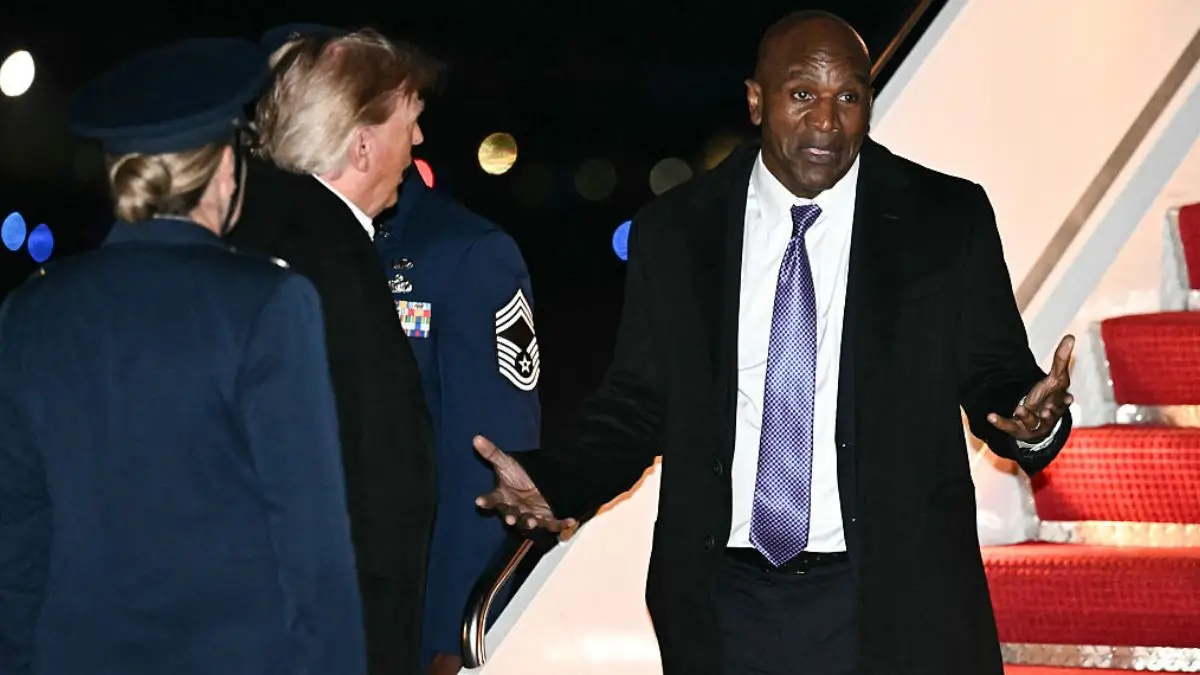
Holyfield's experience took a bizarre turn when Trump’s helicopter was late to arrive, leaving him waiting on the tarmac, illustrating the dynamics of power and privilege in stark relief. According to Libbey Dean's post on X, there was an uncomfortable symbolism in the sight of Holyfield, a Black icon celebrated for his achievements, waiting outside Air Force One while Trump and his top aides took their time. This scene sends a message that many in our community find all too familiar, a reminder of how Black excellence is often relegated to the sidelines, waiting for a nod of recognition from those who wield power without acknowledging the struggles behind the success.
Once at the rally, things continued to spiral, a descent into chaos that seemed almost orchestrated. Protesters tried to disrupt the event several times, voicing their dissent against the backdrop of fervent support, and Trump didn't just ignore it, he reveled in it. When a supporter threw a punch, Trump compared it to Holyfield’s boxing prowess, saying, 'That was incredible. Who threw that punch?' It was a moment that highlighted the dangerous rhetoric that has often surrounded Trump's rallies, where violence becomes a spectacle, and dissenters are not just silenced but attacked, leaving a stain on the democratic process and the values the nation claims to uphold.
Trump's comparison of the rallygoer's actions to Holyfield's fighting skills was not just inappropriate, it was incendiary and telling. The President seemed to enjoy the chaos more than the rally itself, a pattern that has defined many of his public appearances. The punch had Trump buzzing, as seen in the clip below where the former leader excitedly recounted the incident, smiling at the turmoil as though it were a sporting event. This attitude perpetuates a climate where aggression is rewarded and dissent is punished, a dangerous precedent that not only undermines civil discourse but also encourages a culture of hostility and division.
Evander Holyfield, in all his glory, once stood against giants in the ring, but his presence at this rally is a stark contrast to his storied career of integrity and strength. The relationship between celebrities and politicians isn't new, but it has evolved dangerously over the years, often blurring the lines between endorsement and exploitation. Recall when Muhammad Ali stood against the Vietnam War in the 1960s, or when Harry Belafonte marched with Dr. King. These were instances of using celebrity for activism, not for serving political spectacle. Holyfield’s appearance at the rally, however, seemed less about activism and more about lending his iconic status to a rally that thrives on spectacle rather than substance.
Yet, as Holyfield stood on that tarmac, the optics were unmistakable, a Black man conspicuously waiting while the white power players moved freely.
Yet, as Holyfield stood on that tarmac, the optics were unmistakable, a Black man conspicuously waiting while the white power players moved freely.
Holyfield's presence at Trump's rally is a clear illustration of how Black icons can be used as political pawns in a game that often doesn't serve their interests. It's disheartening to see a legend like Holyfield being paraded around for political gain, especially when the politics in question have often been rooted in divisive rhetoric that harms the very community he represents. This is more than about reminiscing old friendships; it's deeper. It's about accountability and recognizing the weight of political endorsements. Black celebrities need to be mindful of how their presence at such events can be manipulated to project false narratives of inclusivity while ignoring the underlying issues that continue to plague our communities.
For Trump, bringing in big names like Holyfield is strategy, a calculated move to lend credibility and sway to his cause by association with beloved figures. But for Black celebrities, the stakes are higher and the risks far greater. They risk alienating their community, especially when standing alongside figures who have not only stoked racial tensions but have often undermined the very struggles we're fighting against. The decision to appear at such events is fraught with implications, as it can be interpreted as an endorsement of policies and rhetoric that are harmful to Black Americans. This strategic use of celebrity is not just a political maneuver; it's a gamble with cultural capital that can have lasting repercussions.
This moment also shows a broader issue within the Black community, a recurring cycle of learning and unlearning who is truly with us and who is simply performing allegiance. It's a dance we’re all too familiar with, a continuous struggle to discern genuine support from performative gestures. When we see our icons gracing stages that have historically marginalized us, it upsets and challenges the cultural progress we've worked so hard to achieve, creating a dissonance that is hard to reconcile. The presence of Black figures at such events can be jarring, serving as a reminder of how easily representation can be co-opted to support agendas that do not align with the needs and aspirations of our community. Check out the video below, where this tension plays out in real-time.
Beyond the personal dynamics, the rally showcases the social and racial undertones in American politics, a microcosm of the broader issues that continue to divide the nation. Holyfield’s role at the event isn’t just about his friendship with Trump; it’s about how Black figures are leveraged to placate racial unrest, often used as symbols of diversity to mask deeper issues of inequality and injustice. How often are we placed in settings intended to pacify rather than empower, to silence rather than uplift? This is more than politics; this is about power structures that continuously exploit our representation, using our presence to lend legitimacy to spaces that have historically excluded us.
Advertisement
Looking forward, the question remains: When will our icons stop lending their legacies to those who don’t serve our collective interest? What we need is more figures like Juwan Howard, who actively reshape the systems that have long sidelined us, challenging the status quo and advocating for real change. It's about making informed choices about where we stand and who we stand with, understanding that our endorsements carry weight and can either uplift or undermine our community. The time has come for our icons to use their platforms not just to be seen, but to be heard, to champion causes that align with the values and aspirations of the people they represent.
The reality is blunt. Our icons have influence, but with that comes responsibility. We need to hold them accountable, just as we do our politicians. Evander Holyfield’s presence at Trump's rally is a reminder of the work we have ahead. A challenge to refocus on what truly elevates our community. That's the bottom line.