Gail Bean's 'The Drop' Salutes John Singleton: How It Honors His Legacy
By Tanya Brooks, PowerVault Staff Gail Bean has carved out her own legacy in Hollywood, dedicating her latest work, 'The Drop: A Snowfall Saga,' to the legendary John Singleton. The series finale aired on October 27,...
Advertisement

By Tanya Brooks, PowerVault Staff
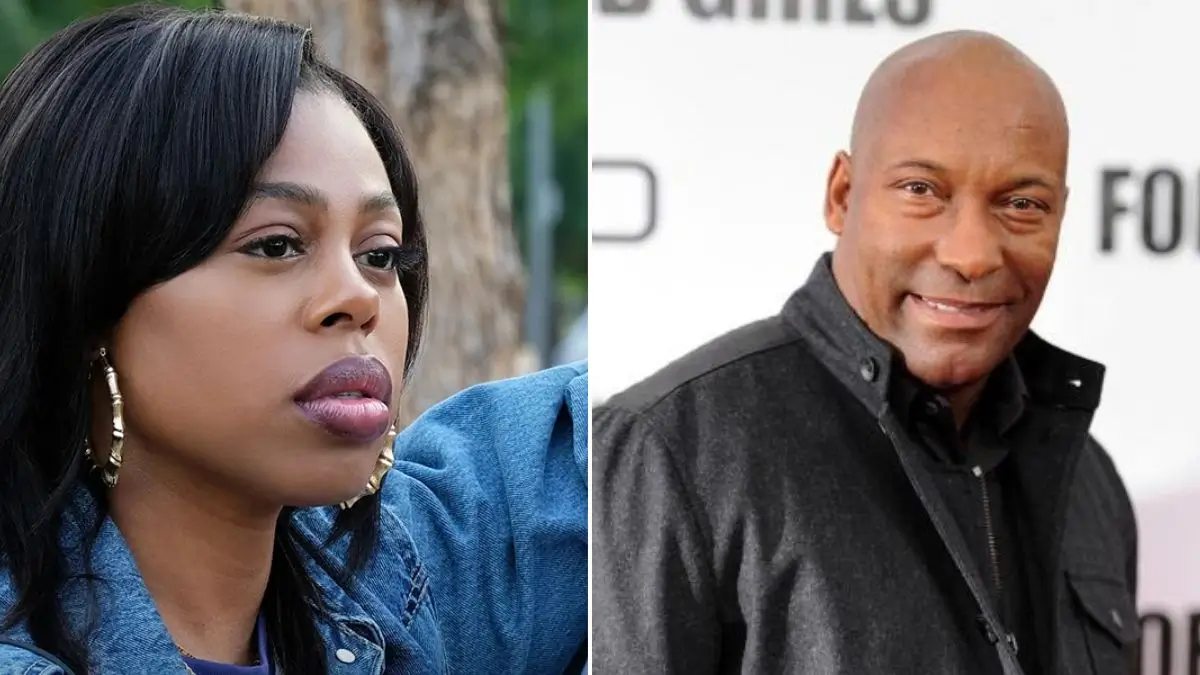
Gail Bean has carved out her own legacy in Hollywood, dedicating her latest work, 'The Drop: A Snowfall Saga,' to the legendary John Singleton. The series finale aired on October 27, and this is more than another spin-off riding on the coattails of a successful predecessor. Bean's portrayal of Wanda Bell handling the turbulent waters of the 1980s music scene is a nod to Singleton, the visionary who saw potential where others didn’t. It’s a tribute to his uncanny ability to lift underrepresented stories into the spotlight, much like he did with 'Boyz n the Hood.' This is a story of grit and ambition, set against the backdrop of Los Angeles’ vibrant yet chaotic music industry, and Bean steps into this space with the same fearless authenticity that Singleton championed.
Bean's journey from a pivotal character in 'Snowfall' to the protagonist of 'The Drop' marks a transformative chapter in her career. John Singleton, who co-created the original 'Snowfall,' left a mark on the series and television as a whole. 'The Drop' shifts its focus from the gritty streets of the drug game to the pulsating beats of the music industry, offering a fresh perspective on Wanda's ambitions. This transition is not just a narrative shift; it's Bean stepping into a powerful legacy of storytelling that pushes boundaries. As Damson Idris's Franklin Saint became the face of 'Snowfall,' Bean has now stepped up as the undeniable star of her saga, embodying a new chapter in Black storytelling that honors Singleton's groundbreaking vision.
With 'The Drop,' Bean doesn't just tell Wanda's story; she immerses us in her reality of struggle and resilience. The finale, aptly titled 'Hercules,' presents a high-stakes showdown that tests Wanda's relationship with Leon and her determination to reclaim her music career. This climactic moment highlights the depth and complexity that Singleton envisioned for his characters. It's proof of his philosophy that Black stories are not monolithic but are rich with nuance and texture. As Wanda stands at the crossroads of her personal and professional life, the finale becomes a stage where her inner strength and vulnerabilities are laid bare, inviting viewers to witness a profound moment of transformation. Watch the scene that captured it all below.
Gail Bean's heartfelt dedication to Singleton is proof of his impact on Black cinema and the opportunities he cultivated for many talents in Hollywood. Singleton, who passed away in 2019, was known for his authentic storytelling and commitment to representing urban narratives. His work laid the groundwork for a new generation of creators and actors who continue to push boundaries, much like Bean is doing with her new series. This dedication is more than a nod to a mentor; it's a recognition of Singleton's role as a trailblazer who opened doors for Black artists to tell their own stories, challenging Hollywood to see beyond stereotypes and embrace the full spectrum of the Black experience.
John Singleton's influence stretches back to the early days of his career, notably with his groundbreaking film 'Boyz n the Hood' in 1991. His authentic portrayal of life in South Central Los Angeles earned him an Academy Award nomination, making him the first African-American and youngest person ever to be nominated for Best Director. This film, along with others like 'Poetic Justice' and 'Higher Learning,' established Singleton as a transformative voice in film and television. His stories were not just narratives but cultural touchstones that spoke to the realities of Black life in America, challenging audiences to confront uncomfortable truths while celebrating the resilience and strength of the community.
The rise of 'Snowfall' and its spin-off, 'The Drop,' highlights a pattern that stretches beyond entertainment. Consider the shift in narratives following Singleton's vision: showcasing complex, multidimensional Black characters who defy stereotypes. These are not just characters but figures who mirror the rich mix of Black life, embodying dreams, struggles, and triumphs that resonate deeply with audiences. It's reminiscent of J. Cole shutting down retirement rumors, reflecting on Jay-Z's influence, as he continues to redefine what's possible in music. Just as these artists reshape the musical scene, Singleton's legacy in television and film provides blueprints for cultural empowerment, illustrating that our stories hold power and deserve to be told with authenticity and depth.
Gail Bean's transformation from a supporting actress to a leading force in 'The Drop' is as much a tribute to John Singleton's vision as it is to her talent.
Gail Bean's transformation from a supporting actress to a leading force in 'The Drop' is as much a tribute to John Singleton's vision as it is to her talent.
Bean's leap into the spotlight reflects a broader industry trend, a push towards centering Black voices and stories in media. Singleton's legacy is alive in these efforts, as networks and creators recognize the value and demand for authentic Black narratives. This trend is more than a passing phase; it's a long-overdue correction in an industry long criticized for its lack of diversity. 'The Drop' signals a shift, inspiring new waves of talent ready to tell their stories, reinforcing that Black voices are not just worthy of being heard but are essential to the cultural conversation. As the industry evolves, these narratives become not only proof of Singleton's influence but a beacon of hope for future storytellers.
For the community, 'The Drop' represents more than just a continuation of a beloved series. It is a celebration of resilience and perseverance, qualities embodied by both Wanda and Gail Bean herself. The show resonates because it mirrors the real-life struggles and triumphs familiar to many in the Black community. It’s a reminder that our stories deserve to be told, and our voices, heard. This resonance is powerful, connecting deeply with audiences who see their own experiences reflected on screen. 'The Drop' becomes a cultural dialogue, a narrative that validates the everyday experiences of its viewers, affirming that these stories are not only important but integral to understanding the full spectrum of human experience.
The societal implications of 'The Drop' extend beyond television ratings or critical acclaim. It challenges the industry to support projects that reflect the diversity of experiences within the Black community. Much like Meek Mill's 'Dream Chasers Nights Tour' carries significance for Philly and hip hop, 'The Drop' is a cultural milestone, urging Hollywood to invest in diverse storytelling that resonates with real audiences. This is more than a call for representation but a demand for authenticity, for stories that reflect the complexities and richness of Black life. By championing these narratives, the industry not only acknowledges its past shortcomings but also embraces a future where diverse voices are not only included but celebrated and central to the storytelling scene.
Advertisement
As the curtain closes on this season, the conversation naturally turns to what’s next for Gail Bean and 'The Drop.' Will Wanda’s journey continue to inspire, or will it spark even more groundbreaking narratives in its wake? The show’s impact, bolstered by Bean’s dynamic performance and Singleton’s enduring legacy, has set a precedent in storytelling. Readers, keep your eyes peeled, because the world is ready for more stories that move us, challenge us, and celebrate us to the fullest. This anticipation is not just about what's next for Wanda, but about the broader implications for Black storytelling, suggesting a future rich with narratives that defy expectations and uplift voices that have long been marginalized.
In the wake of this series, the industry faces a pivotal opportunity to embrace and elevate stories like 'The Drop.' The path forward is clear: nurture these narratives, champion diverse voices, and continue to build on the foundations laid by pioneers like John Singleton. By doing so, it becomes possible to create a scene where stories of Black excellence are not just told, but cherished and celebrated. This is about more than market trends; it’s about cultural responsibility and the recognition that these narratives are vital to the fabric of society. As we look to the future, the commitment to uphold and expand upon Singleton’s legacy becomes not just an aspiration but an imperative.