Gui Santos: What His $15 Million Deal Really Rewards
By Jasmine Reed, PowerVault Staff Gui Santos signed a $15 million Warriors extension after nearly abandoning his NBA chase over loneliness and a G League pay cut. That is a payday worth examining beyond the usual cele...
Advertisement

By Jasmine Reed, PowerVault Staff
Gui Santos signed a $15 million Warriors extension after nearly abandoning his NBA chase over loneliness and a G League pay cut. That is a payday worth examining beyond the usual celebration of persistence. Golden State gets a player it helped develop. Santos gets breathing room after years of financial uncertainty. But the distance between those outcomes contains the real story. Before an NBA franchise could reward his work, his family helped him stay long enough to make that work visible. Some of the most consequential development happened in conversations nobody in the front office had to conduct. The contract belongs to Santos. The support behind it deserves more than a passing mention.
According to Andscape’s reporting on Santos’ journey, the Brazilian forward arrived alone and struggled with isolation during his early weeks with the Santa Cruz Warriors. His English was limited, and the move meant earning less than he had back home. Being able to speak some English did not mean he could easily build a life in it. He called his parents considering a return to Brazil. His mother, Lucineide Carvalho, offered support without pretending the situation was easy. Santos recalled her advice: “Give it one year, two years. If things don’t go well, then you can find something else.” Notice what she offered: a reasonable window to try, not a demand that her son suffer indefinitely for somebody else’s dream.
The money makes that conversation sharper. Andscape reports that Santos earned $40,500 during his G League stint and spent three years on a minimum NBA contract. His extension, worth $15 million over three years, arrived Feb. 28, with the outlet listing his salary for the season at $4.6 million. Those figures describe different stages of his career, not one simple overnight raise. Still, the gap explains why leaving Brazil required more than confidence in his jumper. He accepted an immediate financial sacrifice for an uncertain shot at a much larger future. Golden State could evaluate a prospect. Santos had to live on the smaller paycheck while waiting to become worth the bigger one. That gamble deserves attention alongside the basketball in the accompanying video.
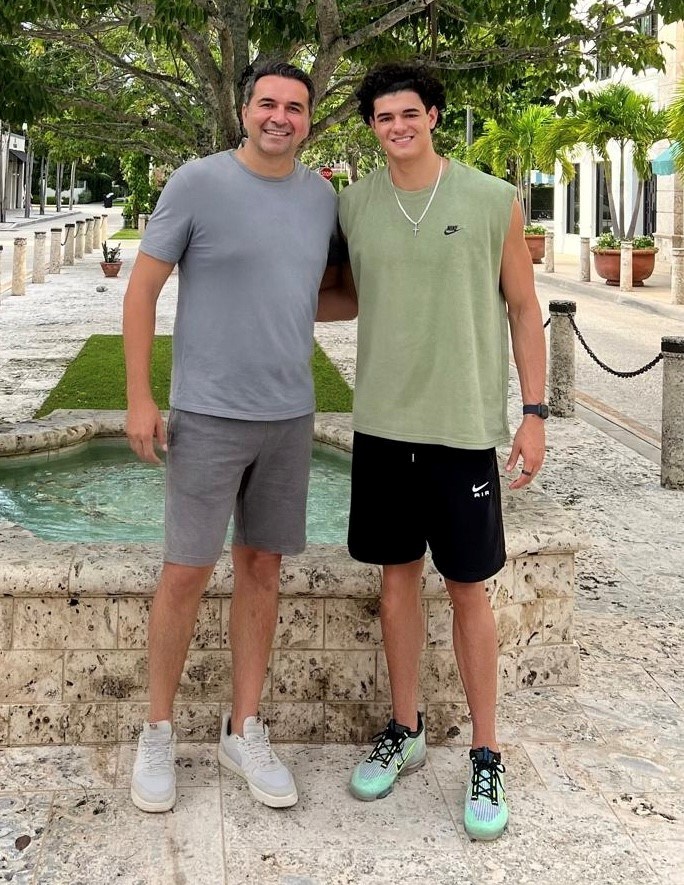
That video sits beside a financial story that game footage alone cannot settle: how much uncertainty can a prospect afford? Santos had connections, but connections did not spare him isolation. His father, Deivisson Santos Costa, played five seasons in Brazil’s top professional league, Novo Basquete Brasil. His mother also played basketball. Agent Aylton Tesch played at Middle Tennessee State and was a professional teammate of Santos’ father. This was a family that understood the sport as work. Tesch’s relationship with his father also meant Santos had guidance rooted in something older than his draft prospects. Even that experience could not remove the strain of entering another country’s basketball economy. Talent opened a possibility. People who understood him helped keep that possibility alive when he wanted out.
Golden State selected Santos 55th, a draft position that offers an opportunity without promising much protection. By Andscape’s account, he was averaging 19.1 minutes when the story was reported. That matters more here than a full statistical rundown. A player cannot establish value without enough court time to show what he contributes. Those minutes also give coaches evidence beyond practice, where a prospect can work hard without moving closer to a dependable role. Santos credits the organization for seeing potential and supporting him. That gratitude can be genuine without making the arrangement charity. The Warriors were also investing in someone they believed could help them win. The second accompanying video belongs beside that distinction between being given a chance and earning a continuing role.
Neither video can carry the full history behind that opportunity. Brazil already had championship footprints in the NBA before Santos arrived. Tiago Splitter won with San Antonio in 2014. Leandro Barbosa won with Golden State in 2015. Anderson Varejão and Nenê built long careers that made Brazilian participation familiar rather than exceptional. Santos told Andscape that Barbosa, Varejão, Raul Neto and Cristiano Felício offered examples and knowledge about the league. His father and Tesch helped make those connections, turning basketball relationships in Brazil into access to men who understood the American workplace firsthand. Their value extended beyond inspiration. They could explain a workplace that looks glamorous from overseas but operates through unfamiliar rules and relationships. For a young Brazilian, predecessors supplied something a scouting report could not: firsthand knowledge of how an NBA career gets built, sustained and sometimes interrupted.
The league gets the finished player; families often help cover the cost of getting him there.
A development system should develop the person, not merely wait for the player to become useful.
Santos deserves to enjoy this deal without having his lowest moment repackaged as proof that suffering was necessary. Homesickness did not make him more deserving of a contract. His basketball did. The extension changes his position because it puts a price on work that once came with little certainty. Yet the reported total does not establish every guarantee, option or protection in the agreement. Readers should resist treating a headline number as cash already deposited. The distinction matters because security is not simply what a deal announces. It is what a player can actually count on. PVN’s discussion of why Josh Downs’ next contract matters offers a related lens: opportunity becomes meaningful when the terms turn athletic usefulness into lasting security. Santos’ next challenge is keeping that leverage as expectations rise.
Golden State deserves credit for helping a late pick become someone worth extending. Credit, though, should invite scrutiny of the process rather than end it. A development system should develop the person, not merely wait for the player to become useful. Language assistance, mental health access and practical help settling into a community should be treated as infrastructure. Those investments should not require a prospect to reach a breaking point before anyone recognizes their basketball value. Andscape’s account does not establish every service Santos received, so this is no claim that the Warriors withheld them. The larger question is whether support across professional basketball depends too heavily on which family answers the phone. A mother’s reassurance can be powerful. It should not have to substitute for an employer’s responsibility to help workers adjust.
Fans also need a better vocabulary for the players who do not become franchise faces. Calling someone a worker can recognize effort, but it can also make limited opportunity sound natural. The nickname “Gui the Worker” carries that tension: praise for his commitment should not flatten the basketball intelligence behind it. Santos does not owe anyone permanent gratitude in exchange for having been selected near the draft’s end. Neither should supporters confuse modest NBA status with modest professional achievement. Staying useful in this league requires skill, judgment and adjustment, not just wanting it badly. PVN’s coverage of Jimmy Butler’s Warriors coaching role points toward another part of that conversation: the knowledge inside a roster matters. The audience should value what players understand and contribute, even when their names never lead a broadcast.
Black readers know the habit of celebrating an athlete’s discipline while treating his distress as a character test. Santos’ experience connects to that pressure without making every player’s racial experience interchangeable. His nationality alone does not establish his racial identity, and the source does not supply one. The broader labor question still belongs in a discussion of Black athletes. A predominantly Black NBA workforce creates value inside an ownership structure with few Black controlling owners. Young players are expected to master those economics while their careers remain fragile. An organization can move to its next prospect. A family has to live with what the failed opportunity costs its child. Family resources can determine who survives the wait. What gets praised as patience may also depend on who can afford another uncertain season.
Advertisement
The next test is whether Santos can build on the role that earned this extension, and whether Golden State keeps investing beyond the signature. Watch his opportunity when rotations change, not simply the applause when his effort produces a highlight. Watch how quickly a useful contract becomes an expectation that he absorb every difficult assignment without complaint. The strongest reading of his story leaves room for gratitude and accountability together. His mother helped him see that trying longer was possible. His employer now has a reason to keep making that effort worthwhile. The payday should buy Santos a future, not a lifetime obligation to prove he deserved a chance.
More from PowerVault Network: