
How Atlanta Became the Center of the Rap Universe.
Start with a basement. Not a studio with a glass booth and a label logo on the door, but the subterranean room in producer Rico Wade's house where Organized Noize cooked up the sound that would change where rap lived....
Advertisement

Start with a basement. Not a studio with a glass booth and a label logo on the door, but the subterranean room in producer Rico Wade's house where Organized Noize cooked up the sound that would change where rap lived. According to Georgia Public Broadcasting and NPR's city-by-city history of hip hop, written by Jewel Wicker for the genre's fiftieth birthday, that basement is the namesake of the Dungeon Family, the collective that gave Atlanta its first real claim on the national conversation. Anybody who grew up on the southwest side or around East Point knows the geography of that story by heart. The rest of the country had to be told.
Wicker opens her piece with a modern proof of concept. She points to Young Nudy's single "Peaches & Eggplants," featuring his cousin 21 Savage, a song with a wordless hook and a verse that reimagines the 2006 local hit "Bubble Gum" by K-Rab and D4L. Her argument is that Nudy and 21 rose because their music feels two ways at once: hyperlocal and authentic, yet deceptively accessible and everywhere. "This, too, is the story of Atlanta," she writes. Its Black culture feels singular, yet mirrors other Black experiences throughout the South and the nation, and that, in Wicker's telling, is how the city's scene became the center of the rap universe and the last semblance of a monoculture.
The receipts are specific, and Wicker lays them out in order. Rap in Atlanta, she notes, has only been thriving for about half of hip hop's fifty years. The scene was born in earnest in 1980, when King Edward J opened Landrum's Records & More and began self-releasing personalized mixtapes called J-Tapes, the foundation for what followed. Those tapes found their way to future stars including Killer Mike and Young Jeezy. Then came the scattered victories: Mo-Jo became the first MC to get local airplay in 1983, MC Shy D signed to Miami's Luke Records in 1986, Jermaine Dupri took the kids of Kris Kross to the top of the Billboard Hot 100 in 1992, and Arrested Development, the so-called anti-gangstas, won the Grammy for best new artist in 1993.
Watch: Atlanta hip hop and R&B history, from OutKast to LaFace Records (archival and documentary footage)
The film above, from 4 Dorchester Films, walks through the OutKast, Monica, Usher and LaFace Records era. PVN offers it as historical background for the period this piece describes.
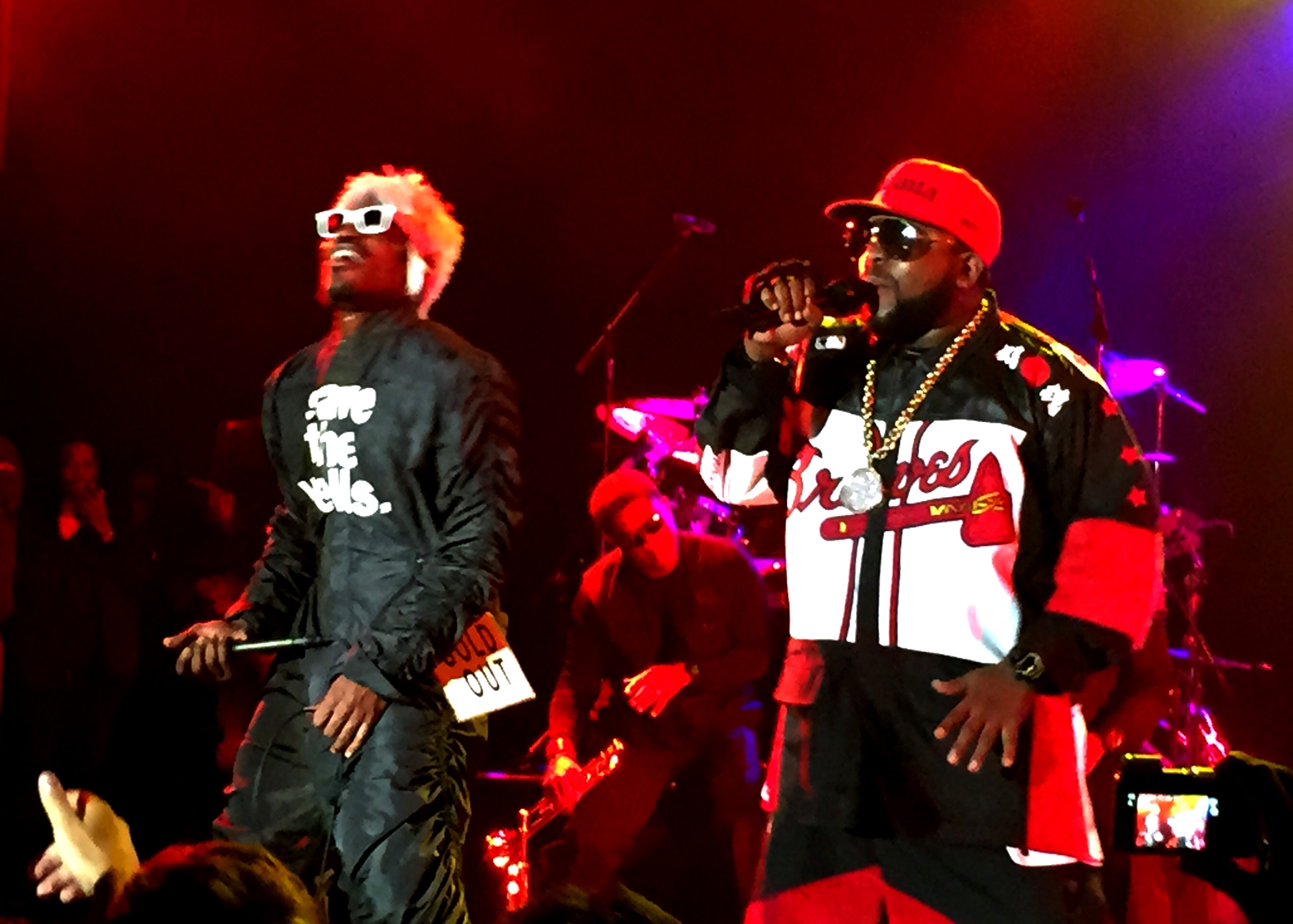
Then the turning point that every Atlanta head can recite. The 1995 Source Awards were tense, a stage for the bicoastal fight between East and West that had left the South nearly invisible. When OutKast won best new artist, the jeering made clear how little room the room had for a new player. Wicker writes that a very annoyed Andre 3000, half of the winning duo, unwittingly rallied the region with an impromptu declaration: "The South got something to say." In retrospect she calls it a clear turning point for the South, and for Atlanta in particular, even though the city was still trying to figure out its own musical identity.
Part of that story is how OutKast got through the door at all. Wicker reports that LaFace Records co-founder L.A. Reid was finally coming around on the duo after a trial run on the label's Christmas compilation, where "Player's Ball" became so popular that it earned them a deal. Their debut, Southernplayalisticadillacmuzik, arrived in 1994. The following year Goodie Mob's Soul Food helped coin the term "Dirty South." With Organized Noize recording both groups in Rico Wade's basement, OutKast and Goodie Mob rapped over complex, layered soundscapes of soul and funk, and their lyrics centered the experiences of the Black working class in Atlanta.
That detail matters, and it is the part outsiders often skip. Wicker writes that in the 1990s city officials were trying to prove Atlanta was a utopia, especially with the 1996 Olympics on the way, and that the Dungeon Family made music that complicated this glowing image. Their songs were about people being pushed aside in service of the city's Black bourgeoisie. The legend of the Black mecca and the rap capital, she says, is crafted by locals and transplants alike, and class is essential to the narrative, because income inequality separates the Black elite from those in the housing projects. In her words the legacy is built on resistance, but also on compliance. A city can be proud of its stars and still owe its own people more.
Atlanta also absorbed the country around it. As the home of HBCUs like Spelman and Morehouse, the city welcomed young Black people from everywhere, and that exchange resonated loudest at Freaknik, the spring break event conceived by students at the Atlanta University Center, which grew so large that it became a public nuisance as young adults partied in the streets. Wicker says that was exactly the atmosphere for Dupri to promote Playa Poncho's "Whatz Up, Whatz Up." The business kept pace with the party. Dupri's So So Def label was A&Red by the self-taught DJ Lil Jon, who staked out local haunts with an ear to the ground, which led to the signings of Playa Poncho, the city legend Raheem the Dream and the producer Shawty Redd, plus the compilation with the Ghost Town DJs smash "My Boo." Wicker tells a story worth keeping: when Dupri asked about a buzzing artist going by Ludacris, Lil Jon would not co-sign him. The Houston rapper Scarface, then head of Def Jam South, saw the mistake. After listening to the 1999 album Incognegro, he signed Ludacris and his Disturbing the Peace roster. The former Hot 97.5 DJ Chris Lova Lova turned wisecracks and innuendo into Word of Mouf, which Wicker says went triple platinum in under a year in 2001, with singles that conquered even Top 40 radio.
Then the fun years, which the industry underestimated. Wicker notes that outsiders challenged the validity of 2000s snap music, but artists like D4L, Dem Franchize Boyz and Soulja Boy Tell'Em, who was one of the first artists to crack the then-new platform YouTube, prioritized fun and ignored the naysayers. If ringtone rap looked like a passing phenomenon ushered along by early video sharing, she argues that trap music was the more substantial movement, one that saw into the city's soul. It was born of the local drug trade, told by duffle bag boys and homegrown beat makers, and built around the Roland TR-808 drum machine that can shift fluidly with time.
Her map of trap is the cleanest in the piece. T.I. and DJ Toomp birthed trap as a kind of Southern regality. Young Jeezy and Shawty Redd made talk of hand-to-hand deals sound suave and genteel. Gucci Mane and Zaytoven delivered garbled, coke-fueled tales over fluttering synth organ. That trio of duos defined the 2000s. The 2010s belonged to a new generation of stylebenders: Future, a byproduct of the Dungeon Family, who mixed the sensual allure of Atlanta's strip clubs with trap braggadocio through raspy, Auto-Tuned croons; Migos, whose triplet flows changed how rap functioned for years; and Young Thug, whose chaotic melodies reframed lyricism as a means to generate motion.
Here is where the through-line to the national industry gets concrete, and it is worth stating plainly. Wicker writes that trap has moved beyond the trap, beyond Atlanta and beyond rap to become the dominant sound of popular culture. Miley Cyrus tapped Mike WiLL Made-It, Young Thug helped take Camila Cabello to number one, and Post Malone's "Rockstar" went diamond with an assist from 21 Savage. Pop songs with trap drums became the norm, EDM and urbano took notice, and 2 Chainz launched a trap-themed haunted house in Atlanta. The slang and the swagger traveled right alongside the drums. PVN will not claim that every hit with a hi-hat roll belongs to Atlanta, but the GPB and NPR account supports the claim that the industry had to move South, and it moved to the city that was already doing the work.
PVN is based in this market, so the closing question is a local one. A city that sells itself as the capital of rap has to ask who actually holds the receipts. The Black working class that the Dungeon Family rapped about is still being priced out by the same development boom that fills the skyline, and the rooms where those records were made rarely come with a plaque. Landrum's, the basement, the Freaknik routes and the clubs that launched the careers deserve the same preservation fight that other cities wage over their landmarks. Wicker's history is a strong floor. It is not the full record.
So tell us what the timeline missed. If you bought a J-Tape, were on Freaknik weekend, danced to "Whatz Up, Whatz Up" at a skating rink, or heard the first night a station finally played rap, drop it in the comments with the year and the block. Name the DJ, the club, the street. This series closes the month where PVN lives, and the people who lived the story are the only complete archive Atlanta has. Credit for the reporting above goes to Jewel Wicker, NPR and Georgia Public Broadcasting, whose full piece is linked at the source below.
Advertisement
Source: How Atlanta became the center of the rap universe, by Jewel Wicker, NPR / Georgia Public Broadcasting.
More from PowerVault Network: