Katt Williams on Shaq Jet Ski Crash: Why He Panicked
By Marcus Ellison, PowerVault Staff Katt Williams says a jet ski collision with Shaquille O’Neal left him fearing for Shaq’s life, not just his own. The comedian recalled the accident during the November 13 episode of...
Advertisement

By Marcus Ellison, PowerVault Staff
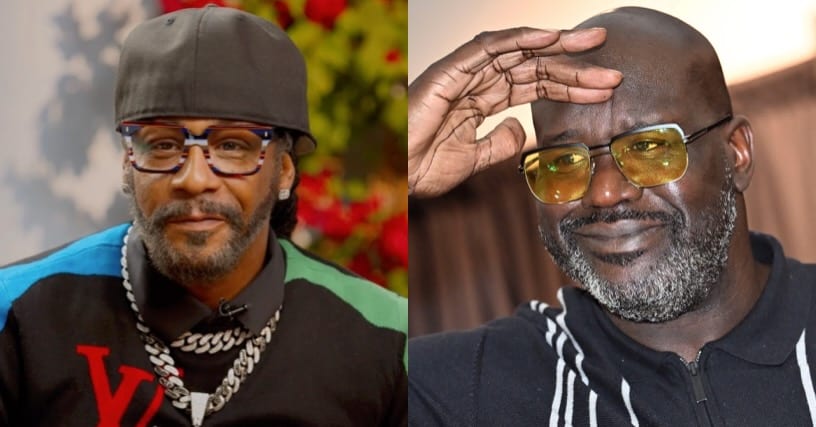
Katt Williams says a jet ski collision with Shaquille O’Neal left him fearing for Shaq’s life, not just his own. The comedian recalled the accident during the November 13 episode of Listen & Laugh, hosted by Ice Cube and Mike Epps. Cube’s question framed Williams as the one nearly killed. Williams promptly redirected the concern toward his much larger friend. That correction gives this story its real center: a frightening accident, a friendship that survived it, and a comedian who can now make the memory funny. The laugh comes with a limit, though. Williams says he genuinely feared O’Neal would not surface.
The account comes from the second episode of Ice Cube and Mike Epps’ Listen & Laugh podcast, where Williams appeared while promoting his debut memoir. The title is unmistakably Katt: Nine Lives, No Wives, and 69 Concubines. O’Neal wrote the book’s foreword, a detail that matters more than any suggestion of fresh tension between them. This was Williams recounting an old incident involving a friend, not announcing a falling out. The supplied account does not establish when or where the accident happened. It also offers no separate account from O’Neal. So the responsible framing stays specific: these are Williams’ memories, delivered during a comedy conversation, rather than a fully documented reconstruction of the collision.
According to Williams, O’Neal was attempting the sort of sharp turn that sends a splash toward another rider. The problem, in his telling, was speed and distance. Williams estimated that Shaq was traveling 40 miles per hour and had approached too quickly to pull off the move. “He just went too fast from too far,” Williams told the hosts. He demonstrated the intended maneuver by mimicking a quick turn of the handlebars, giving the hosts a visual. That is the cleanest explanation he offered for how a playful stunt became a collision. His description puts the attempted splash at the center of the story, not an intentional effort to hurt anybody. Williams explains the maneuver and what followed in the podcast video below.
That attempted splash becomes a much scarier memory as Williams continues his account in the episode. He recalls seeing O’Neal roughly 20 feet away before the collision and being thrown from his own jet ski. The comedian says his attention then shifted toward finding his friend. “I thought Shaq was gone,” Williams said. “I was mortified. I was in a full panic.” His recollection includes a panicked thought about O’Neal having a game the following day. The supplied reporting does not identify a team, opponent or season, so that detail cannot responsibly date the accident. What it does establish is Williams’ state of mind: he was imagining the consequences of returning without Shaq. The punch line came later. First came fear.
When Cube asked how long O’Neal took to resurface, Williams answered with more detail about his own experience rather than an exact time. He described himself then as 5 feet 5 inches tall and 145 pounds. He also estimated being launched 30 feet into the air and swimming about a mile before getting back. Those distances remain his recollection, not independently established measurements. He recalled being unable to see O’Neal, which explains why the missing seconds mattered more than a stopwatch. “Man, it was the worst experience of all times, except for the fact that we all made it,” Williams said. That final qualification changes the emotional temperature. Everybody survived, which gives him room to tell the story with comic exaggeration, relief and genuine affection.
These men also share a history that makes the conversation more than a random celebrity booking. Cube helped build a durable lane for Black ensemble comedy with Friday in 1995. Epps joined that film series in Next Friday in 2000, and Williams appeared as Money Mike in Friday After Next in 2002. O’Neal later helped put comedians before audiences through Shaquille O’Neal Presents: All Star Comedy Jam, which launched in 2009. Their careers connect basketball celebrity, standup and movies through overlapping audiences. For viewers raised on those films and comedy specials, the familiarity is part of the appeal. These are entertainers whose work already shares space in our households. That history helps explain the easy rhythm here. Williams can describe a terrifying experience among peers who understand how to give a storyteller space without making every pause feel like an interrogation.
The better conversation starts where the near death framing runs out of useful information.
Black friendship deserves coverage that leaves room for affection without turning every mishap into evidence of betrayal.
For Williams and O’Neal, the revealing detail is the foreword, not the collision alone. A friend contributing to a memoir suggests a continuing relationship; it does not erase an old scare. Both facts can sit together without manufacturing a feud. Putting someone’s words at the front of your life story is a different kind of public acknowledgment than laughing through a podcast anecdote. Black friendship deserves coverage that leaves room for affection without turning every mishap into evidence of betrayal. PVN’s coverage of Sexyy Red explaining her friendship with Drake offers a related editorial question: can audiences hear what people say about their bonds without reducing everything to a transaction? Here, Williams’ worry about Shaq deserves as much attention as the outrageous size difference that makes the setup funny.
The industry angle deserves a clear eye, too. Williams is promoting a book, and a memorable story involving Shaq is useful publicity. That does not make the memory false or the emotion rehearsed. It means the conversation also serves a commercial purpose. Celebrity podcasts give entertainers room to tell stories at length, then circulate memorable excerpts that can attract attention to the full episode and the project being promoted. A recognizable name and an outrageous setup can travel farther than a straightforward conversation about writing a memoir. That is the promotional advantage. Nothing supplied establishes that this particular anecdote was arranged in advance. Still, readers benefit from recognizing the machinery without pretending to expose a conspiracy. A good promotional appearance can contain real warmth, a strong story and an invitation to buy something.
For the audience, the useful distinction is between enjoying a storyteller and treating every detail as a verified incident report. Williams’ delivery can carry humor without turning estimated speeds and distances into settled facts. That standard protects readers from exaggeration without demanding that comedians speak like insurance adjusters. It also leaves room for ordinary care. A jet ski is not made harmless because the riders are famous, wealthy or good at making everybody laugh afterward. Nor does the laughter afterward tell us what precautions either man took; Williams’ account does not supply those details. The sensible takeaway is not to diagnose either man’s character from one account. It is to recognize how quickly playful showing off can outrun judgment. The joke works because both friends got another day.
Race and class shape what audiences get to see here. Black entertainers often appear in coverage through achievement, conflict or conspicuous spending. Leisure can become another status display, stripped of the people enjoying it. This account offers something messier: successful Black men having fun, making a mistake and admitting fear. Money can provide access to the watercraft; it cannot purchase control over what happens next. There is value in covering that vulnerability alongside the trophies. Williams saying he panicked also interrupts the expectation that a funny man must turn every frightening moment into proof that nothing ever shakes him. The same editorial care belongs in stories such as Queen Latifah reflecting on her Rock Hall recognition. Black public lives deserve both their flowers and their human scale.
Advertisement
The next thing to watch is how Williams’ memoir conversations develop beyond the most clickable anecdote. Listen & Laugh releases new episodes Fridays at 6 p.m. Eastern and 3 p.m. Pacific, giving Cube and Epps more opportunities to build on this conversational format. O’Neal could eventually offer his own recollection, but the supplied reporting contains no such response. Until then, Williams’ version should remain clearly attributed to Williams. Enjoy the timing, appreciate that both friends survived, and resist making an old accident carry a scandal it cannot support. The strongest part of this story is that Shaq lived to write the foreword.
More from PowerVault Network: