Brandi Glanville Says Removed Facial Mass Is Unknown
By Jasmine Reed, PowerVault Staff Brandi Glanville says doctors removed a black facial mass, but she still does not know what it was. That uncertainty is the news, not permission for the comment section to practice me...
Advertisement

By Jasmine Reed, PowerVault Staff
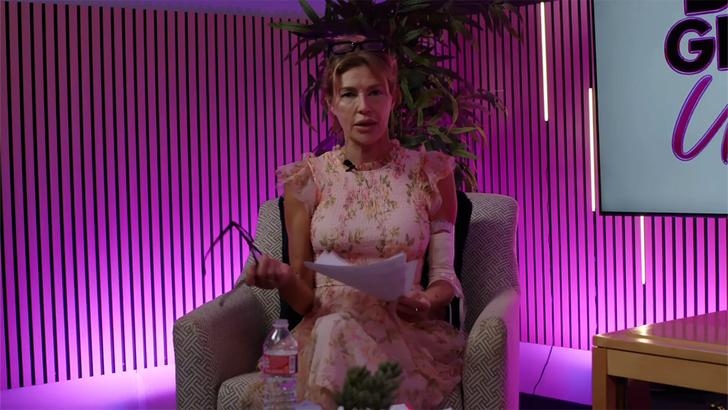
Brandi Glanville says doctors removed a black facial mass, but she still does not know what it was. That uncertainty is the news, not permission for the comment section to practice medicine. The former Real Housewives of Beverly Hills star has shared an unsettling development without a confirmed explanation attached. A removal and a diagnosis are different things. The headline may sound dramatic, but the verified information remains limited. Until more information becomes available, neither a frightening theory nor a reassuring guess deserves to graduate into fact. Glanville can be a familiar reality television personality and still be a patient whose situation requires care, accuracy, and room for unanswered questions.
The PowerVault Network source item identifies the central development: Glanville says she remains unsure what doctors removed from her face. The supplied summary does not name a treating physician, provide a pathology report, or establish a diagnosis. It also does not identify an original reporting outlet beyond the source item provided. Those limits matter. There is no direct medical documentation here for readers to evaluate independently, and another account repeating the claim would not supply it. Saying Glanville does not know is not the same as saying every doctor involved has exhausted every possible answer. Her account deserves attribution, not an upgrade into a sweeping claim about what medicine can or cannot explain.
The medical distinction is worth slowing down for, even when celebrity coverage wants everything delivered at reunion speed. According to the National Cancer Institute’s explanation of pathology reports, pathologists examine tissue and document findings that help establish diagnoses. That general process does not tell readers what happened in Glanville’s case. Citing that resource explains a medical process; it does not suggest that she has cancer or that her doctors followed any particular testing sequence. There is no basis here to say which tests were ordered, whether results are pending, or whether additional evaluation is needed. The useful takeaway is simpler: describing something removed from a body does not identify it. A specimen’s appearance is not a substitute for clinical findings.
The word black may be the detail that catches attention, but color alone does not establish a cause. Neither does the word mass automatically mean cancer. The available account does not confirm cancer, an infection, a parasite, or a complication from a cosmetic procedure. None should be smuggled into coverage through suggestive wording. A question mark after a scary diagnosis does not make that speculation responsible. Neither does placing an unsupported theory beside her name in a caption and inviting followers to weigh in. Readers deserve to know where the evidence stops, especially when a headline involves somebody’s face. The image a phrase puts in the audience’s head can travel much farther than the correction that follows it.
Another distinction belongs on the table: a public update is not a complete medical record. Patients can share one development without explaining every appointment, symptom, or conversation with a clinician. That does not automatically make them deceptive or their care suspicious. Celebrity coverage often rewards the fullest disclosure, then punishes the person for supposedly sharing too much. Glanville should not have to satisfy that impossible standard. An unanswered audience question is not proof that somebody is hiding something. Sometimes the public simply has not been told. No treatment recommendation follows from the information available, either. Anyone selling a cure, cleanse, or miracle fix off this development would be selling certainty the reporting itself does not contain. That is a sales pitch, not a receipt.
Glanville entered The Real Housewives of Beverly Hills in 2011, joining a television franchise built around making personal lives public business. Viewers learned to read friendships, arguments, and appearances as clues to a bigger story. That training can become a problem when health enters the frame. A televised scene is selected for an audience; an absence from that scene cannot establish what someone is experiencing privately. Familiarity with a cast member is not access to their chart. A different celebrity example exposed the limits of public access in 2020: Chadwick Boseman’s death revealed a colon cancer diagnosis he had kept private. Serena Williams described her dangerous childbirth complications in Vogue in 2018, showing how much a polished public image can conceal. Their experiences were different. The shared lesson is that visibility never gives an audience the whole medical picture.
A reality television contract is not a lifetime waiver of medical privacy.
A reality television contract is not a lifetime waiver of medical privacy.
For Glanville personally, the fairest standard is compassion without forced sainthood. Nobody needs to approve of every argument she has had on television to reject mockery of a health concern. Sympathy is not a character reference. That distinction matters because celebrity audiences often treat care like a prize awarded only to their favorites. We can keep our opinions about somebody’s behavior without making their appearance the punch line. Accountability does not require a medical ordeal to become part of the sentence. A person can be difficult, controversial, or simply not somebody’s cup of tea and still deserve accurate coverage. Turning a facial health issue into a punishment storyline does nothing useful for readers. It only teaches everyone watching that visible suffering becomes acceptable entertainment when the patient is unpopular enough.
For entertainment outlets, the test is whether reporting can resist the business model of endless suspense. An unresolved medical update offers easy sequel headlines, each promising the answer the previous one could not provide. Publicists may help shape access and timing across the industry. Nothing supplied here establishes that a publicity strategy explains Glanville’s disclosure, and implying one would be its own form of speculation. Editors still control their choices. Before publishing a followup, the question should be what readers will learn that they could not learn yesterday. More engagement is not more evidence. They can separate new information from recycled uncertainty, refuse diagnosis bait, and avoid dressing an old detail as a breakthrough. A headline should earn another click through another verified development, not a louder adjective.
For the audience, especially Black readers accustomed to seeing bodies inspected and judged, this is a chance to demand better without surrendering curiosity. The group chat can ask what happened without appointing its loudest member chief physician. Checking whether a claim comes from the patient, a clinician, or an anonymous account changes the conversation immediately. So does refusing to circulate an alleged diagnosis with no supporting evidence. A screenshot with the attribution cropped out is not a receipt. Before forwarding it, find the original statement and check what it actually says. PVN’s coverage of Lionel Richie’s return to Las Vegas after rest offers a related editorial lens: health and recovery deserve attention alongside performance. Stars are workers with bodies, not content machines that owe uninterrupted access.
Money and race also shape who gets heard when something feels wrong. A recognizable television personality may have platforms and professional contacts unavailable to an hourly worker seeking another appointment. That visibility does not guarantee an answer, but it can attract attention. Taking time off, arranging transportation, and paying for another visit can make pursuing answers harder before a patient even reaches the examination room. Black women have particular reason to resist any suggestion that being heard by a doctor is automatic. Williams’s account of advocating for herself after childbirth remains a concrete example. Still, Glanville’s experience should not be presented as identical to those barriers. The stronger connection is a demand for care that takes patients seriously, regardless of fame, income, race, or how convincingly they can explain their distress.
Advertisement
The next meaningful development would be a clearer account from Glanville or medical information she chooses to authorize for release. A named diagnosis, an explanation of the findings, or a documented treatment plan would move the story forward. Another round of guesses would not. Until then, responsible coverage should keep the uncertainty visible without turning it into a spectacle. Readers can wish her answers and decline the amateur detective assignment. The challenge for celebrity media is to make restraint feel as necessary as speed. Her face may be familiar, but the public is not entitled to fill in the blanks.
More from PowerVault Network: