Kawhi Leonard’s Knee Injury: What It Means for the Raptors and the NBA
By DeShawn Price, PowerVault Staff Kawhi Leonard's journey on the hard court hits another bump as he's sidelined yet again due to swelling in his left knee. This isn't merely about the Toronto Raptors losing a player;...
Advertisement

By DeShawn Price, PowerVault Staff
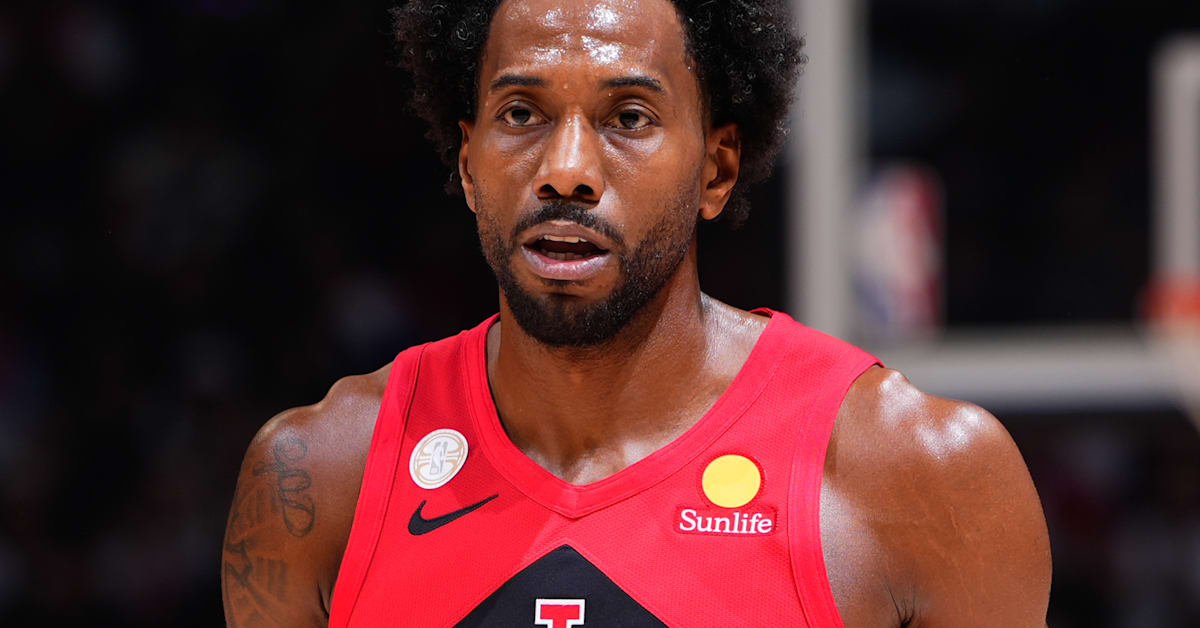
Kawhi Leonard's journey on the hard court hits another bump as he's sidelined yet again due to swelling in his left knee. This isn't merely about the Toronto Raptors losing a player; it's about the absence of a cornerstone as they handle the early-season grind. According to ESPN’s Shams Charania, the MRI brought some relief by showing no structural damage. However, this wasn’t enough to prevent Leonard from taking a seat for several weeks. It's a blow to both Leonard and the Raptors, who have been riding high hopes for a successful campaign. In a league where timing and momentum are key, missing Leonard means missing a critical piece of their puzzle at a crucial juncture.
The Raptors have been cautiously managing Leonard’s involvement ever since he rejoined the team, a necessity given his troublesome history of knee injuries. This latest setback follows a summer where Leonard's offseason was interrupted, affecting his preparation and casting a shadow over his readiness for the new season. Despite this disruption, Leonard remains optimistic, taking to social media to assure fans he is on the mend and expressing gratitude for their unwavering support. Toronto, now without their star, faces a significant challenge to maintain momentum after a solid start to their season. They must handle this period without Leonard, relying on their depth and resilience to keep the ship steady amid the storm of uncertainty.
Leonard's post on social media echoed his frustrations but also his resolve to return stronger than before. The two-time NBA champion has faced similar challenges in the past, most notably with a torn ACL in 2021 and meniscus repair surgery in 2023, both of which sidelined him for extended periods. Despite these hurdles, Leonard's talent as a two-way player is undeniable, and his presence on the court is irreplaceable for Toronto. His ability to dominate defensively while also being a potent offensive force makes him a unique asset to the Raptors' lineup. The video linked below offers a glimpse into his mindset and determination, highlighting his commitment to overcoming adversity and returning to top form.
Toronto's decision to take a cautious approach reflects both their investment in Leonard and the grim reality of his ongoing injury saga. This season, his averages of 19.5 points and 7.5 rebounds show his critical role within the team. His absence forces the Raptors to look inward, developing their depth and finding innovative ways to stay competitive in an unforgiving league. Leonard’s absence leaves a significant void, testing both team dynamics and resilience. As they face this challenge, the Raptors are reminded of the importance of preparing for such scenarios, ensuring that their roster is equipped to handle the unpredictability of professional sports.
This isn’t the first time the unpredictable nature of injuries has thrown a wrench in the Raptors' plans. Having opened the season with a promising 2-1 record, the team now faces an uphill battle to maintain their early success. Without a definitive timeline for Leonard's return, the Raptors must adapt quickly, finding new strategies and relying on their depth to hold the fort. This is more than about surviving but thriving in his absence, a task that requires both strategic acumen and mental fortitude. The challenge is laid bare in the video below, highlighting the complexities the team faces as they attempt to handle this unexpected detour.
Historically, the saga of injured superstars is as old as the NBA itself. From Derrick Rose's knees to Grant Hill’s ankles, the league has seen promising careers altered in the blink of an eye. Leonard’s latest challenge is a chapter in this narrative, echoing past stories where physical ailments dictated the course of once-promising careers. Some athletes found redemption through relentless rehabilitation and determination, while others never fully regained their former glory. Leonard stands at this precipice, reminding us of the fragility of athletic greatness and the relentless pursuit of excellence amidst adversity. His journey shows the unpredictable nature of sports, where success is often as elusive as it is celebrated.
But this is more than an injury report.
Kawhi Leonard’s journey is a stark reminder of how Black athletes handle expectations in a predominantly white sports machine.
For Leonard, this is about legacy. Being a Black athlete facing relentless scrutiny, especially when your body seems to betray you, adds layers to his journey. In the high-stakes world of professional sports, Black athletes often bear the burden of representation beyond personal achievement, constantly handling a scene that scrutinizes their every move. Leonard's journey serves as a stark reminder of the unique pressures Black athletes face in a predominantly white sports machine. His story is not just about personal resilience but also about challenging the broader narratives that surround Black athletes, highlighting the systemic pressures and expectations they must constantly contend with.
For the Raptors and the league, the question is strategic. How do franchises manage player health in a way that respects both the human behind the talent and the business imperatives of winning? Toronto must balance these competing priorities, making decisions that honor Leonard’s contributions while safeguarding the team’s future. It's a dance familiar to teams across all sports, where the calculus of business often seems at odds with athlete welfare. The Raptors' approach will be closely watched, setting a precedent for how teams can handle the fine line between maximizing performance and ensuring the long-term health and well-being of their players.
For fans, this story is a call to engage deeply. Raptors supporters have always been vocal, their passion palpable and unwavering. Now, more than ever, their energy can serve as a lifeline not only for the team but for Leonard himself. Their unwavering support becomes an integral part of the narrative, showcasing how fanbases can influence the morale and psyche of their teams in times of adversity. As Leonard battles his way back to health, the emotional and psychological boost provided by a devoted fanbase cannot be understated. In a time of uncertainty, the connection between player and fans becomes a beacon of hope and resilience.
Advertisement
Beneath the headlines, there’s an unspoken truth about race and class at play. In a league where the players are predominantly Black but the power structures are predominantly white, the dynamics of control and autonomy come into sharp focus. Leonard’s situation puts a spotlight on agency, whose interests come first when health, career, and financial success hang in the balance? The NBA, like any institution, reflects broader societal issues, where race and money intertwine in complex ways. Leonard's case is a microcosm of these larger dynamics, highlighting the challenges Black athletes face in handling a system that often prioritizes profit over personal well-being.
Looking forward, every game the Raptors play without Leonard becomes a proving ground. It's a time for the rest of the roster to step up and for coaches to rethink strategies, adapting to the absence of their star player. Leonard’s return will be watched closely, not just by Raptors fans but by the entire NBA, keen to see if he can once again defy the odds and reclaim his position as one of the league's elite. His story is far from over, and its next chapter promises to be as compelling as the last, filled with challenges, resilience, and the pursuit of greatness amidst adversity.