Kendrick Johnson's Family Won't Let Georgia Close the File
On September 28, 2026, the U.S. Court of Appeals for the Eleventh Circuit in Atlanta issued a procedural order in Case No. 26-11204, involving Kendrick Johnson's parents, Kenneth and Jacquelyn Johnson, against the Geo...
On September 28, 2026, the U.S. Court of Appeals for the Eleventh Circuit in Atlanta issued a procedural order in Case No. 26-11204, involving Kendrick Johnson's parents, Kenneth and Jacquelyn Johnson, against the Georgia Department of Public Health. The court's decision to deny a motion from the Johnsons aimed at striking an allegedly untimely response isn't a headline-grabbing verdict about justice for their son. It's a procedural order, the kind of legalese that often baffles those who don't frequent appellate courtrooms. It doesn't offer any findings about Kendrick's death, nor does it pass judgment on the merits of this particular appeal. It simply keeps the case file moving through the dense machinery of the legal system. As of mid-October 2026, there is no new federal criminal investigation into Kendrick's death, no grand jury convened, and no charges filed.
Yet for the Johnson family, this entry in the court docket is not just an administrative footnote. It represents the continuation of a battle that has consumed their lives for over thirteen years. When a child is lost, especially under circumstances as confounding and controversial as Kendrick's, the very act of pursuing justice becomes a life mission. For the Johnsons, each line on a docket sheet, each stamped piece of paper, is a tangible step in the only fight left open to them. They have exhausted almost every official avenue, from local investigations to federal inquiries, all of which ultimately upheld the initial ruling of accidental positional asphyxia. But paperwork and procedural orders are their tools now, their means to challenge what they see as an incomplete closure, a flawed narrative about what happened to their son on that fateful day in 2013.
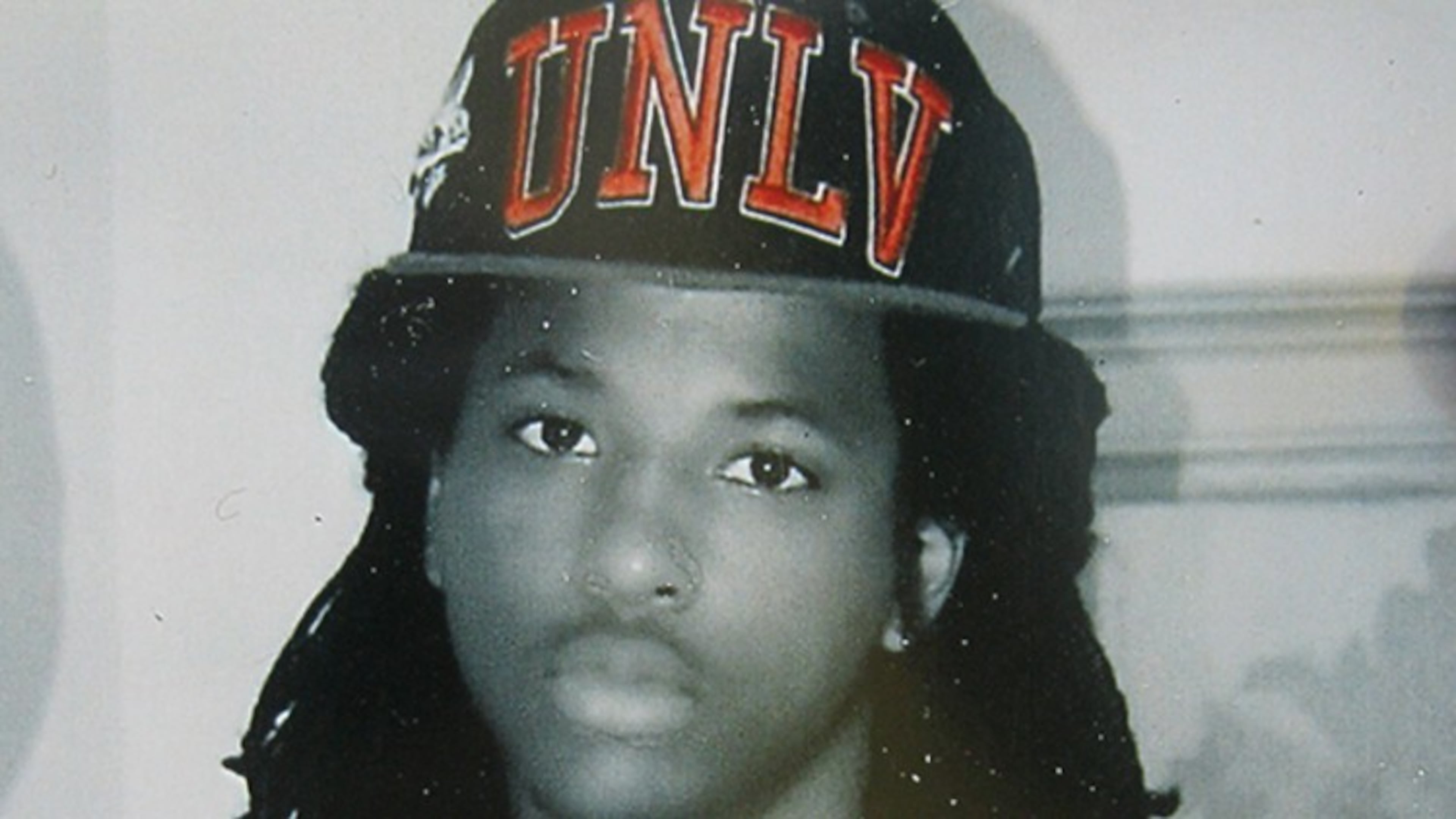
Kendrick Johnson was just seventeen when classmates found him dead inside a rolled-up wrestling mat in the gymnasium of Lowndes High School. The initial conclusions made by the Georgia Bureau of Investigation, and later supported by the FBI, suggested a freak accident. They reasoned Kendrick had reached into the mat to retrieve a shoe and became trapped, leading to suffocation. This narrative has been steadfastly contested by the Johnson family, who argue that their son was the victim of foul play. Their efforts resulted in the exhumation of Kendrick's body for a second autopsy, conducted by forensic pathologist Dr. William Anderson, who concluded that the cause of death was non-accidental blunt force trauma. The family's distrust of official findings was bolstered by the fact that in 2021, the U.S. Attorney's Office closed its federal civil rights investigation without bringing charges, and Lowndes County Sheriff Ashley Paulk publicly reaffirmed the accidental death ruling, even offering a $500,000 reward from his own funds for evidence of a murder.
The Johnsons' relentless pursuit of what they deem justice has led them through the labyrinthine corridors of the legal system, where victories are rare and the tolls on family and emotional health are immense. Their current legal entanglement with the Georgia Department of Public Health is a testament to their unwavering resolve, and while the intricacies of the case are complex, the heart of it remains starkly simple: a family wants answers and accountability for the loss of their child.
The fight over Kendrick Johnson's death certificate is emblematic of the broader struggle for truth and justice his family has waged for over a decade. On July 25, 2025, the Johnson family escalated their battle by filing an amended federal lawsuit against the Georgia Department of Public Health. At the heart of their claim is the assertion that the state's records falsely conclude Kendrick's death as accidental positional asphyxia. This lawsuit, which invokes the Civil Rights Act of 1871 and the Fourteenth Amendment, underscores the family's enduring belief that the system has failed to provide an accurate account of their son's untimely death.
For the Johnsons, the death certificate is more than just a piece of paper, it's a declaration by the state that markedly influences the narrative surrounding Kendrick's death. It serves as the state's definitive word on how Kendrick died, shaping everything from insurance claims to the closure of investigative records. In their eyes, the current designation of 'accidental' not only misrepresents the truth but also denies them the justice they seek. By law, under Georgia's procedures, a formal denial of their request to amend the certificate would allow the family to appeal the decision. Yet, despite filing amendment requests in September and October of 2023, the department has neither amended the certificate nor provided the formal denial necessary for an appeal to proceed.
The lawsuit seeks $12 million, split equally between compensatory and punitive damages, and demands a jury trial along with the correction of the death certificate. Central to the family's allegations is the claim that Dr. Maryanne Kraft, the chief medical examiner at the time, falsified autopsy findings. According to the Johnsons, Dr. Kraft omitted visible injuries and conducted what they describe as a mutilating posterior autopsy. Their complaint draws attention to autopsy photos that allegedly reveal blunt force trauma and a collapsed carotid artery, findings which Dr. William Anderson, who conducted an independent autopsy, deemed consistent with intentional harm.
Kenneth Johnson, Kendrick's father, has been vocal in his belief that the evidence speaks for itself. "All I have to say is pictures don't lie, people do," he stated emphatically in an interview with 41NBC. This sentiment reflects the family's conviction that there are indisputable, visible signs of foul play that have been overlooked or deliberately ignored.
Another troubling aspect that has fueled the family's determination is the mystery surrounding Kendrick's missing organs. During the course of the investigation, it was discovered that Kendrick's organs were unaccounted for following his initial autopsy while under state custody. This discrepancy is underscored by the presence of a biohazard bag in autopsy images, which the family claims should have contained his organs. A subsequent inquiry by the Georgia Secretary of State into these missing organs has not been released, despite numerous open records requests. The lack of transparency only adds to the family's suspicion that there are pieces of the puzzle being concealed.
The Johnsons' pursuit for a corrected death certificate is about setting the record straight, not only for KJ but for a community seeking clarity and accountability. In a case where official findings have been met with skepticism and accusations of misconduct, the importance of the death certificate cannot be overstated. It is a document that carries the weight of finality, one that either closes the door on further inquiries or keeps it ajar for continued investigation. For the Johnson family, amending this document is not just about correcting a record; it's a crucial step toward achieving the justice they believe Kendrick deserves.
As we scrutinize the circumstances surrounding Kendrick Johnson’s death, the scenes from that January day in 2013 unravel under the lens of investigative protocol, illustrating a sequence that any seasoned investigator would find troubling. The wrestling mat, where Kendrick was discovered, had an opening roughly five inches narrower than his shoulders. This alone raises immediate questions about the plausibility of the accidental death scenario proposed by authorities. The chain of custody, a principle that ensures evidence remains unaltered from the scene to the courtroom, was compromised from the start. According to the court record from Judge Sarah Geraghty’s March 2026 dismissal, the coroner on the scene noted the investigative climate as "very poor to worse." Such language signals a breakdown in standard procedure. When law enforcement fails to cooperate with a coroner, it disrupts the integrity of the investigation. Further complicating matters, Kendrick’s body was moved, and the sealed body bag was inexplicably opened, actions that could potentially taint critical evidence.
The surveillance footage, which CNN published in 2013, appeared altered, casting further doubt on the investigation’s transparency. For any investigation to maintain credibility, the evidence must remain uncontaminated, and every piece handled with precision. Yet, in Kendrick’s case, these steps seem to have been disregarded, leaving gaping holes in the narrative offered by officials.
Judge Geraghty, in her dismissal of the family’s $1 billion lawsuit, highlighted her concerns about inconsistencies between official reports and the family's allegations. Yet, she dismissed the case on technicalities: statutes of limitations on the surveillance claims had expired, the Georgia Bureau of Investigation enjoyed immunity, Lowndes County was not properly served, and there were insufficient grounds for defamation claims against two news organizations. The family’s frustration is palpable, as they called the ruling "unprecedented and unconstitutional," and they have filed a notice of appeal. Kenneth Johnson, Kendrick’s father, issued a statement laden with determination and defiance: "If the message is not clear enough, let me make it clear as crystal right now, anyone, regardless of who you are, what position of power and influence you may hold, if you choose to join the murder cover-up scandal of my son Kendrick, you do so at your own peril."
In a bold move, the family also filed a $10 billion lawsuit against the U.S. District Court for the Northern District of Georgia, alleging that the system is structured to shield those responsible. This unprecedented action underscores their belief in a systemic cover-up. As their battle continues, the focus shifts to the Eleventh Circuit briefs, where the family hopes for a different outcome. Meanwhile, an inquiry by the Secretary of State remains unreleased, and the death certificate still declares Kendrick’s death an accident.
That vacuum has a way of filling itself. This month a video tagged #justiceforkendrickjohnson began circulating again on Facebook, claiming that a video of what actually happened to Kendrick has just been released. The clip runs about seventy seconds: a narrator, a screen recording of another video playing inside it, and an overlay announcing that it is over. The comments underneath it are their own kind of evidence about where this case stands after thirteen years. Some viewers swear they can see a boy being held by his hair. Others are certain they see a weapon. Just as many say they cannot make anything out at all. Nobody in the thread can say where the underlying footage came from, who recorded it, or when it was shot.