
Lady B, Schoolly D and the Philly Roots Nobody Gives Credit.
Ask somebody from Philadelphia where hip hop went after the Bronx and they will not say Los Angeles, and they will not say Atlanta. They will tell you it came down I-95 and stopped at home. That is not just neighborho...
Advertisement

Ask somebody from Philadelphia where hip hop went after the Bronx and they will not say Los Angeles, and they will not say Atlanta. They will tell you it came down I-95 and stopped at home. That is not just neighborhood pride. It is close to how WHYY put it when it looked back at the city's early scene: hip hop began in the Bronx, then "quickly moved right on down I-95, stopping in Philadelphia on its way to global exposure." The city did not wait for permission to build its own version of the culture, and it has been waiting on the credit ever since.
Start with a woman most of the country still cannot place. Wendy Clark, known across the Delaware Valley as Lady B, cut a single called "To The Beat Y'all" in 1979. That made her one of the first female MCs to release a vinyl record, a distinction WHYY notes she shares with Angie B, later known as the singer Angie Stone. In a year when most people point to "Rapper's Delight," a young Black woman in Philadelphia was already on wax with her own record. She was not a footnote to the culture. She was in the first wave of it.
Then came the radio. Lady B is probably best known for The Streetbeat, her show on Power 99 from 1984 to 1988, which WHYY called one of the first of its kind and a program that gave a young art form significant early exposure. A rap show on a major station told every kid with a mixtape and a crew that somebody in the building believed in them. She was still at it decades later, hosting "The Basement Party" on WRNB's afternoon drive for several years up until 2017. That is three decades of a Black woman holding down a microphone in her hometown.
Filmmaker Mike Dennis has spent years trying to fix that record himself. Dennis, who founded ReelBlack and has hosted Black film events in Philly for fifteen years, told WHYY his pitch was simply curiosity. What he found backs up what the city has claimed for decades. "Philly was there alongside New York," Dennis said. "It was the first Northeastern city to feel the ripple effect of the explosion of hip-hop. Philly had some of the first record labels committed to putting hip-hop on wax. And all the world champion DJs were from Philly." He turned that curiosity into two short films, "A Salute to Lady B" and "Bring The Beat Back," and showed them at the African American Museum in Philadelphia, 701 Arch Street, on June 15, 2018, with a panel afterward that included Lady B, Schoolly D, Yvette Money and MC Breeze.
Dennis also said something that deserves more attention than it got. His crew shot about nine hours of footage, which he called nothing for a documentary, and he noted that even eighteen years after he started, it would still be the first documentary about Philly hip hop. A city with this much history waited nearly two decades for the first film about its own scene. His point was that the stories he wants to tell are not mainstream, and that it was a good time to remind people of the true spirit of hip hop apart from what has been corporatized and commoditized.
Now the receipts that make the national case. Schoolly D, a name WHYY lists among the city's pioneers, was a West Philadelphia rapper who released records on his own label in the mid 1980s, including 1985's "P.S.K. What Does It Mean?", a dark, slow, drum machine record about a Park Side crew that sounded nothing like the party rhymes coming out of New York. Hip hop historians have long pointed to it as an early blueprint for what the industry later marketed as gangsta rap. The sound that sold millions on the West Coast later in the decade had a Philadelphia fingerprint on it, and the man who made it was doing it independently, at a time when almost nobody thought a rapper could run his own label.
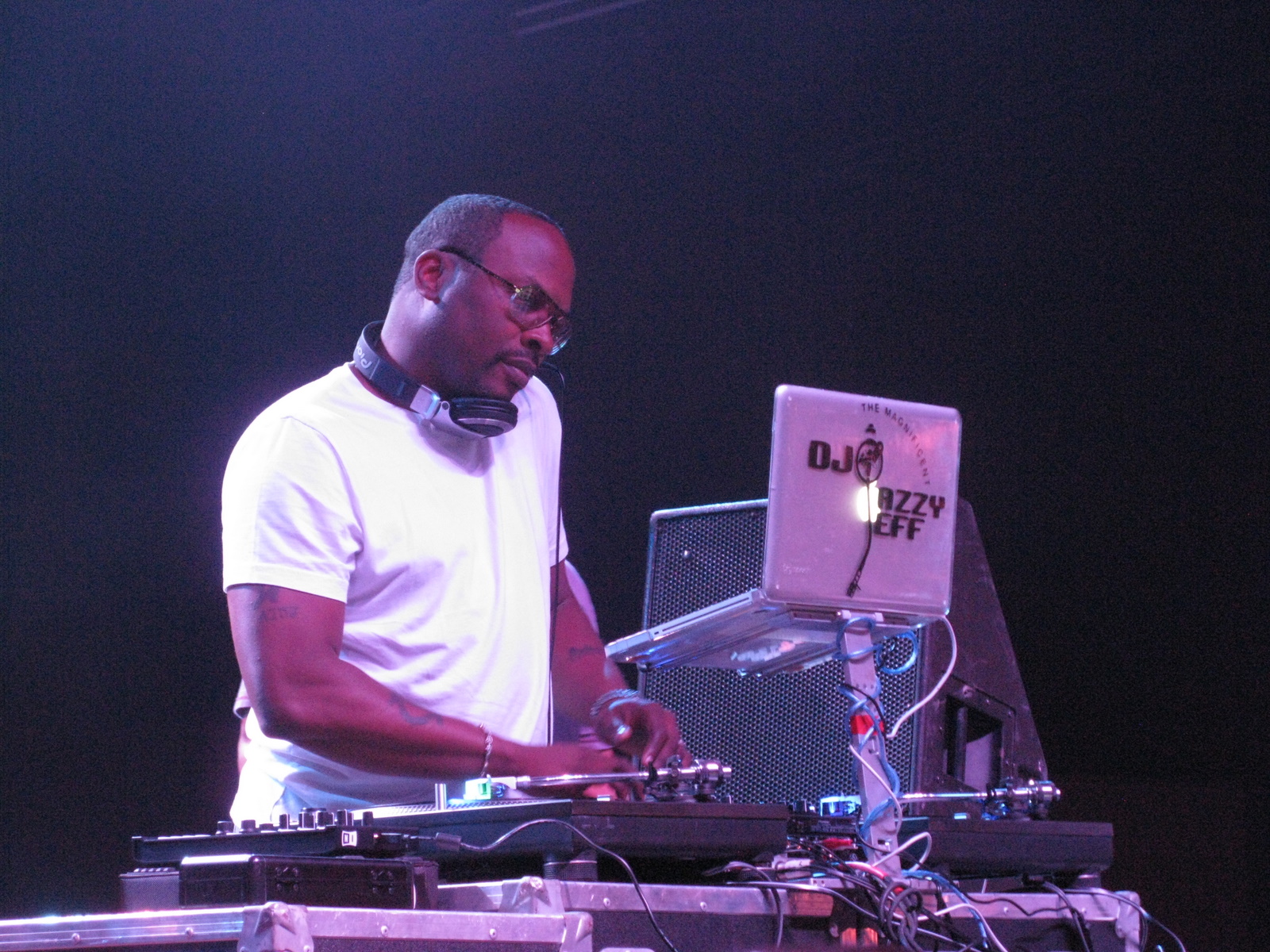
WHYY also names Cool C and Steady B, two more voices from that first generation, along with DJ Cash Money. Then there is the pair that put the city on television. DJ Jazzy Jeff and a West Philly kid named Will Smith, the Fresh Prince, came out of the same network of block parties and basement shows and became one of the first rap acts to cross fully into pop. Jeff's turntable work popularized the transformer scratch, and in 1989 the duo won the first Grammy ever awarded in a rap category. The industry could not deny that two kids from Philly had changed what a rap record could sell.
Watch Lady B in the room, the way her community knew her. The clip below is a Basement Party session with Schoolly D, two of the names at the center of everything above, and it shows the kind of community space where this music was held together long before anyone put a plaque on a wall.
Watch: Lady B hosts a Basement Party session with Schoolly D
That is the through-line to the national business, and it is worth stating without inflating it. New York built the culture. But the ideas that rap could be sold by a small independent label, that a woman could anchor the genre's radio platform in a major market, and that a DJ's technique could travel farther than the DJ were all proven in Philadelphia early. The pipeline from Philly to the national industry was real, and for a long stretch it was Black-owned and Black-run.
It did not stop in the eighties. The Roots, whom WHYY lists among the artists who kept Philadelphia a crucial part of the hip hop marketplace, turned a live band into one of the most respected acts the genre has produced. Eve carried the city's toughness onto the charts. Meek Mill took the sound of North Philly to arenas and then made his own legal fight a national conversation about probation. Chill Moody, the independent rapper WHYY quoted, said that for a while the scene was always represented by one person at a time in the mainstream, but now it runs from Lil Uzi to The Roots, which has brought more light to the city from almost every angle.
That range is the quiet strength of the Philadelphia story, and the reason it gets misread. Outsiders look for one Philly sound the way they look for one Atlanta or Bay Area sound, and Philadelphia never gave them one. It gave them a woman on the radio, a dark independent pioneer, a pair of crossover stars, a live band with a jazz education and a street poet carrying a courtroom fight, all from the same few miles of rowhouses, rec centers and church basements.
There is a present tense here that matters. Philadelphia has spent recent years working through hard stretches on safety and housing costs, and the blocks that produced these artists feel that pressure first. The venues, radio slots and record shops that let a kid from West Philly become Schoolly D or Jazzy Jeff are thinner than they used to be. Black-owned media, museum programming like the night that put Dennis's films on a screen, and the community programs that still teach turntables and writing are doing the work the industry never funded.
There is also a plain lesson in how this record nearly got lost. The film celebrating Lady B's three decades was commissioned for her thirtieth anniversary concert at the Dell East. It rained that night and the screening was cancelled. It sat until the African American Museum offered Dennis a Black Music Month slot. A rainstorm nearly erased a piece of this city's history, which makes you wonder how much more is sitting in a basement or a tape box in somebody's mother's house in Germantown, Overbrook or North Philadelphia right now.
That is where you come in. If you grew up on Power 99 when The Streetbeat was on, if you remember a Basement Party on WRNB, if your uncle spun at a block party in West Philly, PVN wants the part of the story the record missed. Drop the names, the stations, the corners and the years in the comments, because the people who lived it are the only archive this history will ever have. WHYY reported the original story and Philadelphia filmmakers did the hard work of documenting it. We are only trying to keep it moving.
So the next time somebody tells you hip hop is a New York and Los Angeles story, send them to the corridor between them. Lady B was on vinyl in 1979 and on the air by 1984. Schoolly D laid down a template in 1985 that the industry later sold back to the country. Two kids from the same city won the first rap Grammy. Philly was there alongside New York, as Mike Dennis said. It is long past time the credit caught up.
Advertisement
Source: WHYY, "From Lady B to Meek Mill, tracing the roots of Philly hip-hop" (June 15, 2018). Photo: DJ Jazzy Jeff performing in 2011, public domain via Wikimedia Commons.
More from PowerVault Network:
