Nebraska Gas Station Shooting: Was It a Racially Motivated Attack?
By Malik Carter, PowerVault Staff In a deeply unsettling event at an Omaha gas station, 31-year-old David Seyler now faces serious felony charges for allegedly shooting Leon Mitchell, aged 48, and his 23-year-old son....
Advertisement

By Malik Carter, PowerVault Staff
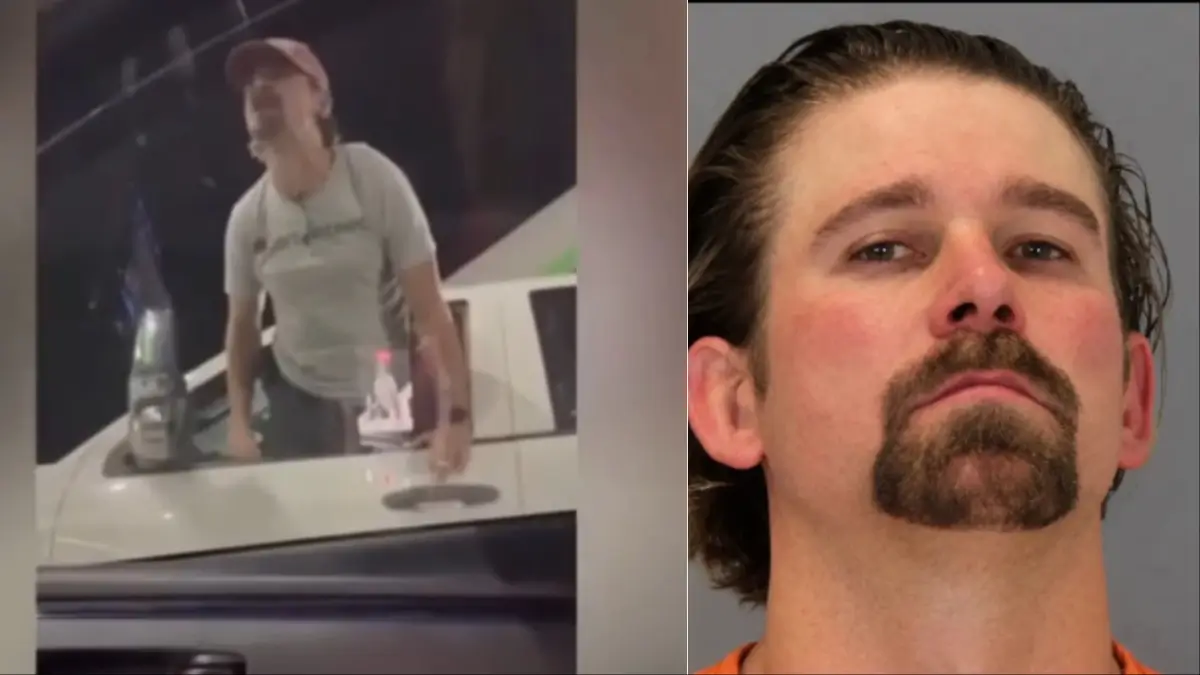
In a deeply unsettling event at an Omaha gas station, 31-year-old David Seyler now faces serious felony charges for allegedly shooting Leon Mitchell, aged 48, and his 23-year-old son. This incident, which unfolded on what seemed like an ordinary evening, has left one man with potential paralysis and has been unequivocally labeled by the family as a hate crime. The gravity of the situation, marked by the racially charged nature of the confrontation, shows the broader societal issues that continue to plague communities of color. The charges against Seyler, including assault and terroristic threats, reflect the severity of the offense, but for the Mitchell family, the emotional and physical scars left by this violent encounter are far more profound.
The tragic shooting unfolded at the Mega Saver gas station located at the busy intersection of 144th and Blondo streets, a place that many locals pass by daily. Prosecutors argue that the confrontation began inside the store, ignited by a seemingly innocuous request from one of the victims. When Leon Mitchell or his son asked Seyler for a cigarette, the situation quickly deteriorated. The tension boiled over, spilling into the parking lot, where the verbal altercation escalated into sudden violence. Seyler, allegedly armed, turned what should have been a trivial exchange into a life-threatening encounter. According to a report from 3 News Now, Seyler appeared in court on October 23, where the judge set his bond at $750,000, reflecting the seriousness of the charges against him.
As the confrontation outside the gas station intensified, Seyler reportedly pulled out a firearm, escalating the situation to a terrifying level. His alleged comment, "You wanna get shot? You’re in West O now," carried with it a chilling racial undertone, suggesting that the victims were unwelcome in that area. This menacing remark, capturing the hostility of the moment, was recorded in a video provided by the victims' family. The footage reveals Seyler's aggressive demeanor as he threatened the men, a prelude to the violence that would follow. The video serves as a stark reminder of the racial animosity that can lurk beneath the surface of everyday interactions, particularly in communities where racial tensions simmer.
Following the violent attack, both Leon Mitchell and his son required extensive medical intervention, undergoing major surgeries to address their critical injuries. Leon's daughter, Makiya Mitchell, has spoken about the severity of her father's spinal cord injury, which leaves him with a grim prognosis of potentially being permanently paralyzed. Her brother also suffered devastating injuries, with gunshot wounds penetrating vital organs such as the liver and lungs. Despite the dire circumstances, medical professionals hold cautious hope for their survival, though the path to recovery remains fraught with uncertainty and challenges. The family faces a long, arduous journey ahead, burdened by the emotional and physical toll of this senseless violence.
In the aftermath of the shooting, Makiya Mitchell has portrayed her father as a hero, a man who selflessly intervened to protect his son and others when faced with a deadly threat. She asserts that her father's actions were driven by a deep instinct to safeguard his loved ones and those nearby. Makiya firmly believes the attack was racially motivated, a hate crime that targeted her family without justification. Her words emphasize the racial dynamics that were at play during the incident, dynamics that are further underscored by the evidence captured in the second video. The family's perspective explains the broader implications of this attack, which resonates with the racial tensions that permeate many communities.
This incident is not an isolated event but part of a troubling pattern of racially charged violence that continues to plague the United States. Similar cases, such as the road rage killing of Koran Irvine in New York and the confrontation faced by a Black FedEx driver in Florida, highlight the persistent racial tensions that bubble beneath the surface of American society. These events serve as stark reminders of the systemic issues embedded within the justice system, which all too often fails to protect Black lives with the urgency and care they deserve. The recurring nature of these incidents shows the need for a comprehensive reevaluation of how the justice system addresses racially motivated crimes.
This tragic confrontation should have never escalated to the point of gunfire and violence.
This act of violence isn’t just a singular event, it's part of a pattern that reflects deeper societal issues.
The shooting at the Omaha gas station is emblematic of deeper societal tensions that extend beyond a single event, challenging us to confront uncomfortable truths about racial bias in our communities. It compels us to examine the prejudices that continue to fuel such violent encounters and to question why racial animosity persists in a nation that prides itself on equality and justice. The implications of this incident stretch far beyond the immediate victims and their families, calling into question the societal structures that allow such biases to thrive. It is a call to action for collective introspection and meaningful change to address the root causes of racial violence.
For the justice system, this case serves as yet another critical test of its capacity to effectively address racially motivated crimes and deliver justice. The proceedings will not only impact the victims' family but will also reverberate throughout the wider Black community, who look to the legal system for accountability and transparency. The anguish captured in the video shared on Instagram highlights the family's urgent demand for justice and the broader community's call for systemic reform. The outcome of this case will serve as a barometer for the justice system's ability to uphold its principles and to protect marginalized communities from the scourge of racially motivated violence.
For the community, this incident starkly shows the painful reality that racism and violence are pervasive issues not confined to specific regions or demographics. This act of violence is part of a broader pattern that reflects systemic societal issues, demanding a comprehensive reckoning and a reevaluation of how racism is addressed across the nation. These incidents are calls to action, urging communities to confront the deep-seated prejudices that perpetuate cycles of violence and to commit to meaningful change. The broader societal implications of this incident challenge us to strive for a more equitable and just society, where all individuals are afforded safety and dignity.
Advertisement
The tragic incident at the gas station reveals the complex interplay between class and racial dynamics, bringing to light the intersection of privilege and bias. Reports indicate that the confrontation spiraled into hostility over something as trivial as a request for a cigarette. In a society fraught with racial tension, such seemingly minor interactions can quickly escalate into violent encounters when underlying prejudices are present. This situation serves as a poignant reminder of how systemic racism can transform ordinary interactions into dangerous confrontations, exposing the vulnerabilities faced by marginalized communities in everyday settings. The incident shows the urgent need for societal introspection and reform to address these pervasive issues.
As we look to the future, the focus must remain on the legal proceedings and their broader implications for racial justice. Will this case ignite meaningful change, or will it simply fade into the background of an ongoing cycle of violence and impunity? The community's response and the legal system's handling of this case will set a precedent for future incidents, shaping the path toward justice and accountability. As the victims' family seeks justice, it is imperative for the community to remain vigilant and committed to dismantling the systemic structures that perpetuate such violence. Only through collective effort and sustained advocacy can we hope to create a more equitable and just society.