Nick Cannon Revisits Eminem Feud: Who Was It Really For?
By DeShawn Price, PowerVault Staff Nick Cannon says his Eminem feud started with defending Mariah Carey, but his latest explanation deserves more than another scoreboard. Speaking on the November 9 episode of On Par w...
Advertisement

By DeShawn Price, PowerVault Staff
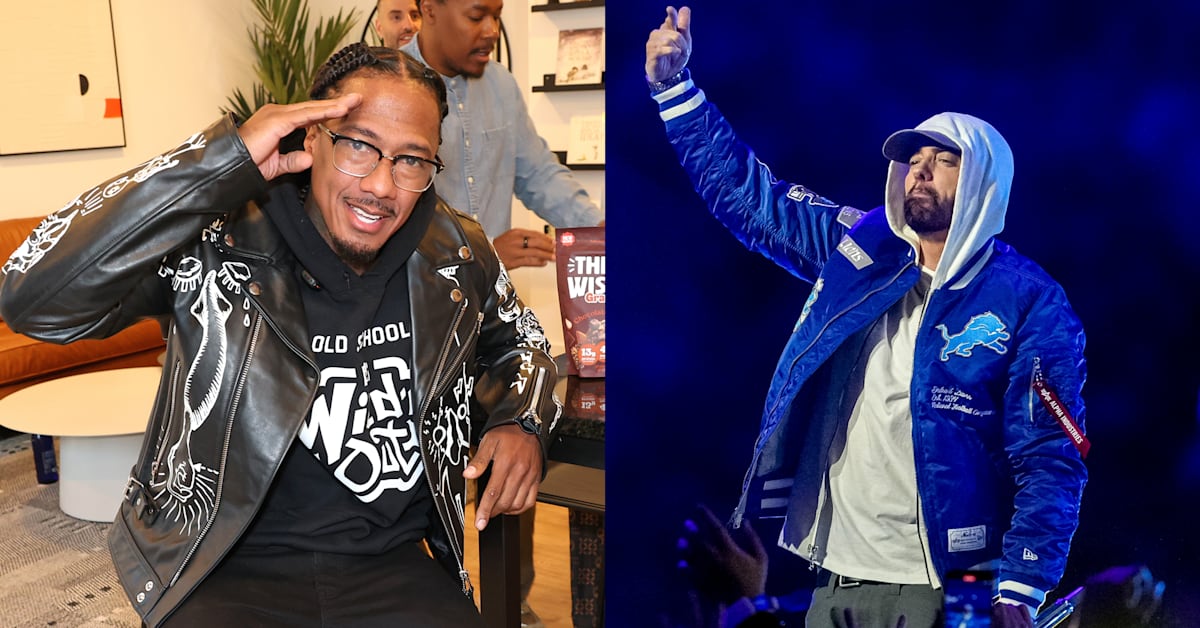
Nick Cannon says his Eminem feud started with defending Mariah Carey, but his latest explanation deserves more than another scoreboard. Speaking on the November 9 episode of On Par with Maury Povich, Cannon revisited why he challenged the rapper over references to his former wife. His position was direct: disrespecting Carey meant hearing from him. That explains his motivation. It does not settle whether a public rap battle protected her peace. Loyalty deserves its flowers, but volume alone cannot tell us whether somebody actually felt supported. The useful conversation now is about that difference, not pretending two men discussing the same woman automatically makes either one the authority on her story.
The On Par with Maury Povich interview gives Cannon room to describe a dispute that stretched across songs, a written response and later interviews. He said Carey and Eminem had a professional relationship that the rapper presented as personal. That is Cannon's account, not independent confirmation of what happened between them. He also suggested Eminem remained upset after Cannon and Carey married. Again, that describes Cannon's interpretation of someone else's feelings. Being part of the later conflict does not automatically give him firsthand knowledge of its earlier history. The distinction matters because celebrity interviews can turn a speaker's confidence into an apparent fact before anyone checks what the speaker actually knows. Familiar names do not make an old claim newly verified.
“He disrespected my woman, man. You can't come at my wife and don't expect to get this work,” Cannon told Povich around eight minutes into the conversation. The language fits the Wild’n Out host's competitive persona, but he framed his response as a boundary rather than a random challenge. He said he could not accept the comments and needed to defend his relationship. There is a fair principle underneath that: fame does not erase a person's right to object when their spouse becomes material. Being married to a superstar should not mean quietly accepting whatever another superstar decides to put on a record. Whether every response helped is a separate question. Cannon explains his reasoning in the interview below.
That explanation in the clip points back to 2009, when Eminem addressed Carey and Cannon on “Bagpipes From Baghdad” and “The Warning.” Carey released “Obsessed” that same year, with a video widely understood as a jab at Eminem. Her response matters because she was not silently waiting for somebody else to speak. She had her own microphone, her own humor and her own way of making the point. The joke worked through her performance, not through a husband translating her feelings for the audience. Cannon also published a Tumblr response titled “How Cute,” according to Billboard's reporting cited in the supplied account. Those were different tools serving different purposes: a pop record, a visual statement and a husband's written objection.
The dispute resurfaced in 2019 after Cannon discussed that letter on T.I.'s ExpediTIously podcast. Eminem responded on Fat Joe's “Lord Above,” and Cannon answered with three diss tracks. By then, Cannon and Carey had divorced; their marriage ended in 2016. That changes the context of the later exchange, even if Cannon still felt protective. A former spouse can care without an active marriage being under attack. Eminem later delivered “Canceled: Invitation,” a callback to Cannon's “The Invitation,” extending a conversation already far removed from its original marital context. It also means audiences should separate the original disagreement from the decision to revive it a decade later. The story moved between interviews and records, with another video from that exchange presented below.
Those clips sit inside a much older entertainment habit: turning a woman's romantic history into material for competition between men. Jay Z's “Super Ugly” in 2001 dragged intimate claims into his battle with Nas. Drake's “Duppy Freestyle” and Pusha T's “The Story of Adidon” made private relationships and family information central to their 2018 confrontation. The circumstances differ, but the audience's appetite is familiar. Personal information becomes ammunition, then fans debate who delivered it better. The woman mentioned rarely gets equal control over that conversation. Even a denial can become fresh content, leaving her to manage attention she did not necessarily invite while the competitors collect another round of reactions. PVN's coverage of Drake reconsidering performances of Rihanna's “Take Care” touches a related issue: music can keep a past relationship publicly active long after the people involved have moved elsewhere.
The real test of protection is whether the person being defended gets more peace afterward.
Defending a woman should not require making her the permanent setting for a fight between men.
Cannon deserves room to say the comments crossed a line without being mocked for caring about Carey. Black love should not become embarrassing simply because a relationship ended. They also share twins, Moroccan and Monroe, who are now 15. Respect between their parents has value beyond anything a diss record can deliver. Their family connection did not disappear with the divorce, but that connection does not make every public confrontation a family service. Still, defending a woman should not require making her the permanent setting for a fight between men. Carey's own response belongs at the center of this history, not tucked behind competing claims about who stood up for her. Giving her credit means recognizing that she could answer, decline to answer or change the subject on her own terms.
The industry argument is less romantic. An old dispute supplies a podcast with a recognizable clip, gives entertainment outlets a searchable headline and sends listeners back toward old records. None of that proves this interview was staged or coordinated. No supplied evidence establishes a publicity agreement, a planned response or a release being promoted through the discussion. The incentive exists without a secret meeting. Celebrity conflict is cheap programming because the audience arrives knowing the characters. A familiar feud needs less introduction than a new project, and an emotional quote can travel without its surrounding caveats. That makes the interviewer's followup especially valuable. What did the response accomplish? Would Cannon handle it differently now? Without those questions, a conversation can preserve the grievance while skipping the lesson that might justify revisiting it.
Fans have a job here, too: stop confusing affection for an artist with an obligation to defend every choice. Someone can respect Eminem's technical skill and reject how he discusses a woman. Someone can appreciate Cannon's loyalty and decide three diss tracks were more attention than the situation deserved. Those positions can live together without anybody surrendering a fan card. Cannon himself has acknowledged Eminem's place in hip hop, which makes the demand that audiences choose total allegiance look especially unnecessary. The same discipline applies when Cardi B challenges a claim about her business: ask what the evidence establishes before rewarding the loudest version. The group chat can have jokes. It should also know when it is debating a documented event, a personal interpretation or an unsupported claim.
Race and gender also shape whose credentials get treated as protection from criticism. Eminem's stature as a white superstar in a Black art form does not make him exempt from scrutiny about Black women. Carey's identity as a biracial Black woman matters when coverage reduces her to a disputed relationship rather than respecting her authorship and career. That does not establish anyone's motive, and criticism should not pretend it does. It does demand a better standard than treating lyrical ability as permission. We can discuss the writing without accepting the premise that a woman's private life belongs to whoever delivers the sharpest punchline. Hip hop can celebrate competitive writing without granting its biggest stars unlimited access to somebody else's dignity. Talent earns recognition. Accountability should not disappear when the beat starts.
Advertisement
Cannon previously told Billboard in 2020 that he respected Eminem as a hip hop icon while remaining willing to respond. That is useful context, not proof that another round is coming. The supplied reporting contains no new Eminem response to this interview. An old willingness to engage is not a fresh announcement of war. Watch whether this becomes an actual exchange or stays what it currently is: Cannon explaining an old decision. Better still, watch whether the coverage leaves room for Carey beyond the dispute. Her catalog, creative control and life deserve attention without a man's grievance attached. The next chapter does not need another diss track to count as growth.
More from PowerVault Network: