Nicki Minaj's MAGA Pivot: What Trump's Remarks Say About His Black Celebrity 'Supporters'
By Renee Fontaine, PowerVault Staff Nicki Minaj, one of hip-hop's most recognizable figures, recently shared the stage with former President Donald Trump, sparking a whirlwind of media attention and social media uproa...
Advertisement

By Renee Fontaine, PowerVault Staff
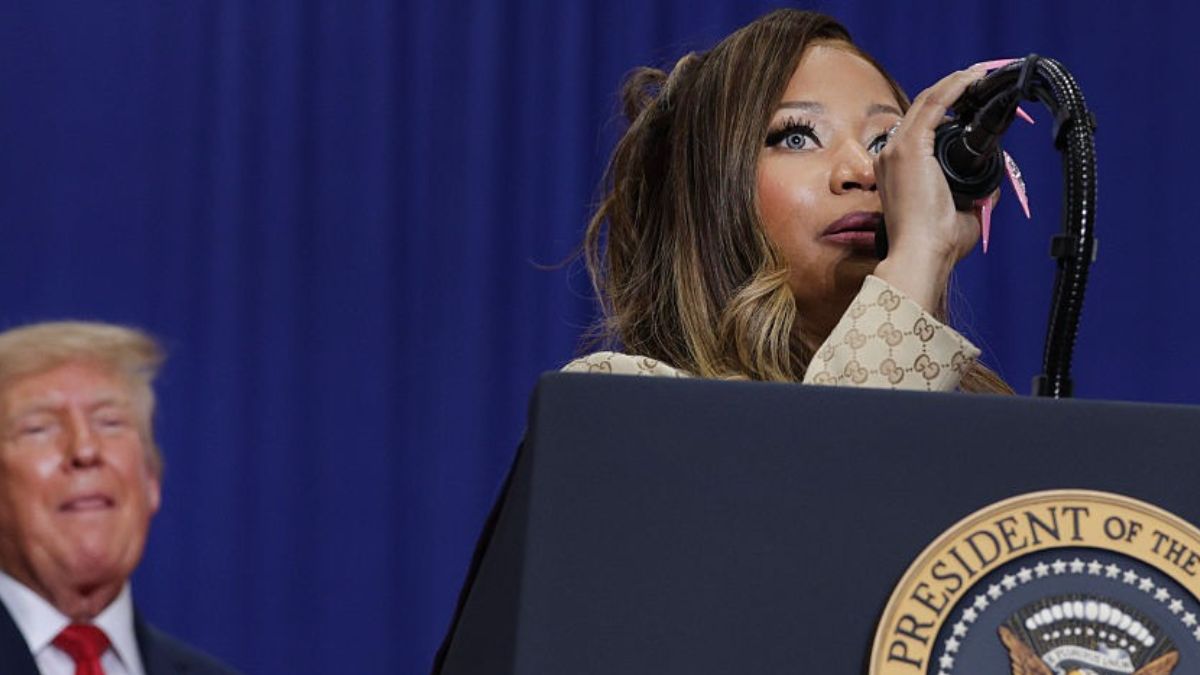
Nicki Minaj, one of hip-hop's most recognizable figures, recently shared the stage with former President Donald Trump, sparking a whirlwind of media attention and social media uproar. The rapper, known for her chart-topping hits and larger-than-life persona, has made headlines due to her vocal support for Trump, a move that some fans find puzzling and polarizing. During a campaign rally in Port Huron, Michigan, Trump showered Minaj with praise, albeit in his usual controversial style, focusing on her physical appearance rather than her musical prowess. This unexpected political alliance has left many questioning whether Minaj's motivations are rooted in genuine political beliefs or strategic career calculations. The spectacle of their interaction shows the ongoing tensions between celebrity culture and political discourse, where the lines between entertainment and serious policy discussions often blur.
The event was part of a campaign push for Republican Senate candidate Mike Rogers, where Trump, ever the showman, paraded his Black celebrity endorsements like prized trophies, hoping to sway voters by flaunting his connections. As reported by the Atlanta Black Star, the evening took a bizarre turn when Trump's comments about Minaj's body drew attention away from the night's political message and towards his ongoing fascination with celebrity bodies. This focus on superficial attributes rather than substantive issues has become a hallmark of Trump's public appearances, reducing complex political events to mere spectacles. By bringing Minaj into the fold, Trump not only sought to bolster his image but also attempted to deflect from the pressing issues facing the nation, using celebrity allure as a distraction from the substantive political discourse that should have been at the forefront.
Trump's words about Minaj were as blunt as they were inappropriate, prompting immediate reactions online and offline. He instructed the rapper to stand as he complimented what he called her 'hard to miss' backside, a move that left many in the audience and at home shaking their heads in disbelief. This incident is not an isolated one; it's part of a long pattern where Trump finds himself in hot water over comments on physical appearances, a behavior that continues to draw criticism despite its predictability. The backlash was swift, with critics lining up behind Minaj's nod of approval for the former president, questioning the sincerity and implications of her support. The incident not only highlights Trump's penchant for controversy but also puts a spotlight on the roles celebrities play in political arenas, where their presence can overshadow the critical issues at hand.
For many, Minaj's sudden political alignment feels like a strategic play in a game where the stakes are high and the true motives remain elusive. Her fans are left questioning what this means for her brand, which has always been about empowerment and authenticity. Has Minaj traded in her credibility for a seat at a table where she's treated as a prop, a mere tool in someone else's political theater? This is more than about optics; it's about the very nature of celebrity influence in political spheres. The rapper's decision to align with Trump, a figure whose policies often run counter to the interests of her fanbase, poses a risk to her reputation and long-standing image as a champion for marginalized voices. It's a complex dance between maintaining personal authenticity and handling the treacherous waters of political endorsements in an era where public figures are scrutinized more than ever.
Social media was quick to react, with individuals calling out Trump's objectification of Minaj and expressing outrage over the normalization of such behavior. Others speculated that this move might be a calculated attempt by Minaj to broaden her audience or reinvent her public image in a rapidly changing cultural scene. The debates raged on about what her support means in a broader sense, especially when juxtaposed with Trump's history of questionable comments and policies that have not always aligned with the interests of Black communities. This incident has ignited discussions about the intersection of race, gender, and politics, highlighting the complex dynamics at play when public figures choose to align themselves with controversial political leaders. The reactions captured online reveal a community grappling with the implications of celebrity endorsements in a political climate fraught with division and uncertainty.
This isn't the first time Trump's interactions with Black celebrities have come under scrutiny, as his history is littered with similar controversies. In 2016, he garnered support from figures like Kanye West, resulting in a wave of criticism that questioned the sincerity and impact of such endorsements. The same pattern unfolded when Mike Tyson attempted to bolster Trump's image, only to be dismissed as a mere pawn in a larger scheme. The history of exploiting celebrity endorsements as a political tool is an old one, where Black celebrities often find themselves at the center of a spectacle that benefits politicians more than the communities these celebrities represent. This tactic reduces complex political dynamics to simple narratives, using the allure of celebrity to mask underlying policy failures and divert attention from substantive issues that require urgent attention and action.
Yet, here we are again, with the same script playing out. Trump's comments are not just off-color; they reflect a deeper issue of using Black bodies as entertainment and distraction in political narratives. It's a tactic as old as politics itself, divert attention from policy matters with the allure of celebrity.
Nicki Minaj stands at a crossroads, where her endorsement of Trump could either be a bold strategic move or a misstep that alienates her core fans.
Nicki Minaj stands at a crossroads, where her endorsement of Trump could either be a bold strategic move or a misstep that alienates her core fans. Historically, fans have shown little patience for celebrities who align themselves with political figures whose policies undermine the very communities they claim to support. Minaj's decision has sparked a broader conversation about the responsibilities of public figures in political discourse. Will Minaj find herself making amends for a partnership seen as tone-deaf and self-serving, or will she manage to handle this complex scene by redefining her public persona? The stakes are high, as her choice could redefine her legacy and influence in an industry where public opinion shifts rapidly. Her fans, many of whom have looked up to her for her outspoken nature and empowering messages, will be watching her next moves closely.
This situation says a lot about the precarious relationship between celebrity and politics, highlighting the complexities and contradictions inherent in such alliances. It's a reminder that celebrity endorsements are a blessing and a curse. On one hand, they provide unparalleled visibility and a platform to advocate for change, offering celebrities the chance to leverage their influence for causes they believe in. On the other hand, they expose celebrities to the risk of their message being co-opted by politicians who see them as mere instruments to reach wider audiences. The power dynamics at play can often overshadow the genuine intentions behind these endorsements, leading to a dilution of the message and potential backlash from fans and critics alike. The post below captures the sentiment well, reflecting a public increasingly aware of the nuances involved in celebrity-driven political narratives.
Trump's objectification of Minaj also shows a broader societal issue: the commodification and fascination with Black women's bodies, a problem deeply ingrained in cultural norms and media representations. This isn't new, but each such incident reignites conversations about respect, autonomy, and the right of Black women to exist beyond the confines of their physicality. The entertainment industry, where image often trumps message, perpetuates these stereotypes, reducing talented individuals to their appearances rather than recognizing their contributions and achievements. These comments are a stark reminder of how far we have yet to go in challenging and changing these perceptions, as they continue to shape public discourse and influence how Black women are perceived across various platforms. The incident calls for a reexamination of the standards we uphold and a commitment to fostering a more inclusive and respectful cultural environment.
Advertisement
Race and class dynamics are at play here, complicating the narrative surrounding Minaj's political moves. Minaj isn't just any celebrity; she's a Black woman handling an industry built on appearances and perceptions, where the stakes are disproportionately higher for those who challenge the status quo. Her alignment with Trump might be seen as a savvy career move in some circles, offering access to new platforms and audiences. However, in others, it's perceived as a betrayal, a decision that undermines the solidarity and trust she's built with her fanbase over the years. The question remains: at what cost do we engage with power structures that have historically marginalized us? This dilemma is not unique to Minaj but reflects a broader tension within communities of color, grappling with the balance between personal ambition and collective responsibility.
As the dust settles, what happens next will be critical for Minaj and Trump. Will she continue to embrace this political pivot, or will she recalibrate her approach to maintain her standing with her fans? As for Trump, will this partnership mark a new chapter in his bid to regain political power, or will it serve as another example of the fleeting nature of celebrity endorsements? Nobody knows yet, but one thing is certain: the community will be watching, critically and closely. The unfolding events will test the resilience of Minaj's brand and challenge Trump's ability to maintain relevance in a political scene that demands accountability. The outcomes of this partnership will not only impact their individual trajectories but also set a precedent for future interactions between celebrities and political figures in a rapidly evolving cultural and political environment.