Terrell Owens Weighs In on Caitlin Clark vs. Angel Reese Debate
By Andre Coleman, PowerVault Staff Terrell Owens has injected his influential voice into the ongoing debate over whether Caitlin Clark or Angel Reese deserves to be dubbed the 'face of the WNBA.' For Owens, the answer...
Advertisement

By Andre Coleman, PowerVault Staff
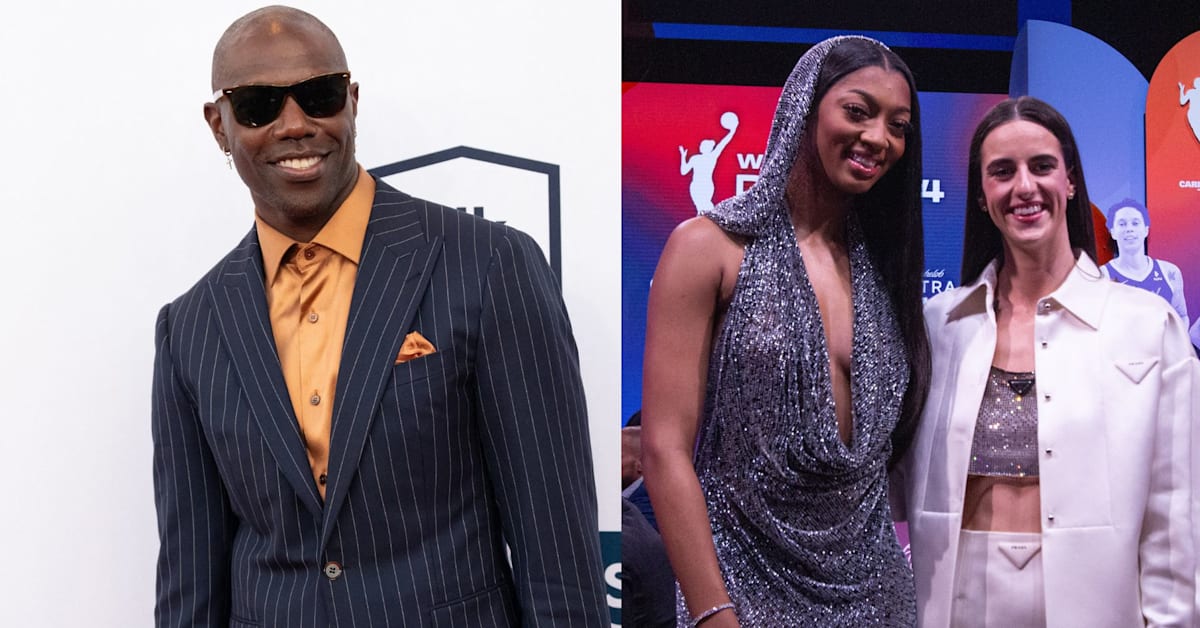
Terrell Owens has injected his influential voice into the ongoing debate over whether Caitlin Clark or Angel Reese deserves to be dubbed the 'face of the WNBA.' For Owens, the answer is unequivocally clear: there's ample room for both stars to shine simultaneously. On his podcast, 'Get to the Point,' the NFL Hall of Famer underscored that each athlete is a luminary in her own right, casting a significant spotlight on women’s basketball. By acknowledging the individual brilliance and unique contributions of both Clark and Reese, Owens challenges the narrative that the success of one must eclipse the other. He recognizes their shared role in elevating the profile of women’s basketball, drawing attention and admiration to a sport that has long struggled for equal recognition.
Owens, in conversation with Chris Spencer on the podcast, dismantled the reductive notion that celebrating one athlete's achievements inherently diminishes another's. He highlighted Angel Reese’s remarkable journey from the Chicago Sky to the Atlanta Dream, where her relentless efforts propelled the franchise to the WNBA Finals, serving as proof of her profound impact on the sport. Owens' remarks emerged after his own unsuccessful attempt to secure a coveted ticket for Game 7 between Atlanta and the Golden State Valkyries in San Francisco. This scenario, which he described as both frustrating and indicative of the sport's soaring popularity, shows the heightened interest and demand surrounding women’s basketball, proof of the magnetic draw of players like Reese and Clark.
Despite his disappointment at not being able to witness the WNBA Finals in person, Owens found the experience to be a positive indicator of the sport's evolution. The struggle to obtain a ticket highlighted, for him, how far the women's game has come in terms of public interest and visibility. Owens emphasized that such high demand signifies a crucial shift in how audiences are beginning to value women's basketball, reflecting a broader societal change where female athletes are finally receiving the recognition they deserve. By acknowledging the rising popularity, Owens suggests that this moment should be celebrated as a milestone in the sport’s journey toward greater acceptance and appreciation. This turning point is a call to action for fans and the industry to continue supporting and investing in the women's game.
Owens didn't hold back when addressing the criticism Angel Reese has faced for her vocal and assertive presence on the court, particularly her penchant for engaging in trash talk during games. He drew parallels between her behavior and that found in men’s sports, where competitiveness often manifests through verbal exchanges. Owens’ perspective taps into a larger, ongoing dialogue about gender norms in sports, where female athletes frequently encounter double standards that their male counterparts are rarely subjected to. This conversation is not just about Reese, but about challenging the outdated expectations that continue to constrain women in sports. By defending Reese's right to express herself, Owens advocates for a more equitable playing field, where female athletes are free to exhibit the same competitive edge celebrated in male-dominated arenas.
While Owens celebrated Reese’s competitive fire, he also pointed out that her contributions extend beyond being an offensive force, like Gabby Williams. He lauded her for her defensive prowess and her exceptional ability to disrupt opposing teams, qualities that make her an indispensable asset on the court. Reese’s impact is not merely measured in points scored but in the way she influences the game's tempo and flow, asserting her presence as a versatile and strategic player. By highlighting these attributes, Owens shows the layered nature of Reese’s game, suggesting that her value lies in her comprehensive skill set that includes rebounding, defensive tenacity, and leadership. This complicated understanding of Reese’s role challenges simplistic narratives and celebrates the depth of talent she brings to the league.
The rivalry between Angel Reese and Caitlin Clark echoes historical sports debates, such as the legendary clashes between Magic Johnson and Larry Bird in the NBA. Their dynamic transcended personal accolades, elevating basketball's status and drawing unprecedented attention to the league. Similarly, Reese and Clark’s competition represents a turning point for women’s sports. Both athletes face the pressures of being young, Black, and extraordinarily talented in an environment that often pits them against each other instead of recognizing their collective achievements. By focusing on their rivalry, the media and fans have the opportunity to elevate women’s basketball, appreciating the depth of talent and excitement both players bring to the court. This moment is not just about individual success but about the broader impact they have on the sport as a whole.
But this is more than about Angel Reese and Caitlin Clark. This debate taps into a larger issue: the fear of a rising Black female athlete challenging established norms is real. It’s the kind of fear that led Cindy Brunson to comment on Clark’s 'stat-padding' while overlooking her substantial contributions, similar to what we see happening in broader cultural contexts.
The fear of a rising Black female athlete challenging established norms is real.
The tendency to crown one athlete as the face over another often highlights an industry still resistant to embracing a multitude of talents equally. This inclination undermines the rich diversity and talent pool present in women’s basketball today. By pitting athletes like Clark and Reese against each other, the media and industry leaders risk missing the broader picture: the collective potential these athletes hold to transform the sport. Instead of forcing a binary choice, the narrative should celebrate how both athletes are drawing new fans to the game and inspiring future generations. The spotlight should be on the vibrant mix of talent within the league, which reflects a diverse range of backgrounds, playing styles, and stories, each contributing uniquely to the growth and evolution of women’s basketball.
For Black athletes, especially women, this moment shows the ongoing battle against entrenched stereotypes and biases within the sports world. Angel Reese's unapologetic persona is a refreshing departure from the conventional mold, echoing the boldness of trailblazing athletes like Serena Williams, who have continuously challenged the status quo. Reese’s authenticity and fearlessness resonate with fans who yearn for representation that reflects their own experiences and aspirations. The culture at large stands to benefit immensely when athletes can embrace their true selves without the looming threat of reprisal or ridicule. By defying the constraints imposed by outdated norms, Reese and her peers are not just making strides on the court but are also contributing to a broader cultural shift toward acceptance, inclusivity, and empowerment in sports.
Owens' inability to secure a ticket to the WNBA Finals game is proof of the league's meteoric rise in popularity. However, it also raises critical questions about access and visibility for sports that have historically been sidelined and undervalued. This surge in interest presents a golden opportunity to invest in the infrastructure of women’s sports, ensuring that this newfound popularity translates into sustainable growth. By addressing issues of accessibility and expanding the capacity to engage with the sport, stakeholders can capitalize on the momentum generated by athletes like Reese and Clark. The challenge lies in maintaining this upward trajectory, creating an environment where women’s sports are valued not just in moments of peak interest, but as a permanent fixture in the sports scene.
The racial undertones present in these debates cannot be overlooked. Caitlin Clark’s vocal support for her teammate against racist attacks shows the persistent struggle against discrimination that plagues the sports world. In a league where diversity should be celebrated as a strength, athletes like Reese and Clark are leading the charge in challenging outdated norms and carving a path for future generations. Their actions and words serve as a beacon of hope and a call to action for others to confront and dismantle systemic biases. By standing together, they exemplify the power of unity and resilience in the face of adversity, paving the way for a more inclusive and equitable future in sports.
Advertisement
As we look ahead, the emphasis should not be on identifying a singular face of the WNBA, but rather on how athletes like Clark and Reese can collectively propel the league into new heights. Their rivalry should be harnessed as a catalyst for the competitive spirit of women’s basketball, rather than an excuse for divisive narratives. The sports community, from fans to media to league officials, should rally behind both Clark and Reese, recognizing their unique contributions and supporting their continued efforts to redefine what it means to be a superstar in women’s sports. Their journey is not just about personal achievement but about inspiring a movement that challenges conventions and champions the rich diversity of talent within the league.
More from PowerVault Network: