Trump’s DC Projects: Why the New Year’s Eve Vote Matters
By Andre Coleman, PowerVault Staff Donald Trump’s D.C. Projects could get a New Year’s Eve vote before Democrats gain seats on the federal planning commission. The Washington Post reported on Nov. 27 that Mark Paolett...
Advertisement

By Andre Coleman, PowerVault Staff
Donald Trump’s D.C. Projects could get a New Year’s Eve vote before Democrats gain seats on the federal planning commission. The Washington Post reported on Nov. 27 that Mark Paoletta, a White House official who chairs the National Capital Planning Commission, scheduled a special Dec. 31 meeting. The date gives Trump’s allies a chance to clear projects with votes they cannot count on come January.
Three projects could get final approval at the special meeting: an overhaul of the East Potomac Park golf course, redevelopment of the Tidal Basin and a plan to repaint the historic Eisenhower Executive Office Building. The two park projects are expected to come up for preliminary approval on Dec. 3. Paoletta notified commissioners by email about the New Year’s Eve meeting and also scheduled a separate executive session for earlier in December.
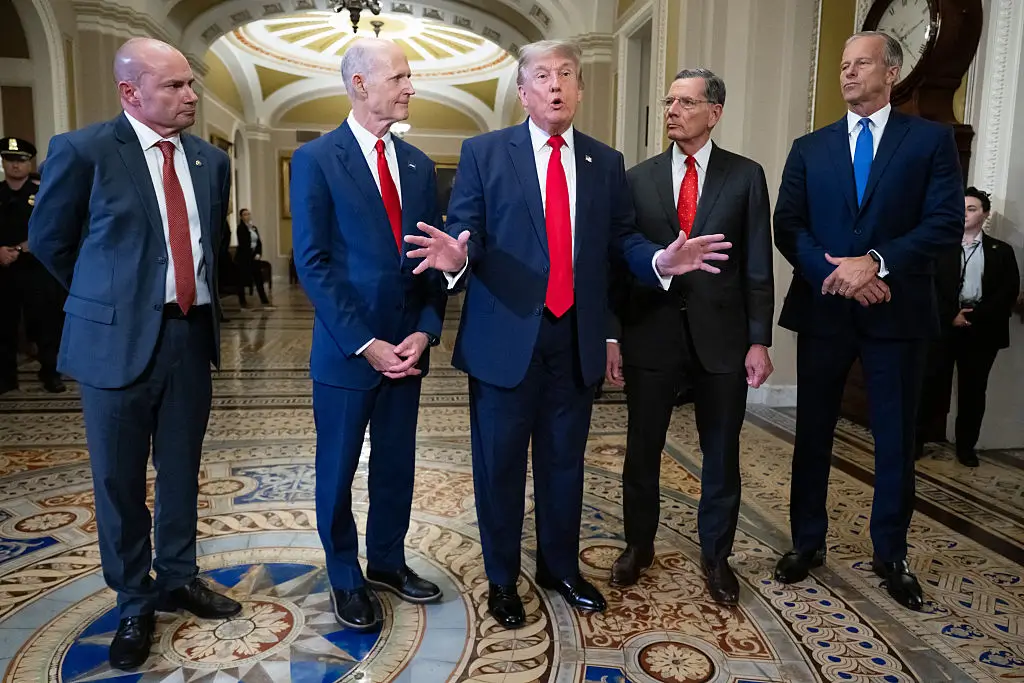
The vote count explains why the date matters. Trump’s administration controls six seats on the 12 member commission, and Republican congressional committee chairs hold two more. D.C. Representatives hold the other four. That alignment helped carry Trump’s proposed 250 foot triumphal arch by an 8 to 4 vote in November. One reader on X had a pointed response to what was getting that kind of attention.
“They are truly dealing with the things the American people care about. How is it possible they lost so big earlier this month?” the X user wrote. That sarcasm is not a measure of public opinion, but it lands on a fair question about priorities. PVN’s view: Trump’s team should have to explain what the public gains from a December decision that it would lose by waiting until January. The change in who gets to vote is already plain.
Democrats take over the two congressional seats in January. If both vote with all four D.C. Representatives, the commission can split six to six. A tie stops a project from advancing. That means Democrats would not need to win over a Trump appointee to block a proposal, but they would need every D.C. Representative on the same side. One X user put that possibility more confidently: “Congress 2027 will block.”
That prediction leaves out an important distinction. The two new commissioners could help stop a proposal that still needs their panel’s approval. Taking their seats does not by itself undo a December vote. Readers should watch which items actually receive final approval on Dec. 31, rather than treating a meeting notice as a decision or a change in Congress as a reset button.
The paperwork matters as much as the roll call. CNN reported in early November that whistleblowers alerted House Democrats to allegations that administration officials destroyed government records tied to Trump’s construction projects. Democrats then sent preservation notices to 36 federal agencies and private contractors. The Interior Department denied the allegations. Those notices do not establish that records were destroyed, and the reporting does not establish that any of the three projects expected on Dec. 31 lost records.
The commission’s calendar can do what no rendering of a golf course can: decide whose objections carry enough weight to stop it.
For Trump, the difference between a proposal and an approval is the part worth watching. PVN’s coverage of what White House photos actually show applies a useful test here, too: What does the evidence establish beyond the image? A rendering can sell the president’s vision. The public record should show what officials agreed to build or change, what conditions they attached and what the public would be expected to pay.
PVN’s read on the commission: D.C. Representatives can fill every seat the city has and still need two members of Congress to make their objections stick. The commission’s calendar can do what no rendering of a golf course can: decide whose objections carry enough weight to stop it. The reaction below puts its faith in Trump’s advantage running out. The harder question is what gets approved before it does.
A prediction about Trump’s next two years tells Black Washingtonians less than the plans for the public places they use. The immediate questions are practical: Who can get in, what might it cost and what access could change during construction? PVN’s coverage of why a public event’s lineup matters starts from a related question about who gets considered in the planning. Here the test goes beyond who feels represented. It’s whether people who live in Washington can see what the changes would mean for them before the votes are cast.
Advertisement
Watch the Dec. 3 preliminary decisions on the park projects, then check what actually comes up for a final vote on Dec. 31. Look for any changes in scope, any conditions on approval and a record of how each commissioner voted. If a project moves forward, its backers should be able to defend the decision on the merits to the same Washington residents who will live with it in January.
More from PowerVault Network: