
Yella Beezy Murder Verdict: What Life Without Parole Means
By Andre Coleman, PowerVault Staff Yella Beezy received life without parole after a Dallas jury found him guilty of capital murder in Mo3’s killing on November 11. The verdict arrived six years to the day after Mo3 di...
Advertisement

By Andre Coleman, PowerVault Staff
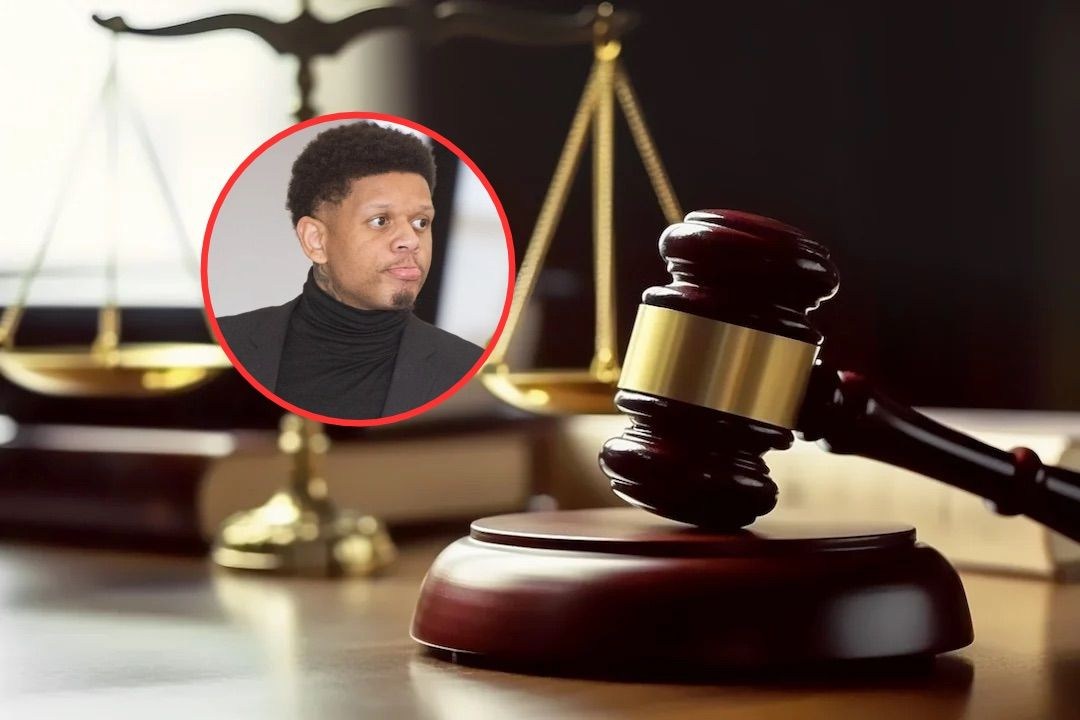
Yella Beezy received life without parole after a Dallas jury found him guilty of capital murder in Mo3’s killing on November 11. The verdict arrived six years to the day after Mo3 died, according to XXL’s account of the trial. Jurors deliberated for several hours following two weeks of testimony. Judge Chikya Anyiam imposed the sentence immediately because the death penalty was off the table. The ruling closed this trial with a punishment that offers no prospect of release through parole. For Dallas rap, the date now holds another painful milestone. For the families involved, the consequences reach far beyond music, streaming numbers or whatever gets posted next.
Prosecutors said Beezy, born Markies Conway, paid Kewon White to kill Mo3, whose real name was Melvin Noble. The shooting happened on Interstate 35 in Dallas on November 11, 2020. Mo3 was ambushed in broad daylight and shot 11 times, according to the reporting. Noble was taken to a hospital, where he was pronounced dead. White was convicted and sentenced to life in September, according to the supplied reporting. Another defendant, Devin Brown, was scheduled for trial in November. Those are separate proceedings, and Brown’s scheduled trial should not be confused with a conviction. WFAA, as cited by XXL, reported that people cried after Beezy’s verdict, including his young son. The prosecutor announced there would be no victim impact statements.
Mo3’s mother, Nicole Noble, opened the testimony by recalling how she learned her son had been shot. She described rushing to the hospital and waiting hours before receiving the news that he had died. She also testified that she urged authorities to investigate four people after his death, including Beezy. That account put a parent’s experience before the jury, alongside the prosecution’s case about who arranged the killing. The courtroom also carried responsibilities beyond deciding guilt. “Thank you for remaining respectful [during this process],” Anyiam told people in the gallery, according to the report. Respect mattered in a room holding grief, family ties and a sentence that leaves no possibility of parole. A related post from journalist Meghann Cuniff follows below.
Beyond the update above, the supplied reporting describes the physical evidence presented to jurors. Justin O’Donnell, a supervisor with the Dallas Police Department’s Crime Scene Unit, testified about Mo3’s damaged vehicle. The car bore visible gunfire damage, with cash scattered across its floorboards. Investigators recovered jewelry and $17,960 in cash, and O’Donnell said they found no firearms inside it. Prosecutors also introduced dashcam footage and testimony from two women who were on the highway. A first responder and the retired medical examiner who performed the autopsy testified as well. Those details matter because a murder prosecution must rest on evidence tied to the case. An artist’s reputation cannot do that work, no matter how familiar a jury finds the name.
Theodore Thomas, the rapper known as Jose Bodega and a longtime friend of Beezy, repeatedly invoked the Fifth Amendment during his testimony. His appearance came on Day 3, putting that dispute over answering questions before jurors. Prosecutors questioned him about a 140 page grand jury transcript containing earlier answers they said helped lead to Beezy’s indictment. Their questions concerned an alleged feud, the Get Rich Cartel and his whereabouts with Beezy. Invoking the Fifth protects against compelled self incrimination; it does not, by itself, establish someone else’s guilt. The supplied account ends before giving a complete account of that exchange, so filling the gaps would be speculation. Another related post from Cuniff appears below, alongside that distinction between testimony, allegation and proof.
The updates above belong to a specific Dallas prosecution, not a verdict on an entire genre. Hip Hop has spent decades watching individual deaths become shorthand for supposed collective failure. Tupac Shakur died in 1996. The Notorious B.I.G. Was killed in 1997. Their murders became endless entertainment properties, often crowding out questions about accountability and the people left behind. Nipsey Hussle’s killing in 2019 led to Eric Holder Jr.’s murder conviction in 2022, a different case with its own evidence. These cases should not be treated as interchangeable. Different cities, relationships and court records demand more than a recycled narrative about rap being unable to escape violence. Familiar framing is not informed reporting. The connection is the media habit that follows: an artist dies, the public consumes the conflict, and the music becomes background to arguments about danger.
The hardest question is what rap’s attention economy rewards before a courtroom forces everyone to stop performing.
A catalog can keep earning after an artist loses the freedom to perform it.
For the people involved, a verdict is a legal outcome, not an instruction to stop grieving. Nicole Noble’s testimony deserves more care than being reduced to the emotional section of a crime recap. Beezy’s son also deserves protection from spectators treating his distress as a reaction clip. Recognizing a child’s pain does not weaken accountability for an adult’s conviction. Both truths can stand without turning the families into opposing fan bases. A courtroom report can acknowledge tears without inviting strangers to dissect a child’s loyalty to his father. PVN’s position is simple: nobody’s loyalty to a rapper outranks a child’s right to dignity. Coverage should explain the judgment without making private suffering another piece of promotional material for somebody’s page. That standard should hold regardless of whose records a reader loves.
For the business, the uncomfortable issue is how easily attention survives consequences. A catalog can keep earning after an artist loses the freedom to perform it. Existing recordings may continue generating revenue under their governing agreements, even when touring and new recording become difficult or impossible. A stream is not a direct deposit to an artist; royalty splits and recoupment can determine what reaches them. That does not establish who owns Beezy’s masters, publishing or distribution rights. Those terms are not provided here. It does explain why the business cannot be measured by whether an artist remains visible. PVN’s coverage of Drake and Spotify access addresses another side of that gatekeeping. Access and ownership are different powers. The video below should be considered alongside the reporting, never substituted for the court record.
The video above does not remove the audience’s responsibility to distinguish a clip from a complete evidentiary record. Fans do not owe every viral interpretation a repost. They also do not have to pretend they never enjoyed an artist’s work to take a conviction seriously. The real test is whether support becomes permission to dismiss a victim or target people named around a case. Being mentioned in testimony is not the same as being charged, much less being found guilty. A song lyric, friendship or neighborhood connection cannot independently establish participation in a crime. Likewise, a favorite record cannot overturn a jury’s finding. Readers should resist accounts selling certainty from fragments. Sharing less can be a more serious response than joining a comment section that treats bereaved families like rival teams.
Race and class shape the coverage even when they do not explain a jury’s decision. Black artists are too often asked to answer for a whole community when an individual faces prosecution. That framing should be rejected without inventing a claim that this verdict resulted from bias. The supplied facts do not establish that. Money also creates different forms of leverage: publicity, legal resources and control over how an artist’s work reaches listeners. None guarantees control over a criminal proceeding. Being recognizable on a playlist does not mean an artist owns the recording or controls its commercial future. The ownership questions behind PVN’s Wu Tang Clan Rock Hall coverage matter here, too. Black musical visibility and institutional power are not the same thing, especially when others control the contracts and platforms.
Advertisement
Next comes careful attention to the remaining proceedings and any documented challenge to Beezy’s conviction. The supplied reporting does not establish that an appeal has been filed, so nobody should sell that as the next confirmed development. Brown’s case must be covered on its own evidence and outcome. A scheduled court date is a reporting checkpoint, not permission to predict guilt. Mo3’s music also deserves discussion beyond the circumstances of his death, without pretending the loss can be separated from the family still carrying it. PVN’s job is to keep those distinctions intact when attention shifts elsewhere. Dallas deserves reporting that remembers the people after the verdict stops being a trending topic.
More from PowerVault Network:
