As we step into a new era, one would hope that humanity has made significant strides towards equality and respect for all. However, the rising tide of misogynoir—the intersection of racism and sexism that Black women face—tells a different story. Every moment captured in the headlines, from the music we listen to, to the political narratives shaping our society, underscores an unsettling truth: the voices of Black women are still marginalized. Whether it’s through dismissive remarks or outright hostility, the ongoing trend reflects an urgent need for society to tune in to what Black women have to say.
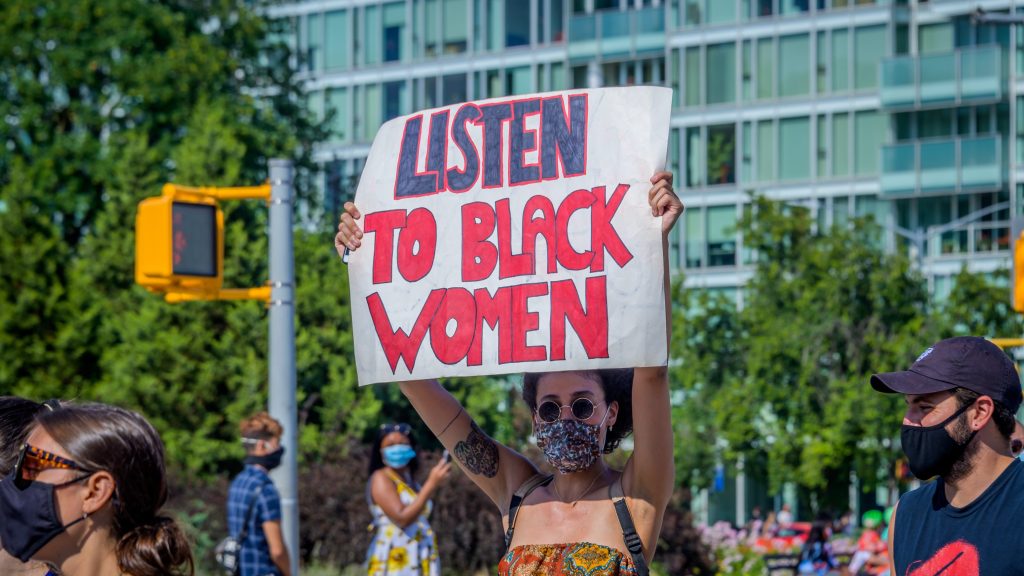
In the realm of entertainment, the glorification of misogyny persists, often submerging the very stories that highlight resilience and strength. Black women artists, directors, and writers create powerful narratives that can uplift and educate, yet they are frequently sidelined or misinterpreted. The phrase “Listen to Black women” has never been a mere catchphrase; it’s a clarion call for understanding and justice. When we engage deeply with their experiences, we do more than just hear their stories—we validate their truths and pave the way for change.
Moreover, the political landscape also serves as a poignant reminder of the necessity for this dialogue. With issues like reproductive rights, police brutality, and healthcare inequality disproportionately affecting Black women, the urgency for their voices in decision-making spaces cannot be overstated. The fight for justice is not just a Black issue; it’s a human issue, and Black women are at the forefront, often leading the charge yet receiving little recognition. When society revolves around narratives that exclude or diminish their voices, we are robbing ourselves of the diverse perspectives that can lead to impactful solutions.
As we journey through 2026 and beyond, let’s not allow the noise of a misguided culture to drown out the essential wisdom that Black women bring to every table. The call to listen isn’t just about acknowledgment; it’s about action. It’s about creating spaces where Black women can share their narratives without fear of backlash or invalidation. The empowerment of Black women should be seen as a collective responsibility, not just theirs alone. The future depends on our willingness to engage, to listen, and to act. Let’s not allow history to repeat itself—let’s turn up the volume on Black women and amplify their stories.
From The Source