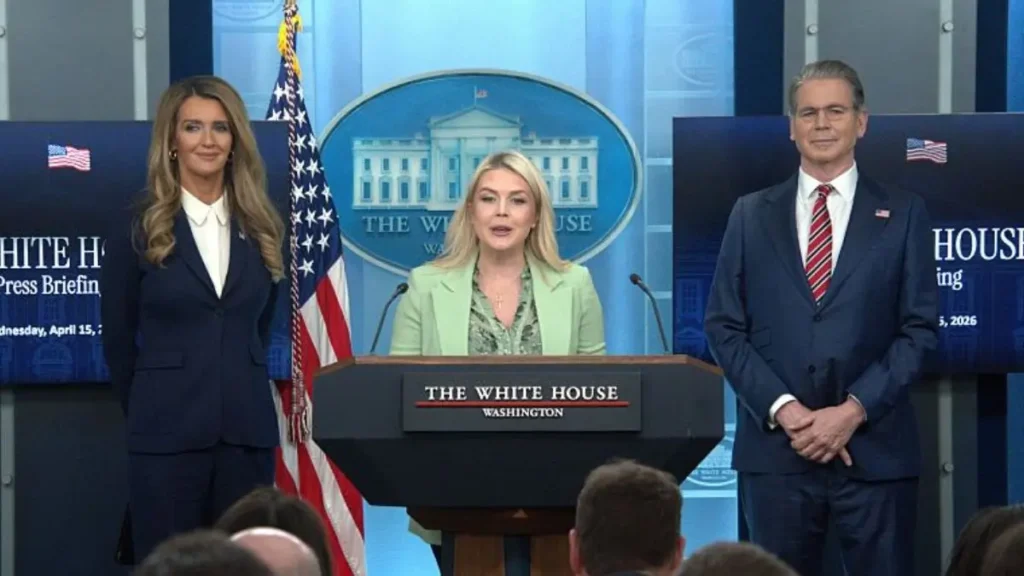
In the ever-vigilant spotlight of American politics, White House Press Secretary Karoline Leavitt has found herself at the center of controversy yet again. At just 28, she is navigating the treacherous waters of public scrutiny not just for the words she chooses but also for her personal life, particularly her marriage to a significantly older husband. Caught in a slip-up during a recent press briefing, Leavitt’s misstep has raised eyebrows and ignited a flurry of critiques, with many arguing that her approach to communication is becoming a troubling trend within the White House.
Critics have not held back, branding her failure to manage the narrative effectively as indicative of a larger issue permeating the current administration. What once seemed like a series of isolated incidents is now being viewed as a potential brand identity for the White House—one that reflects a casual disregard for facts and accountability. In a political landscape where every word matters, Leavitt’s lighthearted handling of serious issues has fueled concerns that the integrity of the press office is being compromised.
This isn’t just about one slip; it speaks to a growing discomfort around how the White House communicates with the American people. For many, the tone set by Leavitt and echoed within the administration feels dismissive and unprofessional. The public has a right to expect transparency and clarity, especially at a time when trust in government is already so fragile. Instead, what we see is a pattern that some are calling emblematic of a broader cultural problem in Washington, where accountability is sacrificed in favor of political expediency.
Moreover, the backlash against Leavitt’s misstep reveals how deep-rooted the intersection of personal and professional lives can be in the political arena. Her relationship choices, particularly with an older spouse, have often been under scrutiny, drawing unwanted attention that some believe eclipses her professional role. This type of invasive judgment reflects a larger societal issue where women in power are often reduced to their personal lives, rather than being examined through the lens of their professional contributions.
As conversations surrounding Leavitt’s slip-up continue to unfold, one thing is clear: the stakes are high. The White House must be vigilant not to let careless communication become its brand. In a time when representation and respect for the office are crucial, the pressure is on for Leavitt to rise above the noise and deliver the integrity that the American people deserve. The question remains—can she turn this moment around, or will it become yet another chapter in a growing narrative of disconnection in Washington?
About The Author