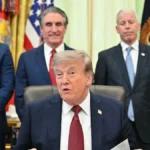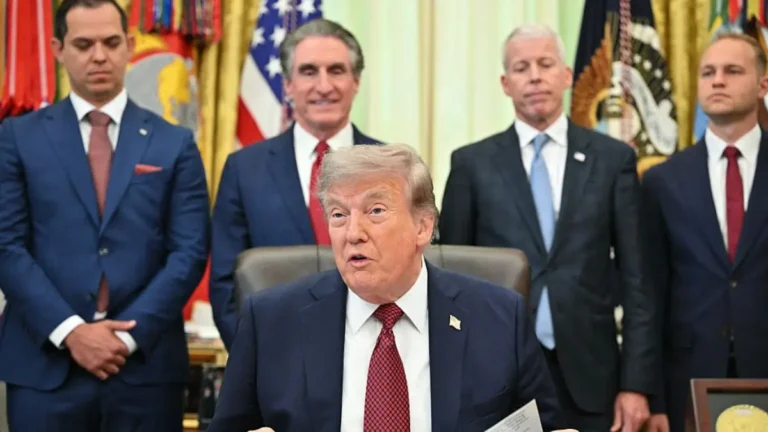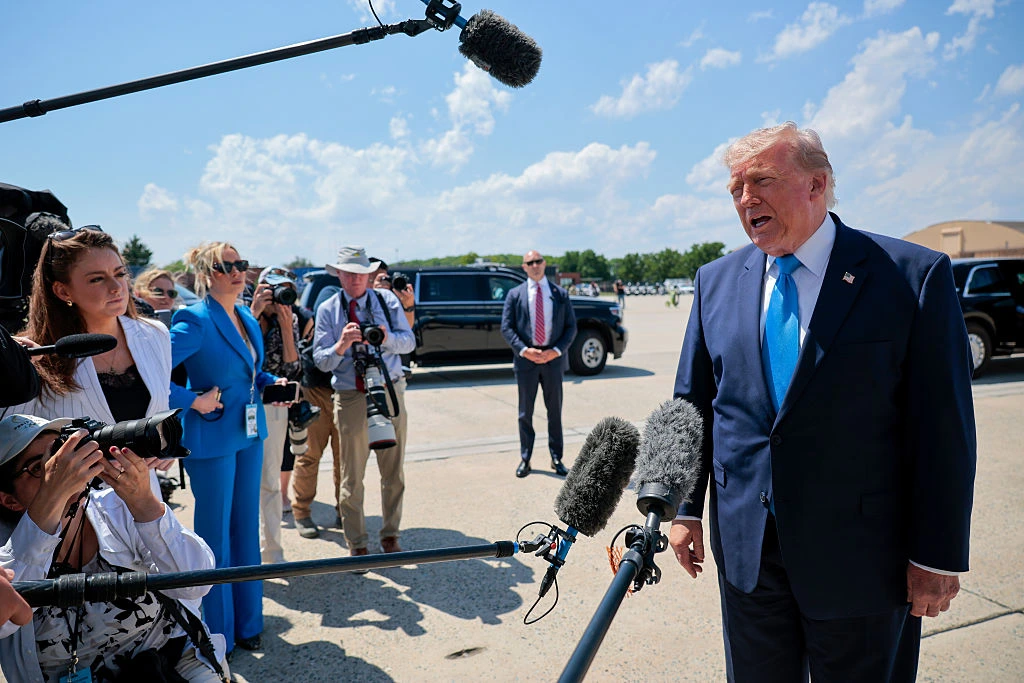
In a moment that could only be described as surreal, President Donald Trump delivered a speech to a crowd that was quickly overshadowed by an alarming incident. As he raged on, seemingly oblivious to the chaos unfolding just steps away, a man collapsed right behind him, falling flat to the ground. The cameras captured the gruesome scene, but Trump, in his characteristic fashion, didn’t even turn around. Instead, he continued his tirade, sweat glistening on his forehead, his body swaying slightly as if he was lost in his own world.
The incident has sent shockwaves through media outlets, with critics quick to pounce on the president’s apparent disregard for the very real human suffering that played out mere feet from him. In the midst of discussing the renovation of the Lincoln Memorial Reflecting Pool — a project already riddled with controversy — Trump’s inability to pause and acknowledge the situation has compounded the negative headlines surrounding his administration. It’s a shocking reminder of how detached he appears, even in the face of crisis.
As the public watches this unfolding drama, one can’t help but wonder: at what point does the spectacle become too much? With each passing day, Trump seems to slide deeper into a performance that prioritizes his narrative over reality. His supporters may cheer in the moment, but as the footage circulates and the internet reacts, it raises a troubling question about leadership and empathy in times of turmoil. This isn’t just about politics; it’s about the very essence of humanity and how we respond to those in distress, something Trump seems all too willing to sidestep.
As we process this moment, let’s not forget the man who fell. Behind the flash and fervor of political theater lies a sobering reality that should never be overshadowed by a performance. Leadership isn’t just about the spotlight; it’s about what you do when no one is watching — or perhaps, what you fail to do when the cameras are rolling.
About The Author