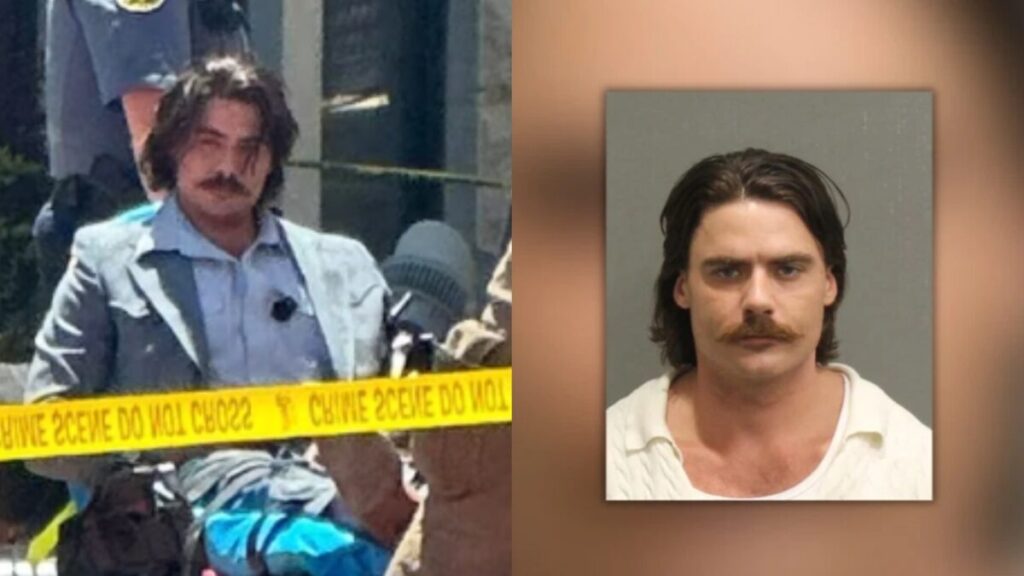
In a bizarre twist of fate, social media personality and self-proclaimed provocateur Chud the Builder finds himself facing serious consequences after accidentally shooting himself while attempting to open fire on a Black man outside a Tennessee courthouse. This shocking incident unfolds just days after he was arrested in Nashville, amplifying the ongoing conversation about reckless behavior and the consequences that often accompany it.
Chud, whose real name is Dalton Eatherly, has built a reputation for pushing boundaries and making headlines, often through controversial livestreams that provoke strong reactions. However, this latest episode has not only garnered widespread media attention but has also ignited discussions about justice and accountability in the face of racial tensions. The chaos erupted as Chud reportedly targeted a Black man, only to have the situation escalate dramatically when he ended up injuring himself—an act that many are calling poetic justice.
In the wake of this incident, the victim has received an outpouring of support from the community, leading to a GoFundMe campaign that has seen a substantial influx of donations. The online fundraiser highlights not only the immediate need for financial assistance due to medical expenses but also serves as a powerful reminder of community solidarity against individuals who seek to harm others. It’s a testament to the collective resilience and determination within the Black community, who continuously rise above adversity despite ongoing societal challenges.
As we reflect on this incident, it’s crucial to understand the implications of our actions and the societal narratives that shape our reality. The story of Chud the Builder should serve as a stark warning to those who choose aggression and provocation over dialogue and understanding. As the situation develops, we must continue to support the victims of such reckless behavior while calling for accountability from those who wield influence in our communities. In the end, karma has a way of balancing the scales, reminding us that actions have consequences, and that justice, however delayed, often finds its way back to the source.
From The Source
About The Author