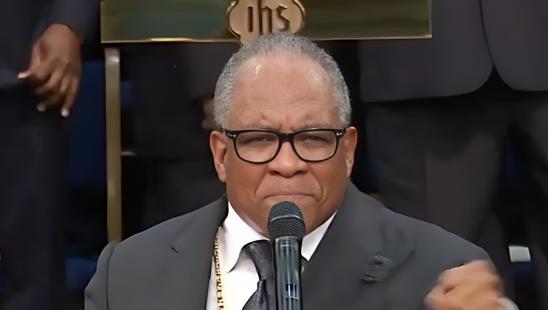
In a recent sermon that has stirred the pot across social media platforms, Bishop Patrick L. Wooden Sr. of the Upper Room Church of God in Christ in Raleigh, NC, delivered a forceful message that struck a chord with many while leaving others in shock. His passionate discourse targeted Black American voters, urging them to rethink their political loyalties and questioning the impact of their choices on the community. Bishop Wooden’s core argument is a call to action for his congregation and beyond, challenging them to consider how their votes align with the values they profess.
As the sermon gained traction online, reactions varied from hearty endorsements to fierce criticism. Supporters praised Wooden for speaking truth to power, emphasizing the importance of accountability in political engagement. They argue that as a community, Black Americans need to be more discerning in their political affiliations, particularly when those affiliations may not serve the best interests of their families and neighborhoods. In contrast, detractors accused him of using his platform to promote divisiveness rather than unity, arguing that such rhetoric can alienate vital support within the broader community.
The discourse prompted a broader discussion about the role of faith leaders in political arenas. Are they meant to be moral compasses guiding their flock, or do they risk overstepping by engaging too deeply in political matters? This sermon has undoubtedly reignited conversations about the intersection of faith, culture, and politics within the Black community. It raises pertinent questions: How do we navigate our identities as both citizens and believers? And can we engage in these discussions without fracturing the bonds that tie us together?
As viewers continue to weigh in on the sermon via social media, it’s clear that Bishop Wooden’s words have sparked an essential dialogue. The way we respond may very well shape the political landscape for years to come. In a climate where every voice counts, the call for introspection and a reevaluation of our collective priorities remains vital. The challenge before us is not just to listen, but to engage thoughtfully and passionately as we move forward together.
For those interested in hearing the sermon firsthand, it’s available to watch online. Dive into the conversation and let us know where you stand on this pressing issue.
About The Author






![Game On! Atlanta Cultural Exchange To Amplify Southern City’s Culture, Creativity & Community During FIFA World Cup 2026™ [Exclusive]](https://powervaultnetwork.com/wp-content/uploads/2026/05/17799997258032-768x439.jpg "Game On! Atlanta Cultural Exchange To Amplify Southern City’s Culture, Creativity & Community During FIFA World Cup 2026™ [Exclusive]")