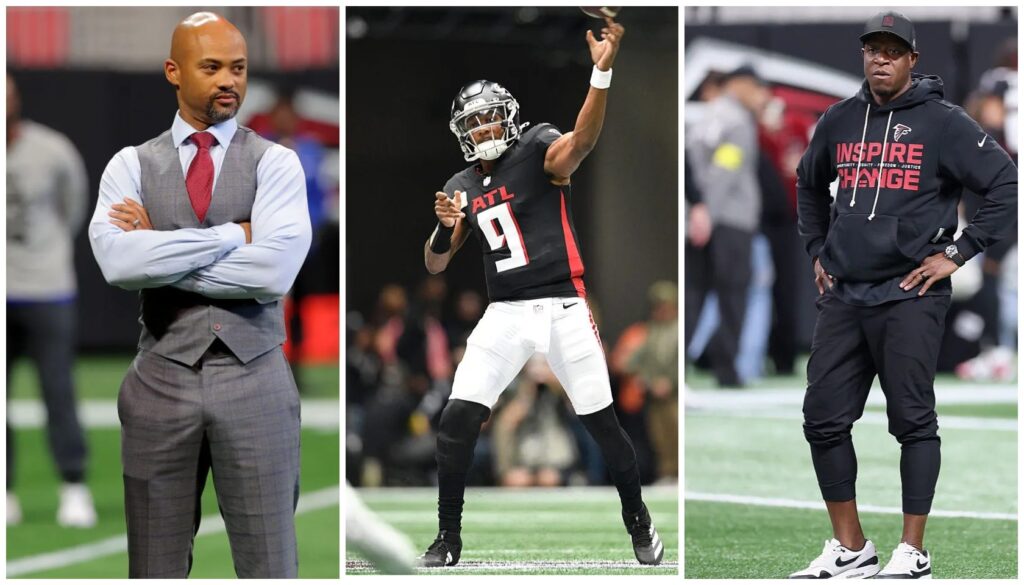
In the complex world of professional football, the Atlanta Falcons have recently made headlines for the firing of their first Black general manager, Terry Fontenot, and their first Black head coach, Raheem Morris. The decision came after a series of disappointing seasons, a reality that weighs heavily on the shoulders of those who are often seen as trailblazers in a league that has historically been slow to embrace diversity in leadership roles. For Fontenot and Morris, their tenure marked a significant moment in NFL history, filled with aspirations, dreams, and, inevitably, the burden of high expectations.
Both men stepped into their respective roles amid a backdrop of hope and change, representing not just their individual journeys but the ambitions of countless others who had come before them. In a sport where Black athletes have long dominated the field, the paths to coaching and management positions have remained riddled with obstacles. The pressure to succeed is magnified for leaders like Morris and Fontenot, as their failures are often perceived as reflections not only of their capabilities but of the potential for future Black executives in the NFL.
Firing them after a few seasons signals a troubling trend in professional sports—one that can discourage future candidates from taking a leap into leadership roles. The stakes are different for Black leaders; their careers can carry the weight of an entire demographic’s aspirations. Each game is more than just a game; it’s an opportunity to rewrite narratives and challenge the status quo, and when wins don’t come, the consequences are deeply felt.
For many, Fontenot and Morris’s departures highlight a larger conversation about accountability and the systemic hurdles within the NFL that continue to hinder diversity in its upper management. The sports world often applauds the accomplishments of elite athletes, but tends to overlook the barriers faced by those steering the ship. In stepping into these positions, Morris and Fontenot not only took on the responsibilities of their roles but also the role of representatives for a community eager for progress. Now, as they move on from the Falcons, we must reflect on what their experience means for the next generation of Black leaders in the league and how the narrative can shift to better support their journeys.
About The Author