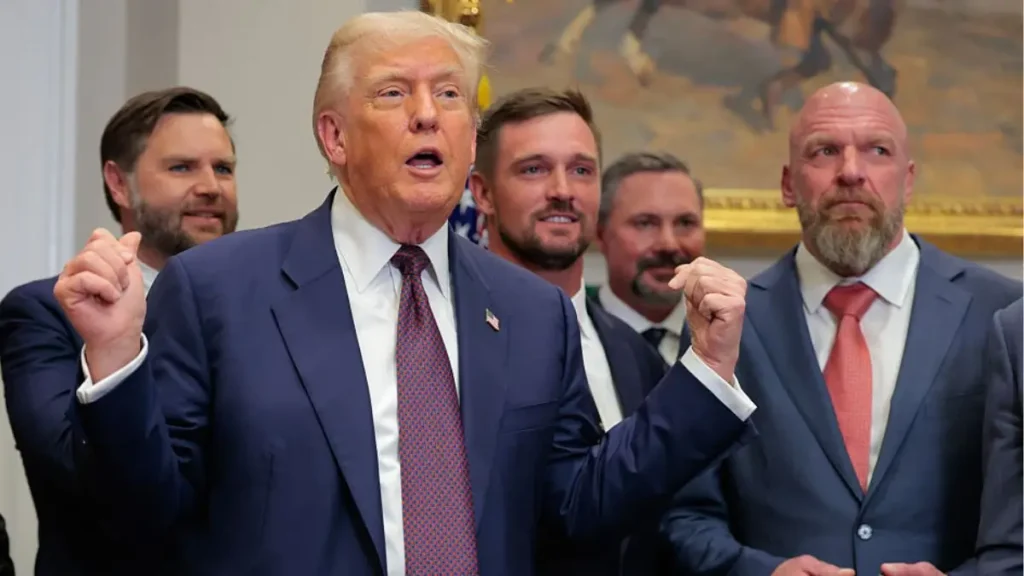
In the wake of the shocking shooting incident at the White House Correspondents’ Dinner, former President Donald Trump has taken to social media to dismiss conspiracies swirling around the event. His bold claims that these theories are unfounded may sound like the familiar refrain of an administration under fire, but this time, his stern denial raises eyebrows and invites deeper scrutiny. Some observers are left questioning whether Trump’s quick exit from the stage was a calculated move or a fateful misstep that could leave him vulnerable to speculation.
The atmosphere surrounding the annual dinner, once a light-hearted affair celebrating journalism and politics, turned somber in an instant. Witnesses describe the chaos that erupted, as attendees scrambled for safety amid the sound of gunfire. In the aftermath, the narrative surrounding the event has been riddled with accusations of mismanagement and negligence. But Trump’s insistence that conspiracy theories surrounding the shooting are baseless leads some to wonder whether he is deflecting blame or genuinely believes he was targeted.
For many, the question lingers: Did Trump walk into a setup? His decision to attend a high-profile event with an increased security risk has raised eyebrows, especially given the contentious political climate. Critics argue that his very presence was an invitation for criticism and confrontation, making it easy for conspiracies to take root. The phrase “The call is coming from inside the house” resonates louder than ever, as Trump’s own choices may have put him in harm’s way, intentionally or not.
As the dust settles, public discourse continues to evolve. Supporters rally behind him, framing the conspiracies as plots by the media to undermine his credibility. In contrast, detractors argue that Trump’s style of provocative rhetoric invites chaos and controversy, creating a breeding ground for speculation and fear. The recent events at the Correspondents’ Dinner are a stark reminder of how quickly narratives can shift in today’s political landscape, where every action is scrutinized and every decision questioned.
Ultimately, the fallout from the shooting will likely linger, shaping not just Trump’s public image but the broader political conversation around safety, accountability, and the impact of divisive rhetoric. As the nation grapples with this unsettling incident, the spotlight remains on Trump, and the question of whether he truly understands the implications of his actions remains an unsettling mystery.
About The Author